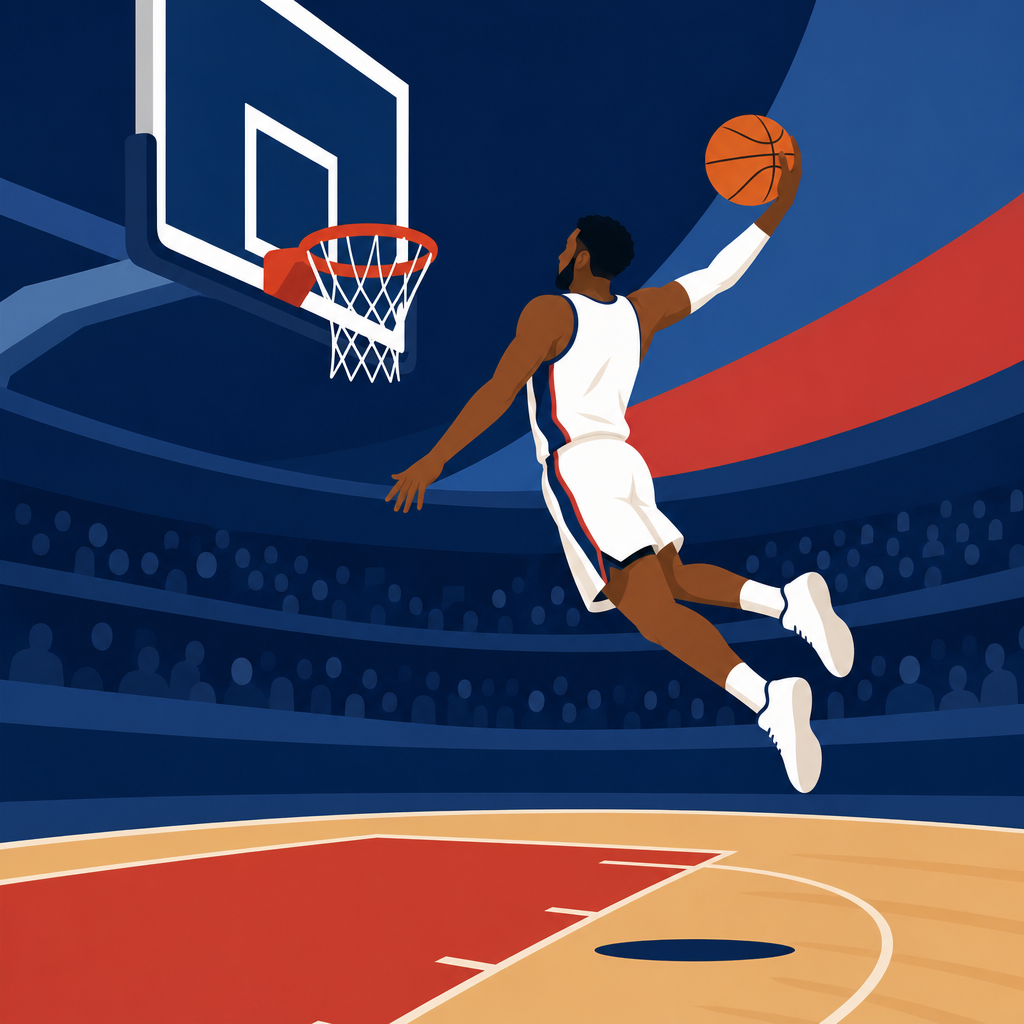

Hakeem Olajuwon’s Dream Shake is more than a signature post move; it is a masterclass in footwork, balance, deception, and timing that changed how centers could attack in the NBA. In player profile discussions, few offensive actions are so closely tied to one athlete that the move itself becomes part of basketball vocabulary, and the Dream Shake reached that rare level. To understand why it defined an era, you have to understand both the player and the environment he dominated: a league packed with Hall of Fame big men, stricter paint battles, and defenses built to stop low-post scorers. Olajuwon thrived anyway because his game fused center strength with guard agility.
When people refer to the Dream Shake, they usually mean Olajuwon’s sequence of post fakes, pivots, shoulder feints, up-and-under steps, and quick spin counters used to create a clean shot near the basket. The term can describe one specific fake-and-counter move, but in practice it became shorthand for his entire footwork package on the block. I have always found that distinction important when profiling Olajuwon, because reducing the Dream Shake to one move misses the bigger truth: defenders were not beaten by a trick. They were beaten by a decision tree. Olajuwon could read weight shifts, hips, help defense, and shot-blocking angles in real time, then punish the first mistake.
This matters because player profiles are not just lists of awards and career averages. The best profiles explain how a player solved the game in his own way and why that solution still influences today’s NBA. Olajuwon’s career offers exactly that kind of case study. He was the first overall pick in 1984, a 12-time All-Star, a two-time NBA champion, a league MVP, a two-time Defensive Player of the Year, and the all-time leader in blocked shots. Yet even that résumé does not fully explain his hold on basketball history. The Dream Shake does. It was the visible expression of everything that made him special: discipline, creativity, touch, patience, and technical precision under pressure.
As a hub article in the NBA Players and Player Profiles category, this piece examines who Olajuwon was, how the Dream Shake worked, why it was so hard to defend, and how it shaped the standards for elite big-man play. It also connects his signature move to his broader profile, including his rise from soccer-playing prospect in Nigeria to one of the most skilled centers the game has produced. If you want one player profile that shows how technique can become legacy, Hakeem Olajuwon is the ideal place to start.
Hakeem Olajuwon’s player profile: background, rise, and NBA identity
Hakeem Abdul Olajuwon was born in Lagos, Nigeria, in 1963 and did not begin playing basketball seriously as early as many future stars. That late start matters in his player profile because it helps explain the originality of his movement patterns. He often credited soccer and handball for developing his footwork, coordination, and spatial awareness. By the time he came to the United States and played at the University of Houston, those traits were already obvious. With Clyde Drexler, he helped power the famous “Phi Slama Jama” teams, combining rim protection with mobility that looked unusual for a seven-footer.
Houston selected Olajuwon first overall in the 1984 NBA draft, ahead of Michael Jordan, Charles Barkley, and John Stockton. That draft order is constantly revisited, but in context it was entirely defensible. Olajuwon was a franchise center prospect in an era when elite centers often anchored title teams. He delivered quickly. Early in his NBA career, he was already an outstanding shot blocker, rebounder, and transition runner. Over time, his offensive game evolved from raw power and athletic finishing into one of the most polished low-post arsenals the league has ever seen.
His listed career averages of 21.8 points, 11.1 rebounds, and 3.1 blocks only sketch the outline. The sharper profile comes from his two-way command. Olajuwon could guard the rim without becoming stiff in space, defend post bruisers without sacrificing quickness, and score against single coverage or doubles from either block. During Houston’s 1994 and 1995 championship runs, he was not simply productive; he was the central organizing force on both ends. In scouting terms, he offered elite rim deterrence, switch survivability for his era, post efficiency, soft-touch finishing, and advanced counter-based scoring.
That combination is why his signature move cannot be separated from his identity. Some stars have a famous move attached to a broader game. With Olajuwon, the Dream Shake was the broad game distilled into one image. It represented his balance, his patience on the catch, the way he sold a fake without traveling, and his ability to turn a defender’s urgency into vulnerability. In the language of player profiles, it was not branding. It was basketball problem-solving at the highest level.
What the Dream Shake actually was and why it worked
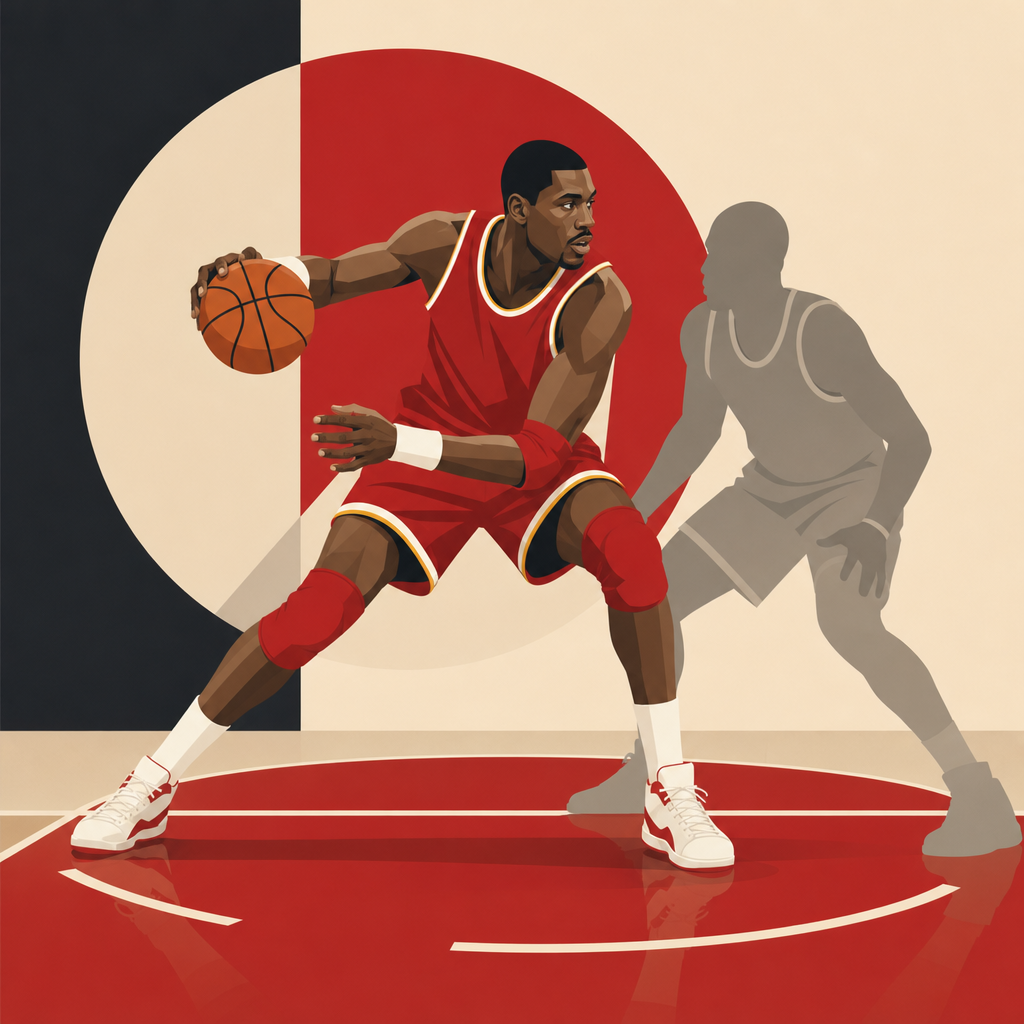
The Dream Shake worked because it forced defenders to react before they had enough information. Olajuwon would establish post position, receive the ball, square his shoulders, and begin a series of believable threats: baseline drive, middle hook, turnaround jumper, spin, or up-and-under finish. Every feint had structural integrity. His head, shoulders, hips, and pivot foot told a convincing story, and defenders had to honor each story because he could score from all of them. Once a defender leaned, lifted, or opened a stance, the counter arrived.
From a technical standpoint, the move depended on elite footwork fundamentals. Olajuwon maintained a legal pivot, kept a wide base, and stayed under control through multiple fakes. He did not rush into contact. He let the defender’s momentum create the opening. One common sequence started on the left block: baseline shoulder fake, middle pivot, quick shot fake, then an up-and-under or short fadeaway. Another sequence came from facing up briefly, showing middle, then spinning baseline into a soft finish. The beauty was that the same opening stance could lead to several endings.
His touch made the move even deadlier. A post package built on deception still fails if the finish is unreliable, but Olajuwon could convert with either hand, off glass, with a jump hook, or on a compact turnaround. He also had the balance to absorb body contact without losing the line of his shot. That is a key reason the Dream Shake was not just pretty footwork. It produced efficient offense in playoff environments where spacing was tighter and help defenders were more physical than many modern fans realize.
Another reason it worked was tempo control. Younger players often imitate the shoulder shimmy but miss the pacing. Olajuwon changed speeds within a single possession. He might hold for a beat, bait the contest, then explode into the counter. Great post scorers manipulate rhythm the way elite guards manipulate dribbles. Olajuwon did it from the block. Watching film of his best possessions against David Robinson, Patrick Ewing, Shaquille O’Neal, or Alonzo Mourning, you see a player dictating not just space but timing. That is the true core of the Dream Shake.
Why the Dream Shake defined the 1990s center era
The 1990s were loaded with elite big men, which makes Olajuwon’s dominance more impressive, not less. This was the era of Robinson, Ewing, O’Neal, Mourning, Dikembe Mutombo, Rik Smits, and a late-career Kareem influence still shaping how centers were taught. Teams expected playoff basketball to be settled in the paint. Post defense was central to roster construction. Help schemes collapsed hard, weak-side rim protectors met drives at the basket, and every contender needed size. In that environment, a center who could manufacture quality shots without relying on guard-created spacing had extraordinary value.
Olajuwon’s 1994 and 1995 playoff runs are the clearest proof. In 1994, he won MVP, Defensive Player of the Year, and Finals MVP, one of the most complete individual seasons in league history. In the 1995 playoffs, Houston entered as a sixth seed yet repeated as champion behind Olajuwon’s brilliance. His Western Conference Finals and Finals performances became part of NBA mythology because he repeatedly solved great defenders with skill rather than brute force alone. Against Robinson in 1995, his footwork and counters turned one of the league’s best defensive bigs into a reluctant reactor.
The move also defined the era because it expanded what people imagined a center could look like offensively. Traditional post stars often imposed themselves through power, size, or one dominant hook. Olajuwon could do that when needed, but his signature was finesse layered onto strength. He made artistry practical. Young bigs watching him saw that low-post offense did not have to be linear. It could involve setup, disguise, and multiple reads. That idea has carried forward into modern skill development, where footwork drills for bigs increasingly borrow from guards, dancers, and soccer athletes.
| Player | Primary low-post identity | What made Olajuwon different |
|---|---|---|
| Shaquille O’Neal | Power seals, drop-steps, force at the rim | Won with counters and touch as often as strength |
| Patrick Ewing | Face-up jumper, strong interior scoring | Used more layered fakes and pivot chains |
| David Robinson | Speed, length, transition, face-up attacks | Operated with deeper post deception under pressure |
| Kareem Abdul-Jabbar | Skyhook precision and length | Relied on varied footwork trees rather than one unstoppable release |
That distinction is why the Dream Shake still stands out in any player profile hub. It was not merely effective within its time. It became the emblem of how skill can bend a physically punishing era to a player’s will.
Signature moments, measurable production, and lasting influence
Any comprehensive player profile should connect style to production, and Olajuwon’s numbers support the legend. He scored 26,946 regular-season points, grabbed 13,748 rebounds, and recorded 3,830 blocks, still the NBA record. He won back-to-back championships with the Houston Rockets in 1994 and 1995 and earned Finals MVP in both title runs. He made 12 All-Star teams, 12 All-NBA teams, and nine All-Defensive teams. Those honors matter because they confirm that the Dream Shake was not an isolated highlight package. It was the offensive signature of a player performing at historically elite levels for more than a decade.
The signature moments are just as important. In the 1994 NBA Finals against the New York Knicks, Olajuwon battled Ewing in a bruising, defense-first series and still provided the shot creation Houston needed. In the 1995 postseason, his path to the title ran through a string of elite frontcourts. He outplayed Robinson in a series often cited whenever people discuss playoff reputation and individual matchup pressure. Against a young Shaquille O’Neal in the Finals, he showed that guile and precision could neutralize even overwhelming physical force. Those series did not create his reputation, but they crystallized it.
His influence continued well beyond retirement because the league’s next generations actively sought his instruction. Kobe Bryant worked with him on post footwork. LeBron James trained with him. Dwight Howard spent time learning post counters from him during his Orlando and early Lakers years. More recently, modern bigs and wings alike study his tape because the principles travel across positions: protect the pivot, sell the first fake, keep balance through contact, and finish with touch. Even in a three-point heavy NBA, those lessons remain useful in the post, mid-post, short roll, and close-range isolation.
For readers exploring the broader NBA Players topic, that is the real value of Olajuwon’s profile as a hub piece. It links biography, technique, production, and influence into one coherent model. Many players leave behind records. Fewer leave behind a teachable language of movement. Olajuwon did both, and the Dream Shake remains one of the clearest examples of individual skill reshaping how basketball is taught and remembered.
What modern players and fans can learn from the Dream Shake
The biggest lesson from the Dream Shake is that elite offense starts with footwork, not flair. Modern highlight culture sometimes isolates the shoulder fake and treats it like a trick move, but Olajuwon’s success came from fundamentals repeated until they became instinctive. His base stayed strong, his pivot foot stayed disciplined, and his counters were available from either shoulder. Coaches still use his film to teach balance, sequencing, and decision-making because those traits improve scoring efficiency at every level.
There is also a lesson about adaptability. Olajuwon did not depend on one rigid pattern. If a defender sat on the baseline, he turned middle. If help came early, he could pass out or shoot before the double fully arrived. If the shot blocker left his feet, he used the up-and-under. That is why the Dream Shake belongs in serious player profile study. It demonstrates that high-level scoring is often less about having one unstoppable move than about owning the next answer. Great players chain solutions together.
Fans can learn something equally important about legacy. Olajuwon’s greatness is not always discussed as loudly as that of some contemporaries, partly because his style was subtle compared with louder brands of dominance. But when you examine the tape, the honors, and the level of competition, the case is undeniable. He was one of the best two-way players in NBA history and arguably the most skilled traditional center the league has seen. The Dream Shake is the doorway into that larger truth.
Hakeem Olajuwon’s Dream Shake defined an era because it turned post offense into applied geometry, timing, and intelligence against the strongest defenders in basketball. It captured everything a complete player profile should reveal: where a star came from, how he won, what made him unique, and why his game still matters. Olajuwon was not just a great center with a famous move. He was a technical innovator whose footwork became a benchmark for basketball excellence.
For anyone building knowledge within the NBA Players and Player Profiles category, Olajuwon is essential study. His career connects development, peak performance, championships, defensive impact, and skill transmission across generations. Watch the film, study the pivots, and revisit the 1994 and 1995 playoff runs. The more closely you look at the Dream Shake, the more clearly you see why Hakeem Olajuwon’s legacy still stands on such firm ground.
Frequently Asked Questions
What exactly is Hakeem Olajuwon’s Dream Shake?
The Dream Shake is Hakeem Olajuwon’s iconic post move built around elite footwork, deceptive body language, balance, and perfect timing. At its core, it is not just one single move but a sequence of fakes, pivots, shoulder turns, and counters that forced defenders to guess wrong. Olajuwon would often catch the ball in the post, establish his base, sell a shot fake or middle turn, then spin or step through into a high-percentage finish. What made it special was how fluidly he moved from one option to the next. Defenders were rarely reacting to a predictable pattern; they were reacting to a complete scoring system.
The move became legendary because Olajuwon made it look graceful while using it against the biggest, strongest defenders in the NBA. He could fake baseline, pivot middle, up-fake, fade, or explode to the rim, all without losing his balance. That combination of technique and improvisation is why the Dream Shake became more than a highlight-reel play. It became a basketball term recognized by players, coaches, and fans everywhere, and it remains one of the clearest examples of how footwork can control a game.
Why was the Dream Shake so difficult for defenders to stop?
The Dream Shake was so hard to defend because it attacked every defensive instinct at once. Most post defenders are trained to anticipate the first move, absorb contact, contest the shot, and stay disciplined on fakes. Olajuwon disrupted that entire process. He used his shoulders, eyes, hips, and feet to make defenders believe the shot or drive was coming a split second earlier than it actually was. That hesitation gave him the edge. Once a defender shifted weight the wrong way, Olajuwon had already created space for a clean look.
Another reason it was nearly unstoppable was that Olajuwon had legitimate counters from every position. If a defender played him too tightly, he could spin by. If the defender backed off, he could shoot. If the defender left his feet on the fake, Olajuwon would patiently step through. If help defense arrived, he could finish quickly before the double-team took effect. He also executed the move with uncommon touch, meaning that even contested shots had a strong chance of going in. The Dream Shake was not effective because it was flashy; it was effective because it combined deception with precise fundamentals and gave the defender no safe answer.
How did Hakeem Olajuwon’s footwork change the way centers were viewed in the NBA?
Olajuwon helped redefine what a center could be offensively. Before and during his era, many big men were expected to score through power, size, and direct positioning near the rim. Olajuwon certainly had strength, but his game showed that a center could dominate with agility, nuance, and technical mastery. He brought a level of elegance and creativity to post play that made footwork a starring skill rather than a supporting one. That mattered in a league filled with elite interior defenders, where winning in the post often came down to inches and timing.
His style expanded the imagination of coaches, players, and fans. Instead of seeing the low post only as a place for drop-steps and hook shots, people began to appreciate it as a stage for advanced movement and decision-making. The Dream Shake showed that a big man could be a scorer who manipulated defenders with craft as much as force. Its influence can still be seen in the way modern frontcourt players train, especially those who value pivots, counters, and body control. Even in an era that emphasizes spacing and perimeter skill, Olajuwon’s post footwork remains a benchmark for complete offensive development.
Why did the Dream Shake define an era rather than just a single player’s career highlight?
The Dream Shake defined an era because it stood out in a basketball environment loaded with dominant centers, physical interior defense, and nightly battles in the paint. Olajuwon was not unveiling this move in a soft or simplified context. He used it against some of the best rim protectors and post defenders the league had to offer, and he used it when possessions were slower, more physical, and often built around half-court execution. In that setting, a move that could consistently create clean offense in the post carried enormous value.
It also became symbolic of a broader basketball truth: fundamentals can be as devastating as athleticism when they are mastered at the highest level. The Dream Shake was memorable not only because Olajuwon scored with it, but because it represented control under pressure. It appeared in crucial moments, playoff games, and championship runs, giving it historical weight beyond regular-season entertainment. Over time, the move became inseparable from Olajuwon’s identity and from the image of 1990s interior basketball itself. When a move enters the sport’s vocabulary and instantly evokes a player, a style, and a time period, it has done more than succeed—it has defined an era.
What is Hakeem Olajuwon’s lasting legacy through the Dream Shake?
Olajuwon’s lasting legacy through the Dream Shake is that he turned post play into both an art form and a teaching model. The move continues to be studied because it demonstrates timeless offensive principles: patience, balance, reading the defender, and using footwork to create efficient shots. Younger players across positions, not just centers, have looked to Olajuwon as an example of how to score without relying purely on speed or strength. His technique remains relevant because defenders in every era are vulnerable to hesitation, misdirection, and smart use of angles.
Just as importantly, the Dream Shake preserved Olajuwon’s place in basketball culture as more than a great scorer. It cemented him as a craftsman whose approach to the game still commands respect from former players, trainers, and modern stars. His influence shows up in offseason workouts, post-skill training, and in the language people use when describing advanced low-post offense. Very few signature moves become part of the sport’s permanent vocabulary. The Dream Shake did, and that is a major reason Olajuwon’s legacy continues to feel immediate, authoritative, and deeply connected to how basketball skill is understood.