
The greatest NBA Finals in history do more than crown a champion; they reveal how basketball changed, which stars could carry the biggest moments, and why certain series still shape the way coaches, players, and fans understand winning. In playoff coverage, “Finals history” means the complete story of the championship round: the tactical trends that emerged, the rivalries that elevated the league, the defining performances under maximum pressure, and the lasting consequences for teams, rules, and legacy debates. A truly great Finals is not simply close. It combines elite shot-making, strategic adjustment, emotional stakes, and historical consequence. Some were seven-game classics, while others became unforgettable because one team or player reached a level that altered the sport’s standards. When I evaluate Finals history, I look at three filters that consistently matter: quality of competition, magnitude of the moment, and influence on the next era.
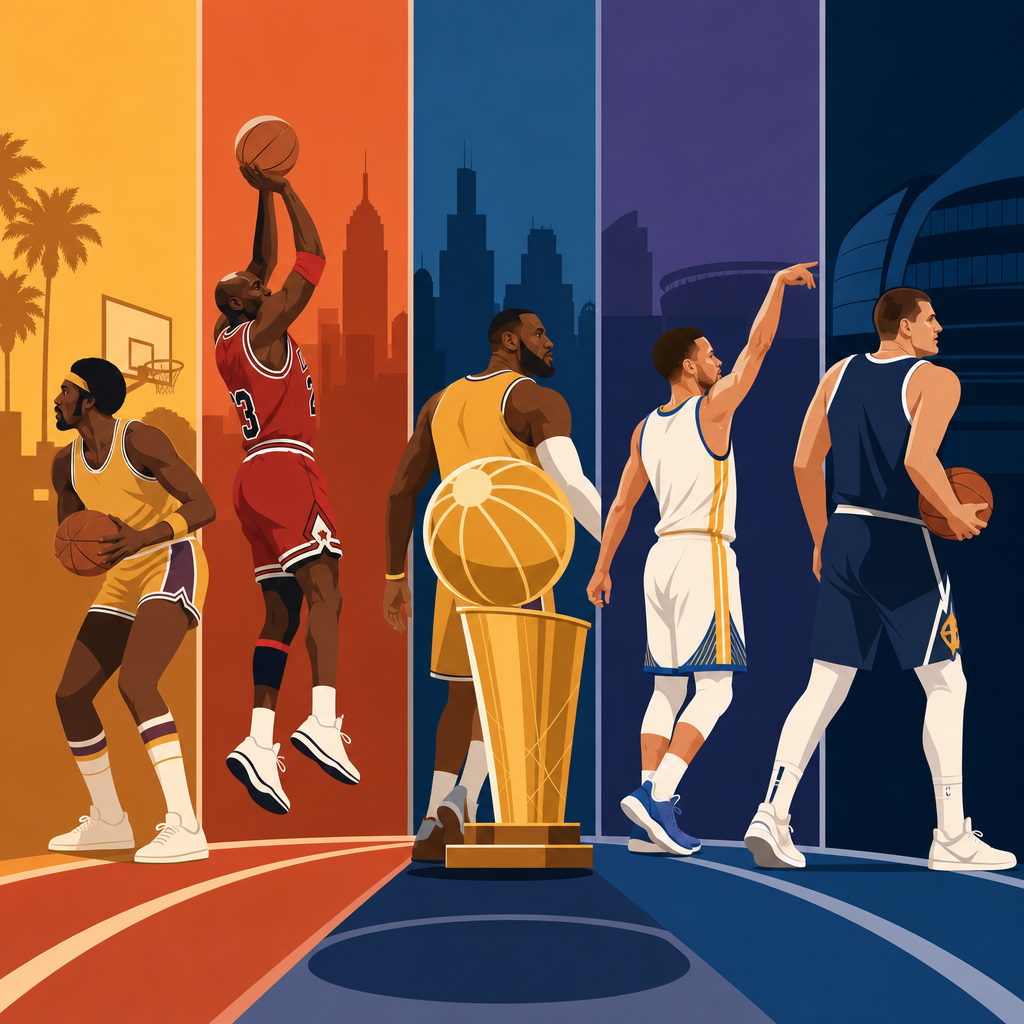
That broader lens matters because the NBA Finals has never been static. The league Bill Russell dominated in the 1960s was organized around paint defense, rebounding, and depth. The Magic Johnson and Larry Bird years restored mainstream visibility through rivalry and style contrast. Michael Jordan’s Bulls turned Finals excellence into a global brand of competitive perfection. The Shaquille O’Neal, Kobe Bryant, Tim Duncan, and LeBron James eras each introduced new answers to the same question: what wins four games when every weakness is targeted? More recently, spacing, switching, and three-point volume changed the geometry of championship basketball. Studying the greatest NBA Finals in history is therefore a practical way to study basketball evolution itself.
For readers exploring NBA Playoffs coverage, this Finals history hub sets the foundation for deeper articles on individual matchups, dynasties, iconic performances, and turning-point games. It explains which series defined each era and why they still matter now. That perspective is useful whether you are comparing dynasties, researching clutch performances, or trying to understand how championship basketball moved from post play and midrange execution to spread pick-and-roll, weak-side tagging, and five-out spacing. The best Finals remain relevant because the problems they solved still exist. Teams still need a reliable half-court offense, lineup versatility, rim protection, poise in late-game possessions, and stars who can create against elite defenses. The names change, but the championship test does not.
Russell, Chamberlain, and the blueprint for championship basketball
The first era-defining NBA Finals was the 1962 Celtics versus Lakers series, a seven-game battle that captured the league’s early identity. Boston won Game 7 in overtime, and the series showcased the principles Red Auerbach built around Bill Russell: defense first, relentless rebounding, transition pressure, and trust in a deep rotation. Russell’s value was larger than raw scoring. He controlled possession flow with rim protection and outlet passing, a combination that let Boston defend without sacrificing pace. Elgin Baylor and Jerry West gave Los Angeles elite shot creation, but Boston’s structure held. When people discuss the greatest NBA Finals in history, 1962 belongs because it established that championship teams could be defined by defensive organization and collective resilience, not just the top scorer.
The 1969 Finals added a different kind of historical weight. The Celtics beat the Lakers again, this time in seven games, in Bill Russell’s final season as player-coach. It remains one of the sport’s most symbolic endings: the dynasty’s elder core defeating a more glamorous roster in a hostile arena. The series is also remembered for the first Finals MVP award going to Jerry West despite the Lakers losing, evidence of how extraordinary his play was. That detail matters in Finals history because it reflects a truth advanced fans recognize immediately: an all-time series can elevate both winner and loser. West’s scoring, shot-making, and command under pressure embodied championship-level performance even without the title. Few Finals better capture basketball’s harshest lesson that greatness and victory are related, but not identical.
The 1970s: parity, pressure, and the league’s tactical expansion
The 1970 Knicks versus Lakers Finals stands near the top of any serious list because it combined star power, memorable theater, and strategic balance. Willis Reed’s dramatic entrance for Game 7 became one of the defining images in American sports, but the series was not only about inspiration. Walt Frazier then delivered one of the best closeout performances ever, controlling tempo, creating offense, and defending at a championship level. The Knicks represented a sophisticated team concept built on ball movement, spacing for the time, and two-way discipline. The Lakers had West, Baylor, and Wilt Chamberlain, yet New York’s cohesion won out. Historically, this Finals matters because it showed that intelligent orchestration and versatile guard play could decide championships as much as frontcourt size.
Another essential Finals from the decade is the 1976 Celtics versus Suns series, often called one of the greatest ever because of its triple-overtime Game 5 and the constant emotional swings across the matchup. Boston eventually won in six, but the Suns forced every ounce of execution out of a deeper, more experienced team. What stands out in rewatching and studying this series is how frequently possession management determined outcomes. In modern terms, it was a clinic in late-clock problem solving, matchup recognition, and composure under fatigue. The 1970s did not produce a single dominant Finals dynasty, but that is precisely why the decade matters. Finals history in this period reveals a league experimenting with styles, distributing power across franchises, and proving that championship pressure can create classics even without a consensus all-time team.
Bird, Magic, and the revival of the modern NBA
If one matchup restored the Finals as a central cultural event, it was Celtics versus Lakers in the 1980s. The 1984 Finals is the key entry point. Boston beat Los Angeles in seven games, and the series blended rivalry, physicality, and superstar contrast in a way the league desperately needed. Larry Bird’s relentless competitiveness and Boston’s grinding half-court style collided with Magic Johnson’s pace, vision, and the Lakers’ transition brilliance. Gerald Henderson’s steal in Game 2, the heat and toughness of Game 5 in Boston Garden, and the tension of Game 7 gave the NBA a dramatic structure television could sell globally. From a basketball standpoint, 1984 also highlighted the value of forcing opponents out of preferred tempo. Boston did not out-Laker the Lakers; it dragged the series into a more physical, possession-by-possession game.
The rivalry evolved in 1985 and peaked artistically in 1987. Los Angeles winning in 1985 mattered because it broke the franchise’s long Finals barrier against Boston, while the 1987 Lakers represented one of the cleanest championship machines the sport has seen. Magic’s “junior sky hook” in Game 4 is the signature play, but the larger story was systemic excellence. Pat Riley’s team could run, punish switches inside, and leverage James Worthy, Kareem Abdul-Jabbar, and Michael Cooper in clearly defined roles. Bird remained brilliant, yet the Lakers’ balance and pace control were overwhelming. These Finals belong among the greatest because they made the league legible to a massive audience: stars had distinct identities, systems had visible logic, and every title felt tied to a philosophical battle over how basketball should be played.
| Era | Defining Finals | Why It Matters |
|---|---|---|
| 1960s | 1962 Celtics vs. Lakers | Established defense, rebounding, and depth as championship pillars |
| 1970s | 1970 Knicks vs. Lakers | Elevated team offense, guard control, and dramatic Game 7 mythology |
| 1980s | 1984 Celtics vs. Lakers | Revived the league through rivalry, contrast, and television appeal |
| 1990s | 1998 Bulls vs. Jazz | Defined closing-time greatness and the peak of Jordan’s Finals legacy |
| 2000s | 2010 Lakers vs. Celtics | Blended old rivalry with modern defensive detail and star pressure |
| 2010s | 2016 Cavaliers vs. Warriors | Delivered the greatest comeback and reshaped modern legacy debates |
Jordan’s Finals standard and the meaning of perfect closure
The Chicago Bulls reached six Finals in the 1990s and won all six, which makes choosing a single defining series difficult. For historical meaning, 1998 Bulls versus Jazz stands above the rest. Chicago won in six, and the series compressed the entire Jordan era into one closing statement: poise under pressure, elite two-way execution, and one superstar capable of deciding the final possession on both ends. Jordan’s steal on Karl Malone and jumper over Bryon Russell in Game 6 became an instantly canonical sequence because it was complete. He defended, created the turnover, managed the clock, and hit the title-winning shot. That image has anchored debates about clutch performance for decades because it captures the ideal of self-authored championship destiny.
Yet the reason 1998 belongs among the greatest NBA Finals in history goes beyond one shot. The Jazz were a genuine championship-level opponent with continuity, discipline, and a devastating Stockton-Malone pick-and-roll connection. Chicago, by contrast, looked worn by age, internal tension, and mileage from two three-peats surrounding Jordan’s baseball hiatus. Every possession carried fatigue. Every basket felt earned. From a strategic standpoint, the series showed how championship basketball often narrows into shot quality, defensive communication, and trust in known actions under stress. The Bulls could no longer overwhelm opponents with athletic margin, so they relied on experience, Michael and Scottie Pippen’s defensive IQ, and late-game execution. As a capstone, 1998 has few peers. It turned the Finals into a stage for legacy finality, where the last image became inseparable from the era itself.
From dynasty basketball to modern versatility
The 2000s produced multiple Finals with lasting significance, but 2010 Lakers versus Celtics is the best bridge between older and newer basketball. Kobe Bryant chasing a fifth title against Boston carried obvious narrative weight, yet the series stands out because of its defensive sophistication. Possessions were crowded, driving lanes were narrow, and every action met strong help principles. The Lakers won Game 7 despite poor shooting because they controlled the offensive glass and defended with force. Pau Gasol’s size and skill were decisive, and Ron Artest delivered the kind of secondary scoring title teams need when stars are swarmed. This Finals matters historically because it showed the end of one model: large, physical lineups surviving through rebounding, interior presence, and contested shot-making before spacing fully transformed the league.
The next major pivot came in 2013 and 2016. Heat versus Spurs in 2013 is one of the greatest Finals ever because it fused tactical excellence with iconic drama. San Antonio’s ball movement was exquisite, Miami’s pressure defense was relentless, and Ray Allen’s Game 6 corner three saved the Heat from elimination and altered several legacies at once. Then 2014, though less suspenseful, demonstrated the beauty of collective offense as the Spurs dismantled Miami with pace, passing, and spacing. Those ideas pointed directly toward the Warriors era. Finally, 2016 Cavaliers versus Warriors became the defining Finals of the 2010s. Cleveland came back from 3-1 against a 73-win team, the first Finals comeback of that scale. LeBron James and Kyrie Irving answered every championship question directly: could they score efficiently against switching, defend in space, and execute late? The answer was yes, and James’s block on Andre Iguodala remains the era’s most complete defensive play.
What makes a Finals truly great, and which recent series belong
The best way to judge Finals history is to combine suspense with significance. A seven-game series is not automatically superior to a shorter one, and a blowout series can still matter if it introduces a new basketball standard. In my experience covering and studying playoff tape, five elements separate good Finals from great Finals: elite opponents, visible adjustments, signature performances, late-game possessions that withstand replay scrutiny, and consequences that extend beyond the trophy. That is why 2011 Mavericks versus Heat deserves mention in any comprehensive Finals hub. Dallas did not just upset Miami; Rick Carlisle used spacing, Dirk Nowitzki’s matchup pressure, and disciplined zone principles to expose how vulnerable top-heavy teams can be when decision-making tightens. It was a masterclass in composure and preparation.
Recent Finals continue to add chapters. The 2021 Bucks versus Suns validated patient team building as Giannis Antetokounmpo delivered 50 points in the closeout game and answered doubts about whether his style could scale to the final round. The 2022 Warriors versus Celtics showed how championship experience, off-ball movement, and defensive connectivity can still overwhelm superior athletic freshness. Stephen Curry’s Game 4 in Boston was one of the finest rescue performances of the modern era. For readers using this page as a Finals history hub, the takeaway is simple: the greatest NBA Finals in history are also the best teaching tools. They explain why dynasties rise, why contenders fail, and which basketball truths survive every stylistic change. Start with the series above, then follow the deeper branches into individual games, player legacies, tactical breakdowns, and franchise arcs. Finals history rewards close study because every era leaves its clearest championship fingerprint on this stage.
Frequently Asked Questions
What makes an NBA Finals series one of the greatest in history?
A truly great NBA Finals is about much more than a close score or a famous Game 7. The best championship series combine elite competition, unforgettable star performances, strategic importance, and a lasting effect on how the sport is remembered. In other words, the greatest Finals are the ones that feel bigger than a single title. They capture a turning point in basketball culture, reveal which teams and players could adapt under the highest pressure, and often redefine what championship basketball looks like.
Several factors usually separate a good Finals from an all-time classic. First is the level of drama: comeback wins, clutch shots, momentum swings, and games that demand adjustments from both sidelines. Second is historical weight. A series becomes more meaningful when it includes a dynasty in the making, a dynasty in danger, a legendary rivalry, or a superstar whose legacy is still being written. Third is quality of play. Some Finals are remembered for brutal defense, others for offensive brilliance, and others for tactical evolution, but the greatest ones usually showcase basketball at its sharpest and most demanding.
Context also matters. A Finals can define an era because of what it says about the league at that moment. One series might symbolize the rise of team-first ball movement, another the importance of isolation scoring, another the impact of three-point spacing and switch-heavy defense. When people revisit the greatest NBA Finals in history, they are not just reliving highlight plays. They are studying how the championship round exposed the strengths, weaknesses, and future direction of the game itself.
Which NBA Finals are most often considered era-defining, and why?
Several series repeatedly appear in discussions of the greatest NBA Finals because each one reflects the style, tension, and personalities of its time. The 1969 Finals between the Celtics and Lakers are central to any conversation about the league’s early championship identity. That series represented the peak of a powerhouse rivalry and reinforced Boston’s culture of winning under pressure. It also stands out because Jerry West, despite being on the losing side, delivered a performance so extraordinary that he became the only player ever named Finals MVP from the losing team.
The 1984 Finals between the Celtics and Lakers helped define the modern NBA as a national spectacle. This was not just basketball at a high level; it was a collision of styles, personalities, and basketball philosophies. Boston’s physical, half-court toughness met Los Angeles’ speed, flair, and transition brilliance. Larry Bird and Magic Johnson gave the league a rivalry with enormous cultural reach, and that series helped cement the NBA’s rise in popularity during the 1980s.
The 1998 Finals between the Bulls and Jazz often symbolize the closing chapter of the Jordan era. Michael Jordan’s final shot with Chicago became one of the most replayed moments in sports history, but the series also reflected how championship basketball in the 1990s could be methodical, defensive, and intensely possession-by-possession. Then, in a very different basketball world, the 2013 Finals between the Heat and Spurs came to represent elite modern execution, spacing, and late-game resilience. The 2016 Finals between the Cavaliers and Warriors has become a landmark of the contemporary era because of the 3-1 comeback, the magnitude of the stakes, and the way it reshaped legacies for LeBron James, Stephen Curry, and Golden State’s dynasty trajectory.
What unites these series is that they were not merely entertaining. They became reference points. Fans, analysts, and players still use them to explain how championship basketball looked in each era and why those eras mattered.
How do superstar performances influence the legacy of a Finals series?
Superstars are often the reason a Finals moves from memorable to immortal. In the championship round, every possession is magnified, every weakness is targeted, and every great player is asked to solve problems with no margin for error. When a star answers that challenge with poise, production, and signature moments, the series becomes attached to that performance forever. That is why so many legendary Finals are remembered through individual brilliance as much as through team achievement.
Magic Johnson’s versatility, Michael Jordan’s closing power, Hakeem Olajuwon’s two-way dominance, Tim Duncan’s precision, Kobe Bryant’s shot-making, LeBron James’ all-around control, and Stephen Curry’s offensive gravity all changed the way certain Finals are remembered. These players did not just post impressive numbers. They bent the emotional and tactical direction of a series. A timely scoring outburst, a defensive stop, or a late-game read can become the symbol of an entire championship because it captures what greatness looks like when the pressure is absolute.
At the same time, Finals history is not only about heroes succeeding. Sometimes a player’s legacy is shaped by how difficult the challenge was. Jerry West in 1969, Allen Iverson’s resistance against a superior Lakers team in 2001, or LeBron’s Herculean efforts in losing series all show that a Finals can elevate a player’s reputation even without a ring, if the level of performance reveals uncommon greatness. The biggest series in NBA history tend to force stars into their purest form. That is why those performances remain central to how entire eras are understood.
Why are tactics and coaching adjustments such an important part of Finals history?
The NBA Finals are often where basketball ideas are tested at the highest possible level. Over a long playoff run, teams can survive with talent advantages or favorable matchups, but in the Finals, opponents have time to study every tendency and challenge every comfort zone. That makes coaching adjustments one of the most important parts of the championship story. Many of the greatest Finals are remembered not just for who played well, but for which team solved the series first.
Sometimes the decisive shift comes from tempo. A faster team tries to create chaos in transition, while a slower opponent tries to turn the series into a half-court battle. In other cases, the battle revolves around defensive coverage: whether to trap a star ball-handler, switch screens, protect the paint, or stay home on shooters. Rotations tighten, bench roles change, and even one lineup decision can alter the balance of a championship. These tactical pivots are often what transform a long series into a historic one.
Think about how certain Finals exposed the importance of spacing, perimeter defense, and versatility. Earlier eras often emphasized post play, physical rebounding, and controlling the pace. Later eras increasingly highlighted three-point volume, weak-side movement, and the value of players who could defend multiple positions. The Finals became the stage where those trends were either validated or challenged. That is why “Finals history” is not just nostalgia. It is a record of how basketball strategy evolved under maximum stress, with the best teams in the world trying to outthink each other as much as outplay each other.
How should fans compare great NBA Finals from different eras of basketball?
Comparing Finals across eras requires more than lining up box scores or counting Hall of Fame names. The league has changed too much in terms of pace, rules, spacing, athletic development, officiating emphasis, and even the number of teams. A Finals from the 1960s took place in a different basketball ecosystem than one from the 1990s or 2010s. To judge them fairly, fans should look at how dominant the teams were relative to their own era, how intense the competition was, what the tactical environment looked like, and how much the series influenced the future of the sport.
One useful approach is to ask a few core questions. Did the series feature elite teams operating near their highest level? Did it produce moments that still matter in the sport’s memory? Did it reveal something important about championship basketball in that period? And did it permanently affect the legacy of players, coaches, or franchises involved? A lower-scoring, defensive struggle can be just as historically significant as a high-octane modern shootout if it perfectly reflects the standards and demands of its time.
It also helps to appreciate different kinds of greatness. Some Finals are great because they are dramatic from start to finish. Others are great because they crown a dynasty, end one, or announce the arrival of a new basketball model. Some are remembered for individual genius, others for collective execution, and others for the emotional force of a rivalry. When fans compare the greatest NBA Finals in history, the goal should not be to erase differences between eras. It should be to understand how each unforgettable series defined what winning meant in its own basketball world.