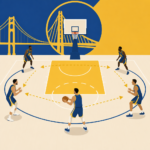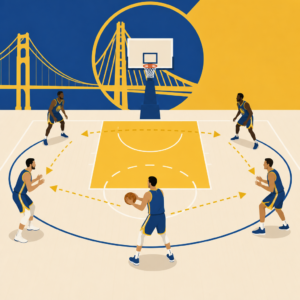


The corner three and the top-of-the-key three are both central to modern NBA offense, yet they are not equal shots. A corner three is the shortest three-pointer on the floor at 22 feet, while a top-of-the-key three is taken from the center above the break at roughly 23 feet 9 inches. That distance gap changes make percentages, defensive rotations, passing angles, rebounding patterns, and roster construction. When teams talk about shot quality, they are not discussing one generic three-point attempt. They are evaluating geometry, player skill, help coverage, and expected points per possession.
I have built scouting reports and play-type breakdowns around this distinction because it explains why some lineups produce efficient offense even without high-volume stars. The question matters for coaches designing spacing, front offices valuing specialist shooters, bettors projecting offensive efficiency, and fans trying to understand why one clean look is celebrated while another is merely acceptable. NBA analytics treats these attempts differently for a reason: they create different expected returns and demand different tradeoffs.
At a basic level, the corner three usually produces a higher field goal percentage because it is shorter and often arrives from inside-out ball movement that forces long closeouts. League-wide tracking data has consistently shown corner threes converted at a better rate than above-the-break threes. However, the top-of-the-key three can be more scalable. It is available in more actions, fits pick-and-roll spacing, opens driving lanes symmetrically, and is often taken by primary creators who bend defenses possession after possession. So the better shot depends on whether you mean the most efficient individual attempt, the most repeatable team action, or the shot that best supports an entire offensive ecosystem.
To evaluate corner three vs top-of-the-key three properly, you need to define a few terms. A corner three comes from either deep corner, where the sideline and baseline compress space. The top-of-the-key three is a specific above-the-break attempt from the middle slot, usually created through pick-and-roll, drive-and-kick action, trail offense, or five-out spacing. Analytics means using possession-level evidence such as effective field goal percentage, points per shot, turnover risk, offensive rebounding value, and lineup interaction rather than relying on aesthetic preference. Once those factors are separated, the debate becomes much clearer.
Why the Corner Three Is Usually the Most Efficient Shot
The corner three is usually the better shot on a per-attempt basis because the basket is closer and the pass often forces the defender into the longest possible recovery. A made corner three is still worth three points, but the shooter saves nearly two feet compared with the top of the key. In NBA terms, that is a meaningful reduction in difficulty. Tracking from recent seasons has generally placed corner three accuracy in the high thirties to low forties league-wide, while above-the-break accuracy has sat several points lower. Even a three-point gap in percentage materially changes offensive rating over hundreds of attempts.
The geometry is favorable too. When a driver attacks the middle and the low man commits to protect the rim, the corner is the natural release valve. The pass is direct, the read is simple, and the catch is frequently uncontested. Teams like the 2014 Spurs, 2015 Hawks, and several Mike Budenholzer offenses used this principle relentlessly: collapse the paint, force a tagging decision, then spray the ball to the corner. Bruce Bowen built a career on it. P.J. Tucker extended his value deep into his thirties on the same shot. These were not accidental specialists; they were role players optimized for the highest-value spot-up area on the floor.
Another reason the corner three grades so well is role clarity. Corner shooters are usually taking catch-and-shoot attempts rather than self-created pull-ups. Catch-and-shoot threes outperform off-the-dribble threes almost every season. The player can load his feet early, see the pass coming, and shoot in rhythm. That rhythm matters. Coaches frequently teach weak-side spacing so the shooter stays one pass away, knees bent, hands ready, and visible to the ball handler. When the offense works, the shot arrives on time and on target. From an analytics perspective, those are repeatable process indicators, not luck.
Why the Top-of-the-Key Three Matters More Than the Percentages Suggest
If the corner three is usually more efficient, why do elite offenses still generate so many top-of-the-key threes? Because the middle of the floor drives almost everything. The top-of-the-key three is not merely a shot; it is a pressure point created by actions that also produce layups, free throws, short-roll passes, and wing kickouts. In a standard high pick-and-roll, the on-ball defender fights over the screen, the big drops or shows, and the ball handler reads the coverage. If the defense goes under, the pull-up three from the top is the immediate punishment. Stephen Curry, Damian Lillard, Trae Young, Luka Doncic, and Tyrese Haliburton have all warped schemes with that threat.
This shot also scales better across offensive volume. There are only two corners, and both can be occupied by stationary spacers. The top of the floor can be accessed in transition, in drag screens, in ghost actions, in double-drag sets, and in late-clock bailouts. It is available to stars every game regardless of opponent. That matters because the hardest thing in NBA offense is not identifying the single most efficient shot in theory; it is manufacturing good shots against set playoff defenses that know your first option. The top-of-the-key three remains available when the corners are denied and rotations are sharp.
There is also a lineup effect. A credible top-of-the-key shooting threat stretches the defense vertically and horizontally at once. The screener’s defender must come higher. Nail help becomes riskier. Backline rotations lengthen. Even misses can be useful because the defense had to distort itself to prevent the drive. A team built around a great pull-up threat often improves every teammate’s efficiency. That indirect value does not always appear when comparing raw percentages of shot locations, but it is real in film and in offensive rating.
Analytics Comparison: Expected Value, Creation Burden, and Playoff Reliability
The cleanest way to compare the shots is to split them into three questions: Which is easiest to make, which is easiest to create, and which survives playoff scouting? The corner three usually wins the first. The top-of-the-key three often wins the second and can share the third when the shooter is elite. Expected value starts with simple math: if a corner specialist hits 40 percent, the shot yields 1.20 points per attempt before accounting for putbacks or turnovers. If a top shooter makes 36 percent from the top, that yields 1.08 points per attempt. On paper, the corner shot wins comfortably.
But the creation burden changes the analysis. A corner three often depends on a chain of successful events: paint touch, help commitment, accurate pass, and preserved spacing. A top-of-the-key three can be generated by one great ball handler reading one coverage. That means the offense may reach it more often under stress. In other words, efficiency and accessibility are not the same variable. The best offenses balance both.
| Shot Type | Typical Distance | Usual Creator | Common Efficiency Profile | Main Limitation |
|---|---|---|---|---|
| Corner three | 22 feet | Drive-and-kick or swing pass | Higher percentage, strong catch-and-shoot value | Dependent on paint pressure and available corner spacing |
| Top-of-the-key three | 23 feet 9 inches | Pick-and-roll ball handler or trailer | Lower percentage, but more self-created volume | Harder shot with greater defensive attention |
Playoffs sharpen the distinction further. Defenses hug corners, pre-rotate to the low man, and force role players to make extra decisions. At the same time, a true pull-up threat at the top can become the only reliable pressure source against a switch-heavy opponent. That is why postseason shot charts often favor stars generating above-the-break threes while role players see fewer pure corner looks. The corner three remains excellent, but it is easier to remove if the initiating action never gains advantage.
How Personnel and Scheme Decide Which Shot Is Better
No NBA analytics answer is complete without personnel context. If your roster has a heliocentric guard and a stretch big, the top-of-the-key three may be the engine of the offense. If your team thrives on rim pressure from multiple slashers and fields two strong corner spacers, the corner three may be the foundational endpoint. Dallas with Luka Doncic has long needed above-the-break pull-up gravity and slot shooting around spread pick-and-roll. Milwaukee at its best paired Giannis Antetokounmpo’s downhill force with corner spacing from Khris Middleton, Brook Lopez, and complementary wings. Different stars create different maps.
Handedness and passing angle matter too. A right-handed driver going left often sees the weak-side right corner differently than the top slot. Skip passes to the corner travel farther and invite stunts from long defenders. Slot or top kickouts may be shorter but arrive to more heavily contested shooters. Coaches script actions accordingly. Spain pick-and-roll, pistol action, hammer action, and flare screens all exist partly to manipulate whether the defense must protect the corner, the slot, or the middle pull-up.
Defensive philosophy changes the answer as well. Against drop coverage, a pull-up shooter from the top can feast. Against aggressive nail help and strong-side tags, the corner can be wide open all night. Against switching defenses with rangy wings, neither shot comes easily unless the offense forces a mismatch first. This is why analysts should avoid universal claims like “the corner three is always better.” It is usually the better percentage shot. It is not always the better strategic shot.
Rebounding and transition defense introduce another tradeoff. Corner shooters are closer to the baseline and often less involved in offensive rebounding. Misses from the top can create longer rebounds that favor guards, but they can also start transition the other way if floor balance is poor. Some coaching staffs prefer one profile over the other based on how quickly they can set their defense after a miss. That factor is smaller than shot quality, but over a season it affects lineup viability.
What the Best NBA Offenses Actually Prioritize
The smartest offenses do not choose between the corner three and the top-of-the-key three as if only one should exist. They build systems where each shot strengthens the other. The threat of the top pull-up drags the defense upward, opening rolls and low-man rotations that free the corners. The threat of elite corner spacing prevents help from collapsing, giving the ball handler cleaner pull-up windows. This is why five-out spacing, early drag screens, and quick decision rules have become standard across the league. The goal is not one favorite shot location. The goal is creating a decision tree in which every correct defensive choice still concedes something valuable.
Boston, Denver, and Oklahoma City have shown versions of this balance. Boston uses drive-and-kick depth plus above-the-break volume to overwhelm coverage math. Denver’s Jokic actions bend the middle, then punish overhelp with weak-side shooters. Oklahoma City uses Shai Gilgeous-Alexander’s rim pressure to generate both corners and slot threes while maintaining ball security. In each case, analytics is not just a shot chart. It is an integrated model of spacing, touch time, matchup hunting, and pass timing.
So which is the better shot in NBA basketball? For pure efficiency on an individual attempt, the corner three is usually better. For self-created volume, offensive scalability, and late-clock utility, the top-of-the-key three often matters more. The best answer is situational: build your offense to threaten both, then lean into the one your stars and lineups can create repeatedly against playoff defense. If you are studying NBA analysis, start with this principle: shot location only tells the truth when paired with context. Use that lens across the rest of this analytics hub, and every possession makes more sense.
Frequently Asked Questions
Why is the corner three usually considered a better shot than the top-of-the-key three?
The corner three is generally viewed as the more efficient shot because it is the shortest three-pointer in NBA basketball. From the corner, the line measures 22 feet, while a top-of-the-key three is taken from above the break at about 23 feet 9 inches. That difference may not sound enormous, but at NBA speed and volume, even a little less distance can have a meaningful impact on shooting percentage. A shorter shot is easier to repeat mechanically, often requires less power, and tends to be more forgiving for role players who are asked to space the floor rather than create off the dribble.
There is also a tactical reason the corner three carries so much value. Defenses are often forced to help in the lane against drives, post-ups, and pick-and-roll action, and that help frequently comes from the weak-side corner. Once the defense collapses, the pass to the corner becomes one of the cleanest kick-out reads on the floor. In many offenses, that means the corner shooter is receiving the ball in rhythm, with feet set, after the defense has already been compromised. By contrast, a top-of-the-key three is often more visible to the defense, easier to contest with a direct closeout, and more likely to come against a defender who is already in the play.
That said, “better” depends on context. The corner three can be the best shot in terms of raw efficiency, but the top-of-the-key three can be more valuable for shot creation, spacing geometry, and offensive versatility. Teams love corner threes because they are high-percentage shots, but they also need above-the-break shooting to keep the middle of the floor open. In other words, the corner three is often the more efficient shot, while the top-of-the-key three may be the more structurally important one for an offense that wants to function at a high level.
How does the distance difference between a corner three and a top-of-the-key three affect shooting percentages?
Distance matters more than many casual fans realize. A corner three at 22 feet is nearly two feet shorter than a top-of-the-key three, and in elite basketball, that gap can shift efficiency in a real way. A shorter shot usually means a flatter demand on strength, less room for mechanical breakdown, and a slightly bigger margin for error on release timing and arc. For spot-up players especially, that can translate into better percentages over the course of a season.
The numbers around the league have consistently reflected this reality. Corner threes are typically converted at a higher rate than above-the-break threes, which include top-of-the-key attempts. Even strong shooters often post a noticeable split between the two zones. That does not automatically mean every player is better from the corner, because player comfort, handedness, footwork, and role all matter. Some shooters prefer the visual symmetry of shooting from the top, where the backboard is centered and the passing angle is cleaner. Others thrive from the corner because the shot is shorter and often arrives off simple catch-and-shoot opportunities.
The other factor is shot type. Top-of-the-key threes include more pull-ups, late-clock attempts, and shots taken out of high pick-and-roll actions. Those are naturally harder than a stationary corner catch-and-shoot. So when percentages differ, it is not only because of the extra distance, but also because the top-of-the-key three is often taken in tougher circumstances. Evaluating efficiency properly means separating pure shot distance from the offensive context in which the shot is created.
If the corner three is more efficient, why do NBA teams still take so many top-of-the-key threes?
NBA teams still prioritize top-of-the-key threes because the middle of the floor is where much of the offense begins and where defenses are most vulnerable to being stretched. The top-of-the-key three is central to pick-and-roll basketball. When a ball handler uses a screen and the defense goes under, the pull-up three from the top becomes available. When the defense drops too deep, that same shot punishes conservative coverage. If teams could only threaten from the corners, defenses would be far more comfortable packing the paint and shrinking driving lanes.
There is also a spacing reason. A credible shooter above the break forces defenders to honor the center channel of the floor. That opens seams for drives, pocket passes, slips, and post entries. In modern five-out systems, a shooter at the top can distort the defense before the ball even moves. The shot may be less efficient on average than a corner three, but it often creates the chain reaction that produces other efficient shots elsewhere. Coaches are not just hunting the single best shot percentage; they are building an ecosystem of spacing and decision-making.
Another major point is player creation. Star guards and wings generate a huge portion of their offense from above-the-break threes, especially from the top. Those attempts may be harder, but they are also scalable and available in moments when a defense takes away simpler looks. In playoff basketball, when rotations sharpen and corner shooters are more closely tracked, the ability to create a top-of-the-key three off the dribble becomes incredibly valuable. So while the corner three often wins on efficiency, the top-of-the-key three remains essential because it is tied directly to initiation, self-creation, and the overall health of a modern offense.
How do defensive rotations and rebounding differ between corner threes and top-of-the-key threes?
Defensive coverage changes significantly depending on where the three-point attempt originates. On a corner three, the help defender is often making a difficult choice: stay attached to the corner shooter or tag the roll man, stunt at a driver, or protect the rim. That conflict is exactly why offenses love putting shooters in the corners. If the defense helps too much, the kick-out pass creates a clean look. If the defense stays home, the offense may gain easier access to the paint. The closeout to the corner can also be longer and more delicate, because the defender has less room to recover and must avoid flying by along the baseline.
Top-of-the-key threes create different defensive demands. Because the shot comes from the center of the floor, contests can arrive more directly, and the defense usually has more support behind the primary defender. At the same time, a top-of-the-key shooter can be more dangerous in dribble handoff actions, pick-and-roll pull-ups, and quick swing-swing sequences. Defenses often build their scheme around preventing that central launch point from becoming comfortable, especially against elite pull-up shooters.
Rebounding patterns differ too. Missed corner threes often produce long rebounds that kick toward the wing, baseline, or opposite side, creating scramble situations. Since the shot comes from the edge of the floor, rebounding responsibilities can become more chaotic, especially if the defense has rotated heavily to contest. Missed top-of-the-key threes, on the other hand, tend to create rebound opportunities that are more centered, with guards and bigs converging from more traditional positions. Teams study these tendencies closely because shot location affects not only make percentage, but also transition defense, offensive rebounding chances, and who is in position when the ball comes off the rim.
What type of players and roster construction benefit most from corner threes versus top-of-the-key threes?
Corner threes are especially valuable for role players who can space the floor, make quick decisions, and defend their position. These players do not need to dominate the ball to have offensive impact. A strong corner shooter can punish help defense, keep the weak side occupied, and fit naturally next to stars who create paint touches. That is why so many contenders prioritize wings and combo forwards who can reliably hit from the corners. The skill is highly portable and tends to blend well with heliocentric creators, post scorers, and downhill guards.
Top-of-the-key threes, by contrast, are often tied to creators, movement shooters, and stretch bigs. A guard who can pull up from the top changes the math of every ball screen. A center who can shoot from above the break drags rim protection away from the basket and opens driving lanes that corner spacing alone cannot create. Teams built around dynamic pick-and-roll play often need top-of-the-key shooting to unlock their full offensive ceiling, even if those shots are a bit less efficient in a vacuum.
From a roster-building perspective, the best offenses usually need both. They want specialists who can bury corner threes when the ball is kicked out, and they want creators or frontcourt spacers who can threaten from the top to shape the defense from the middle. If a roster has only corner shooters, the offense can become overly dependent on stars generating collapse-and-kick situations. If it has only above-the-break shooters, it may lose some of the easiest spot-up value available. The smartest front offices balance the two shot types by pairing initiators, connectors, and finishers in a way that maximizes spacing across the entire arc rather than treating all threes as interchangeable.