
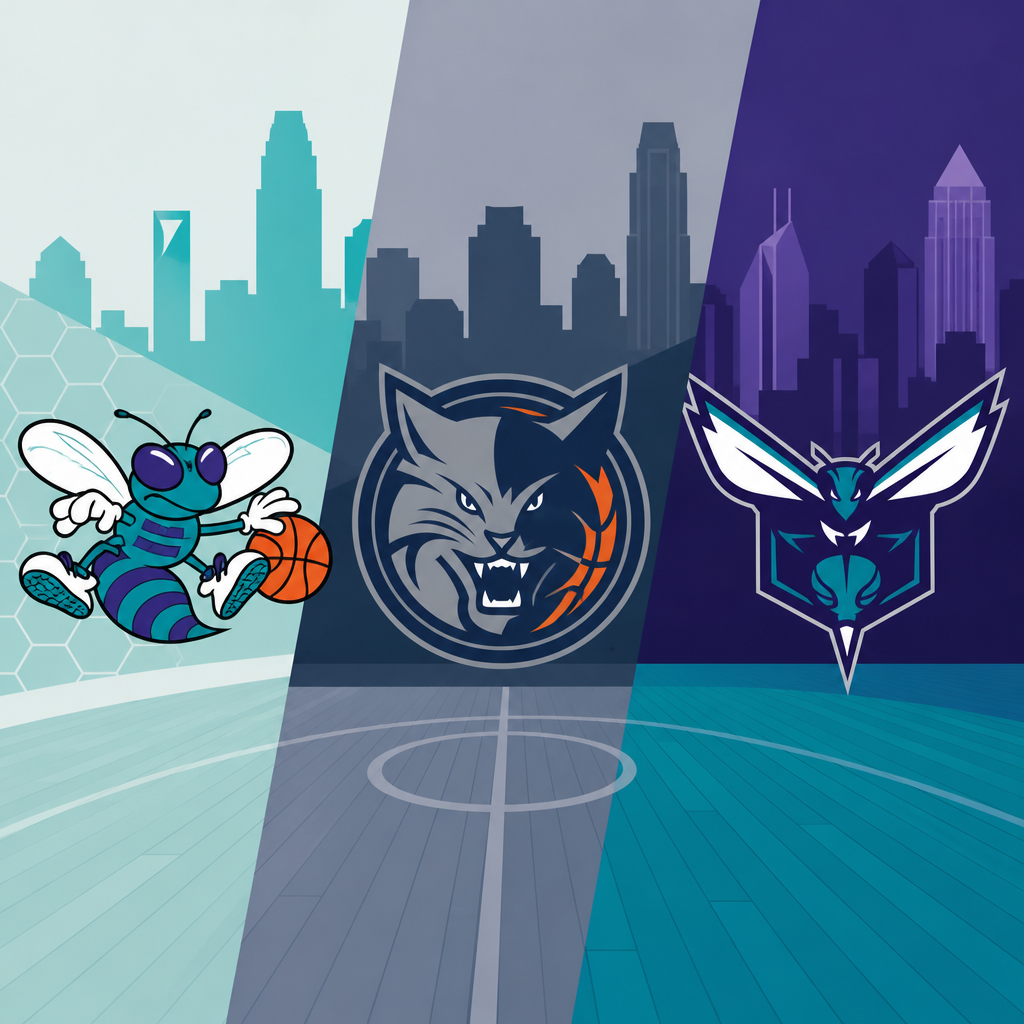
The Charlotte Hornets have one of the most unusual franchise stories in American professional sports, because their identity was interrupted, relocated, replaced, and then restored. To understand Charlotte Hornets history, you have to separate three connected but distinct chapters: the original Hornets expansion team that began play in 1988, the Bobcats years that started after the NBA returned to Charlotte in 2004, and the eventual return of the Hornets name in 2014. Each phase matters because team history in the NBA is not only about wins and losses. It is also about civic identity, branding, ownership decisions, league expansion policy, and the emotional bond between a city and its team.
In practical terms, the Hornets story explains how a franchise can leave while a basketball market remains viable, and how a name can carry more value than a roster. I have worked on NBA team history projects where Charlotte consistently stands out because fans still talk about logos, uniforms, attendance records, and ownership disputes with the same intensity as playoff runs. That is not nostalgia for nostalgia’s sake. The original Hornets were one of the league’s strongest early examples of how a distinct brand could become nationally relevant even before sustained postseason success arrived. The Bobcats, by contrast, became a case study in how difficult expansion can be when basketball performance and consumer trust do not develop together.
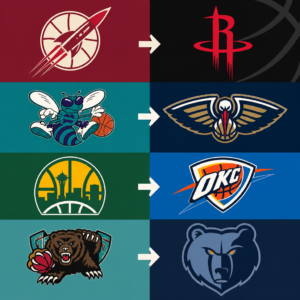
Several key terms help frame this history. An expansion team is a new franchise added by the league, usually built through an expansion draft, front-office hiring, and long-term roster development. A relocation happens when an existing franchise moves to another city. A franchise identity includes the team name, logos, colors, records, and historical lineage recognized by the league. Charlotte’s case involved all three concepts. The original Hornets relocated to New Orleans in 2002. Two years later, Charlotte received a new expansion team, the Bobcats. In 2014, after New Orleans rebranded as the Pelicans, Charlotte reclaimed the Hornets identity and, importantly, the NBA reassigned the original Hornets records from 1988 to 2002 back to Charlotte.
Why does this matter beyond local interest? Because Charlotte Hornets history reveals how modern sports leagues manage continuity, intellectual property, and fan loyalty. It also helps explain current perceptions of the franchise. When people assess the Hornets today, they are really reacting to a blended legacy: the excitement of the late 1980s and 1990s, the instability of the Bobcats era, and the symbolic power of reclaiming a beloved name. For anyone studying NBA teams, Charlotte is the clearest example that history can be broken on paper yet remain continuous in public memory.
The original Hornets and why Charlotte embraced them so quickly
The NBA awarded Charlotte an expansion franchise in 1987, and the Hornets debuted in the 1988-89 season under owner George Shinn. From the start, the team stood out visually and culturally. The teal and purple color scheme was fresh in a league still dominated by traditional palettes, and the Hugo the Hornet branding gave the club an immediately recognizable identity. Just as important, Charlotte responded with overwhelming fan support. The city had a strong college basketball culture, anchored by ACC loyalties, and it transferred that energy to the NBA faster than many league observers expected.
Attendance became a major part of the original Hornets story. During the late 1980s and throughout much of the 1990s, Charlotte ranked among the NBA’s attendance leaders. The Charlotte Coliseum, opened in 1988, was then the largest basketball arena in the league by capacity. Sellout crowds were common, and the Hornets proved that smaller markets could produce major-league atmosphere if the brand connected locally. That connection also spread nationally. Starter jackets, caps, and teal merchandise became staples far beyond North Carolina. In branding terms, the Hornets were ahead of their time.
On the court, early struggles were typical for an expansion team, but the franchise quickly found foundational players. Rex Chapman brought scoring punch. Dell Curry became one of the era’s premier sixth men and remains one of the most respected names in club history. Muggsy Bogues, at 5-foot-3 the shortest player in NBA history, gave the team a unique identity with his speed, passing, and toughness. Larry Johnson, selected first overall in 1991, became a star almost immediately, winning Rookie of the Year. Alonzo Mourning, drafted second overall in 1992, gave Charlotte an elite interior presence. Their 1993 playoff series victory over the Boston Celtics was the franchise’s first postseason series win and a landmark moment for the market.
Rise, playoff relevance, and the problems that drove the first Hornets away
By the mid-1990s, the Hornets were no longer merely an expansion novelty. They were a competitive Eastern Conference team with legitimate star power. The Johnson-Mourning core did not last, but Charlotte remained relevant through smart roster additions and trades. Glen Rice became one of the league’s best shooters and scorers, earning All-Star recognition. Vlade Divac brought passing skill from the center position. Anthony Mason added versatility and defense. Later, Eddie Jones, David Wesley, Jamal Mashburn, P.J. Brown, and Baron Davis helped sustain playoff-level basketball.
The most successful seasons of the original Charlotte Hornets came in the late 1990s and early 2000s. The team won 54 games in 1996-97 and 51 in 1997-98, then reached 49 wins in 1999-2000 and 44 in the lockout-shortened 1998-99 season. In 2000-01 and 2001-02, Charlotte won 46 and 44 games respectively and advanced to the second round both years. Paul Silas coached with a direct, defensive mindset, and the team regularly fielded lineups that balanced shot creation with veteran toughness. The Hornets were not title contenders in the Michael Jordan era, but they were credible, difficult, and usually entertaining.
Yet basketball success did not protect the franchise from deeper structural damage. George Shinn became increasingly unpopular in Charlotte for several reasons, including public disputes over arena financing, deteriorating relationships with local stakeholders, and a criminal trial in the late 1990s in which he was ultimately acquitted but suffered severe reputational damage. At the same time, the aging Charlotte Coliseum, despite its size, lacked the premium-revenue design of newer NBA arenas. As teams across the league pushed for luxury suites, club seating, and updated sponsorship inventory, the Hornets sought a new facility. Public support was weak, and a 2001 referendum on public funding for an arena failed.
The result was a collapse in trust between fans and ownership. Attendance, once a point of civic pride, fell sharply by the early 2000s. This is a crucial part of Charlotte Hornets history: the city did not reject NBA basketball itself as much as it rejected the relationship surrounding the franchise. In 2002, the NBA approved relocation to New Orleans. Officially, the Hornets moved, but culturally many Charlotte fans treated the departing club as something that no longer represented them.
The Bobcats years: expansion reset, hard lessons, and a lost identity
Charlotte regained an NBA team faster than many cities would have. In 2004, the league granted a new expansion franchise, the Charlotte Bobcats, with BET founder Robert L. Johnson as majority owner. The name reflected North Carolina wildlife, but it never generated the same attachment as Hornets. The new team entered the league with all the normal disadvantages of expansion: limited top-end talent, shallow depth, and the need to construct basketball operations from scratch in a more analytically demanding era.
There was also a practical issue many casual fans missed. The Bobcats inherited the market, not the original Hornets records. For a city that still identified strongly with Bogues, Johnson, Mourning, Curry, and the teal era, that separation felt artificial. The Bobcats had to ask fans to emotionally start over while many were still waiting for the old identity to come back. That burden was heavier than it looked from outside the market.
On the court, the Bobcats had occasional useful pieces but little sustained momentum. Emeka Okafor won Rookie of the Year in 2004-05 and gave the team a defensive anchor. Gerald Wallace became the franchise’s first All-Star and embodied effort, athleticism, and toughness. Raymond Felton, Stephen Jackson, and Boris Diaw all had stretches of relevance. Michael Jordan, initially a minority investor, became majority owner in 2010, giving the franchise the most famous basketball figure in the sport, but ownership prestige did not immediately solve roster construction issues.
| Era | Years | Name | Key figures | Historical significance |
|---|---|---|---|---|
| Original franchise | 1988-2002 | Charlotte Hornets | Muggsy Bogues, Larry Johnson, Alonzo Mourning, Dell Curry, Glen Rice, Baron Davis | Built a powerful brand, drew elite attendance, reached multiple playoffs, then relocated |
| Expansion return | 2004-2014 | Charlotte Bobcats | Emeka Okafor, Gerald Wallace, Stephen Jackson, Michael Jordan | Reestablished NBA presence but struggled competitively and commercially |
| Restored identity | 2014-present | Charlotte Hornets | Kemba Walker, LaMelo Ball, current ownership groups and executives | Recovered original branding and reunified franchise history in Charlotte |
The best Bobcats season came in 2009-10 under coach Larry Brown, when Charlotte went 44-38 and reached the playoffs for the first time as the Bobcats. That team defended hard, played slowly, and relied on Wallace, Jackson, Diaw, and Felton for enough offense to compete. It was a respectable achievement, but it did not transform the franchise. Brown departed after the following season, the roster plateaued, and the team soon hit a historic low. In 2011-12, during the lockout-shortened 66-game season, the Bobcats went 7-59, finishing with a .106 winning percentage, the worst in NBA history for a season of any length. That record became the defining shorthand for the era.
The Bobcats years matter because they show that league reentry alone does not restore a market. Charlotte had an arena by then, what is now Spectrum Center, originally opened in 2005 as Charlotte Bobcats Arena. It had modern revenue features and downtown visibility. But the team still lacked an identity that resonated across generations. In my experience reviewing fan behavior around franchise rebrands, this is where Charlotte differs from standard expansion stories. The city did not need to be taught pro basketball from zero. It needed emotional reconciliation.
The return of the Hornets name and how Charlotte recovered its basketball lineage
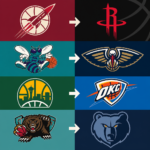
The path back opened when New Orleans owner Tom Benson announced in 2013 that his franchise would change its name from the Hornets to the Pelicans. That decision reflected Louisiana identity and created a rare opportunity. Charlotte moved quickly to reclaim the Hornets brand, and the NBA approved the Bobcats’ rename to the Charlotte Hornets effective for the 2014-15 season. This was more than a cosmetic update. It was one of the most important brand restorations in league history.
The NBA then made a historically significant records decision. Charlotte would retain the Bobcats’ 2004-2014 history and also recover the original Hornets history from 1988-2002. New Orleans, in turn, would be treated as beginning its own lineage in 2002, first as the Hornets in that market and then as the Pelicans. This clarified a confusion that had lingered for years. For Charlotte fans, it meant the franchise’s statistical and symbolic timeline was finally whole again.
The rebrand immediately improved the team’s public standing. The return of teal and purple, Hugo’s revival, and renewed references to Bogues, Curry, Johnson, and Mourning reconnected the organization with memories people actually wanted to celebrate. Kemba Walker became the central on-court figure of the restored Hornets era, earning multiple All-Star selections and carrying several competitive teams, including the 48-win 2015-16 squad. Later, LaMelo Ball brought fresh national attention with his passing vision and pace. Results have still been uneven, but the franchise now operates with a coherent identity, and that matters in every aspect of team building, from ticket sales to alumni engagement to long-term storytelling.
For anyone exploring NBA team histories, Charlotte is essential because it demonstrates that names, records, and civic memory are assets, not side notes. The original Hornets created one of basketball’s strongest local brands. The Bobcats proved how hard it is to thrive without that bond. The restored Hornets showed that history, when properly recognized, can become a strategic advantage. If you are building out coverage of NBA teams, use Charlotte as the model for how franchise history shapes the present, then continue to the related team history pages to compare how other markets handled expansion, relocation, and rebranding across different eras.
Frequently Asked Questions
When were the Charlotte Hornets first established, and why were they important to the city?
The original Charlotte Hornets were established as an NBA expansion franchise in 1988. Their arrival was a major moment for Charlotte because it gave the city a place in one of the biggest professional sports leagues in the United States at a time when Charlotte was still building its national profile. From the beginning, the team stood out. The Hornets quickly became known for their distinctive teal and purple color scheme, strong fan support, and energetic home atmosphere. In fact, the franchise developed a reputation for some of the most passionate attendance in the league during its early years, which helped prove that Charlotte could support major-league basketball.
The importance of the original Hornets went beyond wins and losses. They helped shape Charlotte’s modern sports identity and became one of the city’s most recognizable brands. During the late 1980s and 1990s, players such as Larry Johnson, Alonzo Mourning, Muggsy Bogues, Dell Curry, and later Glen Rice helped make the team nationally relevant. The Hornets also became popular with fans outside North Carolina because of their exciting style and memorable branding. For many people, the original Hornets era represents the emotional foundation of Charlotte Hornets history, because it was the chapter that created the bond between the city and the franchise name.
Why did the original Charlotte Hornets leave Charlotte and become the New Orleans franchise?
The original Hornets left Charlotte in 2002 after years of growing tension involving arena issues, ownership controversies, and a decline in local support. While the team had been one of the NBA’s stronger attendance draws during much of its early history, the relationship between the franchise and the city became strained in the late 1990s and early 2000s. A major point of conflict centered on the team’s desire for a new arena, which ownership argued was necessary to remain financially competitive in the modern NBA.
At the same time, public frustration with ownership hurt the franchise’s standing in the community. As those issues worsened, attendance dropped significantly, despite the team still fielding competitive rosters at various points. Eventually, ownership sought relocation, and the NBA approved a move to New Orleans. As a result, the original Charlotte Hornets franchise became the New Orleans Hornets beginning with the 2002–03 season. This is the part of Charlotte Hornets history that often causes confusion, because the original franchise technically moved away, but the story of basketball in Charlotte did not end there. The city would later receive a new NBA team, creating a separate chapter that eventually reconnected with the Hornets identity.
What were the Charlotte Bobcats, and how do they fit into Charlotte Hornets history?
The Charlotte Bobcats were the NBA expansion team awarded to Charlotte after the league returned to the city in 2004. After the original Hornets relocated to New Orleans, Charlotte was without an NBA team for two seasons. The NBA then granted the city a new franchise, which began play as the Bobcats in the 2004–05 season. This means the Bobcats were not simply a continuation of the relocated Hornets franchise in a legal or historical sense at that time; they were a brand-new team created to restore NBA basketball to Charlotte.
The Bobcats years are an essential middle chapter in Charlotte Hornets history because they kept the city in the league and preserved the market until the Hornets name could eventually return. Although the Bobcats never matched the cultural popularity of the original Hornets brand, the franchise still played an important role. It gave Charlotte a fresh start, brought professional basketball back to local fans, and laid the groundwork for the identity change that would come later. The Bobcats era also included key organizational developments, roster-building efforts, and ownership changes, including Michael Jordan becoming the majority owner. Even though many fans never fully embraced the Bobcats name the way they had embraced the Hornets, that period was crucial because it bridged the gap between the loss of the original franchise and the restoration of the city’s historic basketball identity.
How and why did the Hornets name return to Charlotte in 2014?
The Hornets name returned to Charlotte in 2014 because the basketball landscape changed in a way that made the original identity available again. In 2013, the New Orleans franchise rebranded from the Hornets to the Pelicans, reflecting a stronger connection to Louisiana and opening the door for Charlotte to reclaim the Hornets name. This created a unique opportunity for the Bobcats organization to bring back a brand that still had deep emotional meaning for fans in North Carolina.
Charlotte officially announced that the Bobcats would become the Hornets starting with the 2014–15 season. The move was widely celebrated because many fans had never stopped identifying with the Hornets name, colors, and history. The rebrand was more than a cosmetic change. It restored a sense of continuity between the city and its basketball past, reconnecting the modern franchise with one of the most beloved identities in the NBA. The return of the Hornets name also had a business and branding impact, generating renewed excitement, merchandise sales, and broader fan engagement. In practical terms, 2014 marked the moment when Charlotte’s NBA team once again matched the name that many people felt had always belonged to the city.
How does the NBA officially handle the history of the original Hornets, the Bobcats, and the current Charlotte Hornets?
This is one of the most unusual and important parts of Charlotte Hornets history. After Charlotte reclaimed the Hornets name, the NBA approved a historical realignment that treated the current Charlotte franchise as including the history of the original Hornets from 1988 to 2002, along with the Bobcats years from 2004 to 2014. In other words, the current Charlotte Hornets are officially recognized as carrying the full lineage of NBA basketball in Charlotte, even though there was a gap between 2002 and 2004 when the city did not have a team.
As part of that arrangement, the records and history of the New Orleans franchise were reset to begin with its time in New Orleans. That means Charlotte’s official franchise history includes the original Hornets era, the Bobcats era, and the renamed Hornets era that began in 2014. This resolution matters because it helps clarify what can otherwise seem like a confusing timeline. For fans, it means the achievements, players, and memories from the 1988–2002 Hornets years are once again formally connected to Charlotte. For historians and casual readers alike, the simplest way to understand it is this: the city of Charlotte now officially holds its original NBA basketball heritage, the Bobcats years serve as the bridge period, and the current Hornets identity represents the restoration of that full story.