
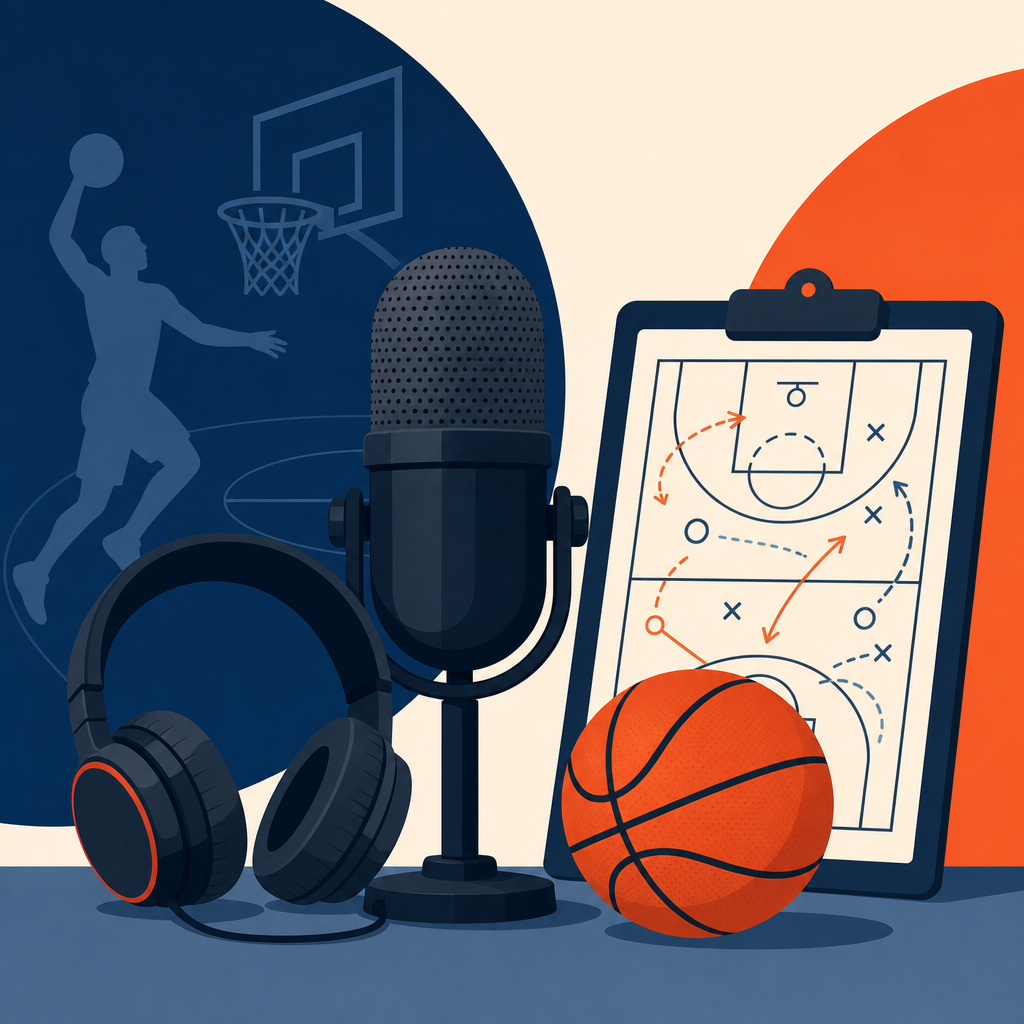
Following the NBA well means doing more than checking scores, watching highlights, or reacting to social media clips. The best NBA podcasts for fans who want to go deeper into the game help listeners understand why teams win, how schemes change possessions, what front offices value, and which long season trends matter more than one hot shooting night. In practical terms, a strong NBA podcast translates film study, salary cap mechanics, player development, injury context, and league politics into language a committed fan can use. I have relied on podcasts for years while tracking the league daily, and the right shows consistently sharpen how you watch games, read box scores, and evaluate narratives. This hub is designed for fans who want a smarter way of following the NBA, whether you are building a weekly listening rotation, learning advanced concepts, or deciding which hosts match your level of knowledge. It also serves as the central guide for the broader “Following the NBA” topic, helping you connect podcasts with news habits, game viewing, analytics, and offseason coverage. The value is simple: better podcasts make you a better observer of basketball.
What makes an NBA podcast worth your time
The strongest NBA podcasts do three things at once: they inform, interpret, and teach. Informing means giving accurate news, injury updates, transaction context, and schedule implications without chasing every rumor. Interpreting means explaining what those developments mean for a team’s offense, defense, playoff ceiling, or roster-building timeline. Teaching means leaving the listener with concepts they can apply independently, such as how weak-side help shapes rim attempts or why second-side creation matters against switching defenses. In my experience, most fans outgrow general recap shows quickly because they want to know more than who scored thirty. They want to know how a guard manipulated drop coverage, why a coach changed the rotation, or whether a five-out lineup is sustainable over eighty-two games.
Depth also depends on format. Some podcasts are fast daily products built around headlines and immediate reaction. Others are longer conversations driven by film review, cap analysis, or team-building philosophy. Neither style is automatically better. Daily shows help you stay current through the regular season, trade deadline, and playoffs. Longer-form podcasts are often better for understanding the game’s deeper layers, especially if hosts reference Synergy play types, Cleaning the Glass lineup data, NBA Advanced Stats, or CBA restrictions. The best listening mix usually includes one show for daily league awareness and two or three that go deeper on tactics and team construction.
Host credibility matters too. Former players can explain locker-room dynamics and on-court decision-making in a way outsiders sometimes miss, but playing experience alone does not guarantee sharp analysis. Reporters often provide sourcing and organizational context. Analysts with film backgrounds can identify actions, counters, and defensive coverages more precisely. Salary cap specialists bring discipline to discussions that casual fans often oversimplify. The best NBA podcasts combine these strengths or at least know their lane. When hosts confidently speak beyond their expertise, depth turns into noise.
Best NBA podcasts by listening goal
If your main goal is broad league coverage, “The Lowe Post” has long been one of the most reliable places to start. Zach Lowe blends reporting, game analysis, and measured opinion better than most national hosts. He can move from discussing a team’s Spain pick-and-roll frequency to the practical challenge of fitting a second apron roster, and that range is rare. For listeners who want a smart weekly overview of the NBA without losing tactical detail, it remains a benchmark.
For pure game breakdown, “Thinking Basketball” stands out. Ben Taylor’s work is especially useful for fans trying to understand what actually drives winning possessions. Episodes often focus on decision-making, offensive advantages, defensive rotations, and historical comparison rather than hot takes. If you want to improve how you watch the game, this is one of the clearest recommendations. It rewards active listening because the concepts apply directly when you sit down for the next national TV game.
For salary cap, team-building, and transaction logic, “Dunc’d On Basketball NBA Podcast” is one of the most valuable subscriptions in the space. Nate Duncan and Danny Leroux treat roster construction with unusual rigor. They discuss bird rights, trade exceptions, apron constraints, draft pick value, and extension timing in a way that mirrors how front offices actually think. Even when you disagree with their player evaluations, the framework is useful. It teaches you why some rumored trades never had a realistic chance of happening.
For daily news and fan-friendly discussion, “The Hoop Collective” offers strong utility. Brian Windhorst, Tim Bontemps, and Tim MacMahon are plugged in across the league and especially useful around major inflection points such as free agency, the trade deadline, and playoff series. Their conversations are less technical than some film-heavy shows, but they often explain the political and organizational side of the NBA that shapes what ends up on the floor.
For fans who like player perspective without sacrificing substance, “The Old Man and the Three” has produced some of the best interview episodes in basketball media. JJ Redick’s interviewing style tends to draw out specific details about preparation, role acceptance, spacing, and coaching communication. Interview quality varies by guest, but the best episodes reveal how NBA players think through reads, scouting reports, and development in a way that broadens a fan’s understanding.
| Podcast | Best for | Why deeper fans like it |
|---|---|---|
| The Lowe Post | Balanced league analysis | Combines reporting, strategy, and roster context |
| Thinking Basketball | Film and concepts | Explains actions, counters, and winning habits clearly |
| Dunc’d On Basketball | Cap and team building | Breaks down transactions using CBA logic |
| The Hoop Collective | League news and context | Connects reporting to team direction and timing |
| The Old Man and the Three | Player interviews | Reveals preparation, roles, and locker-room perspective |
How podcasts help you follow the NBA smarter
A good NBA podcast does not replace watching games; it upgrades what you notice. After listening to strong analysts for a few months, most fans start seeing the game in sequences instead of isolated plays. You notice who sets the screen angle, how the low man tags the roller, whether a defense is top-locking a shooter, and why a team keeps targeting the same weak defender in crunch time. That change matters because modern NBA basketball is less about memorizing star names and more about understanding ecosystems. A great scorer can look ordinary if spacing collapses, and an average shooter can become crucial if he makes instant decisions that preserve offensive flow.
Podcasts are also one of the best ways to track the calendar of the league. During the opening month, good hosts explain which small-sample trends deserve caution. In December and January, they identify which teams are solving structural issues and which are simply beating weak opponents. Around the trade deadline, the best shows separate possible deals from fantasy trades built on internet logic. In the playoffs, they help listeners understand matchup adjustments from game to game, including why a backup center disappears in one series and becomes essential in the next. That seasonal framing is one of the biggest advantages of audio analysis over random highlight content.
For many fans, the hidden benefit is efficiency. You can absorb informed analysis while commuting, working out, or doing routine tasks. That makes podcasts the easiest way to keep up with eighty-two games per team without trying to watch everything live. The key is to use them as a structured information system. Choose one daily or semi-daily show, one tactical show, and one front-office-oriented show. That combination gives you news, interpretation, and deeper context without overwhelming your week.
What deeper NBA coverage should include
If you want to go deeper into the game, listen for specific markers of quality. First, strong podcasts define terms instead of assuming understanding. When a host says a team uses “drop,” “switch,” “ICE,” or “show,” they should explain what the coverage is trying to concede and what it is trying to take away. Second, they should connect numbers to film. Effective analysts do not cite offensive rating or true shooting percentage as decoration. They explain why the number moved, which lineup combinations drove it, and whether the change is likely to hold.
Third, quality NBA podcasts address roster economics. Following the NBA comprehensively means understanding not just basketball tactics but the restrictions teams operate under. The current collective bargaining agreement makes apron rules, mid-level exceptions, sign-and-trade limitations, and extension windows central to roster planning. A show that ignores these realities can sound persuasive while offering unrealistic conclusions. This is why cap-focused episodes are valuable even for fans more interested in games than transactions.
Fourth, the best podcasts acknowledge uncertainty. Basketball analysis is not weakened by nuance; it is strengthened by it. When hosts discuss a young player, they should separate current production from long-term projection. When they discuss a contender, they should distinguish regular-season efficiency from playoff viability. When they discuss coaching, they should note the difference between philosophical preference and personnel necessity. I trust podcasts more when they explain tradeoffs clearly instead of forcing every topic into winner-loser framing.
How to choose the right NBA podcasts for your fan profile
Different fans need different listening stacks. If you are newer to serious NBA analysis, start with broad shows that explain ideas in plain language before moving into specialist content. “The Lowe Post” and “The Hoop Collective” are often good entry points because they mix league stories with enough strategy to build vocabulary. Once those concepts feel familiar, add “Thinking Basketball” for deeper film ideas and a cap-focused show for roster logic.
If you already watch games closely, prioritize shows that reward that effort. Film-heavy podcasts are best when you can picture the action being described. After a marquee matchup, listening to breakdowns of how a team attacked empty-corner pick-and-rolls or hid a weak defender off-ball can be more useful than another recap of the final score. Serious fans often benefit from listening after watching, because the analysis locks observations into place.
Team-specific listeners should mix local and national coverage. A good beat-oriented podcast can explain a rotation battle, coach-player tension, developmental priority, or front office motive that national shows reasonably skip. But relying only on team media can narrow your lens. National NBA podcasts supply comparison points: how your team’s defense stacks up league-wide, how its cap sheet looks next to peers, and whether its timeline is actually promising or just familiar. The smartest fans balance both views.
There is also value in setting expectations by episode type. Preview episodes help before the season. News reaction matters during the calendar grind. Mailbags are useful because they often answer the exact questions serious fans have, such as whether a contender can survive with limited wing size or how to value a non-shooting creator in the postseason. Postgame instant reactions can be entertaining, but they are rarely the deepest format unless paired with film review later.
Building a complete “Following the NBA” routine
This hub exists because following the NBA comprehensively is a system, not a single habit. Podcasts should connect to the other ways you track the league. Start with a reliable news source each morning so you know injuries, lineup changes, and schedule context. Use podcasts to interpret that information. Watch at least one full game or condensed game most nights if possible. Then check trusted statistical resources like NBA.com/stats, Basketball-Reference, Cleaning the Glass, or Synergy-derived reporting to verify whether what you heard matches the data. That loop turns passive fandom into informed observation.
Within a Fan Guide structure, podcasts are the bridge between surface-level awareness and deeper literacy. They help explain what to watch for in national broadcasts, why certain matchups matter in the standings, how award races are framed, and which offseason decisions shape the next season before opening night arrives. They also prepare you for adjacent topics that deserve their own articles in this sub-pillar: how to follow NBA news without getting misled, how to understand advanced stats, how to watch League Pass efficiently, how to track the trade market, and how to follow the draft and free agency as part of one continuous league cycle.
The best routine is sustainable. A fan does not need twenty hours of content each week. Two or three high-quality episodes, plus targeted listening during major NBA moments, is enough to stay informed and steadily get smarter. If you want the simplest formula, begin with one balanced national show, one deeper tactical show, and one cap or front-office show. Keep that mix for a month, notice which hosts consistently teach you something new, and build from there. The best NBA podcasts for fans who want to go deeper into the game are not just entertaining background audio. They are one of the clearest paths to understanding the league on a higher level, from nightly strategy to long-term team building. Start with a small rotation, listen actively, and let it reshape how you follow the NBA every week.
Frequently Asked Questions
What makes an NBA podcast useful for fans who want to understand the game more deeply?
The best NBA podcasts do far more than recap final scores or repeat the biggest headlines from the night before. A truly useful show helps listeners understand the reasons behind what they are watching. That means explaining offensive and defensive schemes, identifying how certain matchups shape a game, and showing how coaching decisions affect pace, spacing, shot quality, and late-game execution. Instead of treating every result as a simple win or loss, strong NBA podcasts explain process, sustainability, and context.
They also help fans connect different layers of the league. A deeper podcast may move from film breakdown to roster construction, then from roster construction to salary cap limitations, and from there into trade logic or long-term front office planning. That kind of analysis matters because the NBA is rarely about a single possession in isolation. Team identity is built through player development, health, lineup combinations, contract structure, and strategic adaptability over an 82-game season and beyond.
Another sign of a valuable podcast is that it can translate complex ideas into language that makes sense without oversimplifying the sport. Good hosts can explain concepts like drop coverage, weak-side help, empty-corner pick-and-rolls, second-side creation, tax aprons, or replacement-level depth in a way that makes listeners feel smarter rather than overwhelmed. For fans who want to go deeper, the ideal NBA podcast is one that sharpens how they watch games, not just one that gives them more opinions to repeat online.
Are film breakdown podcasts better than news-driven NBA podcasts?
Not necessarily. They serve different purposes, and the best choice depends on what kind of understanding you want to build. Film breakdown podcasts are excellent for fans who want to learn how the game works on the court. These shows often focus on spacing, defensive rotations, screening angles, shot creation, and the little details that decide possessions. If you want to understand why one team’s offense creates easier looks than another’s, or why a defense keeps giving up corner threes, film-focused podcasts are extremely valuable.
News-driven NBA podcasts, however, can be just as important when they are done well. The league is shaped by more than X’s and O’s. Injuries, workload management, coaching changes, front office priorities, contract negotiations, and collective bargaining rules all influence what happens on the floor. A smart news-based podcast can help listeners make sense of trade rumors, roster strategy, and organizational timelines. That kind of knowledge is essential for understanding why teams make certain decisions even when those moves seem confusing in the moment.
For most fans, the strongest approach is a mix of both. Film study teaches you how possessions are won, while news and cap coverage teach you why teams are built the way they are. A great NBA podcast diet usually includes one show that explains tactics, one that covers the business side of the league, and one that ties everything together through broader analysis. Going deeper into the NBA is less about choosing one style over another and more about combining multiple perspectives into a fuller view of the sport.
Can NBA podcasts really help casual fans understand advanced stats and analytics?
Yes, and the best ones are especially helpful because they put numbers in context. Advanced stats can be intimidating when they are presented as isolated acronyms or used as debate weapons. But strong NBA podcasts explain what those metrics are measuring, what their limitations are, and how they should be paired with film and common sense. For example, a good host will not just mention offensive rating, true shooting percentage, or on-off differential. They will explain why those numbers matter, when they can be misleading, and what they reveal about style, role, and team environment.
This is important because analytics are most useful when they clarify patterns rather than replace observation. A thoughtful podcast might explain why a player’s shooting efficiency has improved because he is getting more corner threes, playing next to a better creator, or facing second units more often. It may also point out where the numbers need caution, such as small sample sizes, unusual lineup contexts, or role changes caused by injuries. That kind of nuance helps casual fans become more confident without turning analysis into jargon for its own sake.
Over time, podcasts can train listeners to ask better questions. Instead of saying a player is simply “good” or “bad,” fans start thinking about usage, defensive versatility, decision-making under pressure, rebounding position, foul discipline, and lineup fit. That shift is what makes analytics meaningful. The right NBA podcast does not ask listeners to memorize metrics. It teaches them how to use data as one tool among many for understanding what is actually happening in games and across the season.
Which topics should the best deep-dive NBA podcasts cover besides game recaps?
If a podcast is designed for fans who want to go deeper into the game, it should regularly move beyond surface-level recaps and cover the full ecosystem of the NBA. One major area is player development. Listeners should hear about skill growth, role changes, age curves, coaching influence, and how young players evolve from prospects into rotation pieces, starters, or stars. Development often determines whether franchises rise or stall, so podcasts that explain this process provide real long-term insight.
Another essential topic is roster construction and salary cap strategy. The NBA is a talent league, but it is also a resource-allocation league. Great podcasts explain contract value, trade flexibility, tax penalties, draft capital, and how front offices balance short-term competitiveness with long-term optionality. This helps fans understand why some teams hold onto picks, why others consolidate depth for a star, and why certain contracts become difficult to move even when the player still has value on the floor.
Strong podcasts should also cover injuries, schedule dynamics, coaching philosophy, and broader league politics. Injury context is especially important because availability, recovery timelines, and post-injury performance can dramatically alter a team’s ceiling. Schedule analysis matters because travel, rest disadvantage, and back-to-backs can affect performance in ways that the standings do not immediately show. Coaching matters because systems shape player outcomes, and league politics matter because labor rules, ownership priorities, and media pressure often influence major decisions. The best deep-dive NBA podcasts understand that the league is interconnected, and they help fans see those connections clearly.
How can I choose the best NBA podcast for my listening style and level of knowledge?
The best way to choose is to start with what you want to improve as a fan. If you want to understand on-court tactics, prioritize podcasts with clear film-based explanations and hosts who can describe actions and counters without assuming every listener is already fluent in coaching language. If you are more interested in trades, free agency, and team-building, look for shows that spend time on contracts, draft picks, and front office incentives. If you want a broad education, choose a podcast that balances game analysis, league trends, and roster strategy in one place.
It is also worth paying attention to style and chemistry. Some NBA podcasts are highly technical and dense, which can be great for dedicated fans but less ideal for someone still building a foundation. Others are more conversational, using humor and examples to make complex ideas easier to follow. Neither approach is automatically better. The right choice is the one you will consistently listen to and learn from. A podcast can be brilliant, but if the pacing, tone, or structure does not fit your habits, it will not be as useful.
Finally, sample a few episodes before committing. Listen to how the hosts handle disagreement, whether they separate evidence from hot takes, and whether they can explain both stars and role players with equal clarity. The strongest NBA podcasts do not chase every viral moment. They help listeners develop a more disciplined way of following the league. When you find a show that consistently teaches you something new about schemes, trends, roster logic, or player value, you have likely found a podcast worth keeping in your regular rotation.