
Finding the best basketball shoes for wide feet starts with understanding a simple problem: most performance basketball shoes are built on standard or narrow lasts, while many players need more forefoot volume, midfoot room, and a shape that does not squeeze the toes during hard cuts. Wide feet are not just a comfort issue. They affect balance, lockdown, blister risk, toe bruising, and even how confidently a player plants on defense. In years of testing shoes, fitting players, and comparing models across brands, I have seen the same pattern repeatedly: a shoe can have elite traction and cushioning, but if the platform pinches the foot, performance drops fast.
For basketball footwear, “wide” usually refers to either a naturally broad forefoot, a high-volume foot, or a player who needs more lateral space because of orthotics, toe splay, or swelling during long runs. “Court feel” means how close and connected your foot feels to the floor, especially during jab steps, changes of pace, and defensive slides. Some players want plush impact protection; others want a low, nimble ride. The best basketball shoes for wide feet balance those needs without creating pressure points. This hub article covers how to evaluate fit, which shoe categories suit different playing styles, and what features matter most if you need comfort and court feel at the same time. If you are building a full basketball equipment setup, footwear is the foundation, because every other piece of gear works better when your foot is stable inside the shoe.
What Wide-Foot Players Should Look for First
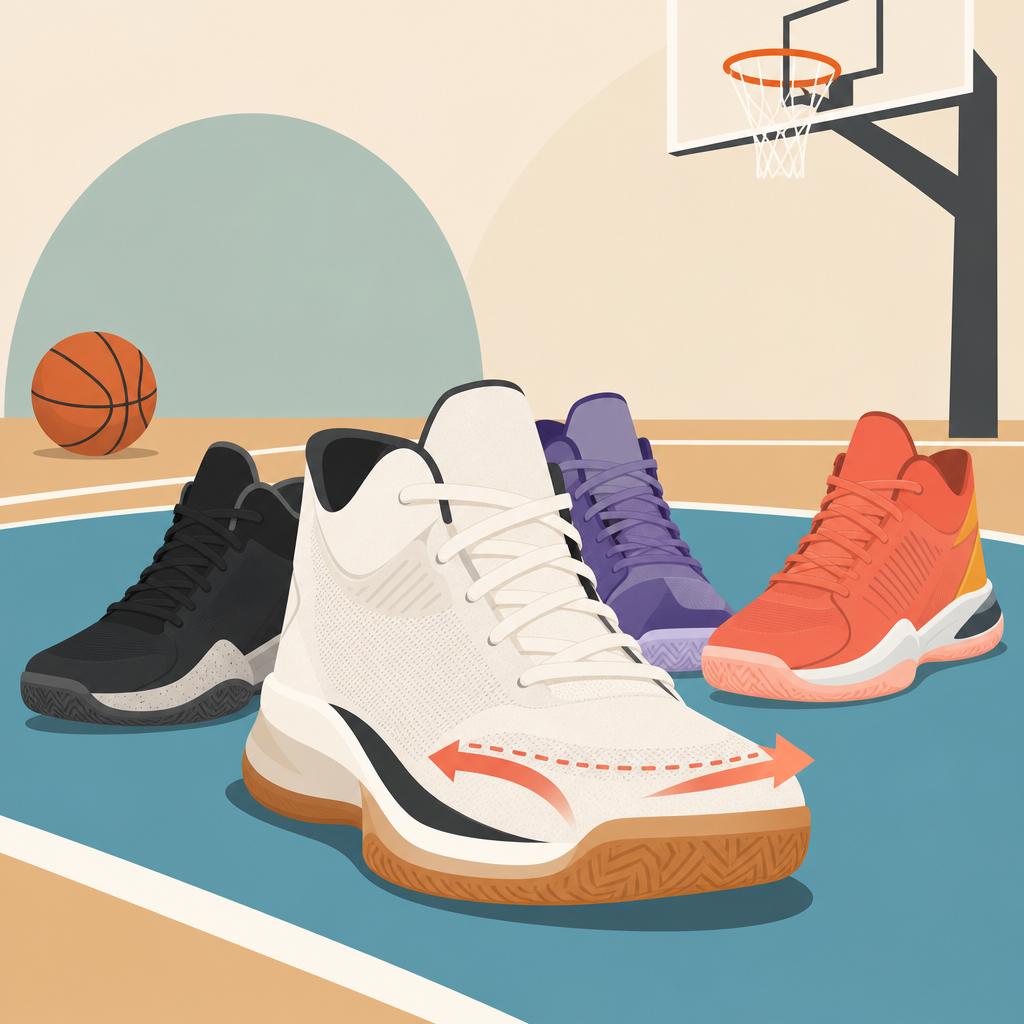
The first priority is shape, not marketing. Brands use different lasts, and two shoes labeled the same size can fit very differently. A wide-friendly basketball shoe usually has a rounder toe box, less aggressive midfoot taper, and enough upper give to let the foot spread naturally on load. Materials matter here. Engineered mesh, knit, and soft woven uppers adapt better than rigid synthetic shells, though strong overlays are still needed for containment. A forgiving upper without sidewall support can feel comfortable standing still and unstable once you start cutting.
Midsole geometry matters as much as upper width. If the sidewalls curve sharply inward under the arch, many wide-foot players feel compression even before lacing up. Outriggers, flared bases, and straight sidewalls often work better because they create a more accommodating platform. I always tell players to check not only where the toes sit, but where the fifth metatarsal rests during a hard lateral lean. If that area hangs over the edge of the footbed, comfort and stability will both suffer.
Lockdown should come from heel structure, lace placement, and smart padding, not from crushing the forefoot. Shoes that fit wide feet well often secure the rearfoot with a firm heel counter and sculpted collar while leaving the front half more permissive. That setup reduces heel slip without forcing players to size up too much. Sizing up can add width, but it often creates excess length, delayed toe-off, and sliding inside the shoe.
Comfort Versus Court Feel: Why the Tradeoff Matters
Comfort and court feel are linked, but they are not the same. Comfort includes step-in softness, pressure-free fit, impact protection, and how fresh your feet feel after a full session. Court feel is about responsiveness and sensory connection to the floor. A thick, highly compressive setup may feel luxurious in warmups yet dull on quick first steps. A low-profile setup may feel fast and precise but punish heavier players over two hours. Wide-foot hoopers often face this tradeoff more sharply because models with softer, more accommodating uppers are sometimes paired with bulkier cushioning systems.
Guards and shifty wings often prefer lower stack heights, firmer foams, and flexible forefeet because these support quick transitions and better floor awareness. Bigger players, frequent rebounders, and anyone with knee or heel pain usually need more impact attenuation, especially on concrete-adjacent school courts or heavily used recreation floors. The right answer depends on your body, role, and surface. There is no universal best basketball shoe for wide feet. There is only the best option for the way you play.
In testing, I separate comfort into fit comfort and ride comfort. Fit comfort asks whether the upper and platform accommodate width without hot spots. Ride comfort asks whether the cushioning and torsional setup reduce fatigue over time. A shoe can score well in one and poorly in the other. Understanding that distinction helps players choose more accurately and avoid returns.
Best Shoe Types for Different Wide-Foot Playing Styles
Instead of chasing one perfect model, it is more useful to match shoe type to role. Low-to-the-ground guard shoes often deliver the best court feel for wide feet when the forefoot is broad and the materials break in quickly. These are ideal for players who value speed, quick stops, and direct response. Balanced all-around shoes suit the largest group. They combine moderate cushioning, stable bases, and enough forefoot room to work for wings and versatile forwards. Max-cushion models help heavier athletes, older players, and anyone managing joint stress, though they can sacrifice some floor connection.
Retro-inspired basketball shoes deserve mention because many use roomier shapes than modern speed-focused designs. They are not always the lightest, but wide-foot players often appreciate their straighter lasts and less aggressive midfoot pinch. That said, retros can vary wildly in traction pattern and foam performance, so fit alone should not decide the purchase.
| Shoe type | Best for | Wide-foot advantage | Main tradeoff |
|---|---|---|---|
| Low-profile guard model | Quick guards, perimeter scorers | Better court feel, easier toe-off if forefoot is broad | Less impact protection for heavier players |
| Balanced all-around model | Wings, two-way players, most adults | Moderate width with stable platform | May do everything well but nothing exceptionally |
| Max-cushion model | Bigs, older players, outdoor-heavy use | More underfoot comfort during long sessions | Higher stack can reduce floor feel |
| Retro or classic-cut model | Players prioritizing roomy fit and support | Often wider last and less toe squeeze | Heavier build and older foam setups in some pairs |
Key Performance Features in Basketball Footwear
Traction is still the top performance feature, because fit does not matter much if you cannot stop. For wide feet, traction and width interact in a practical way. If your foot spills over the footbed, edge grip feels less secure during lateral cuts. Herringbone patterns remain dependable on clean indoor courts, while radial and mixed patterns can work well for players who pivot frequently. Rubber compound matters outdoors. Softer translucent rubber can grip well indoors but wear down fast on blacktop.
Cushioning technology should be judged by placement and stability, not just by brand labels. Nike Zoom Air, Jordan Zoom Strobel, adidas Lightstrike, Boost, Under Armour Flow, Puma Nitro, and New Balance FuelCell all feel different under load. Wide-foot players often do best with cushioning systems that sit within stable sidewalls rather than bulging over narrow platforms. Compression-molded EVA can feel basic compared with premium foams, but in a broad, stable carrier it can outperform softer systems for control.
Support comes from torsional rigidity, heel containment, and lateral stability. A good shank or midfoot plate helps keep the shoe from twisting excessively. This matters if you are broader through the midfoot, because unstable shoes can let the foot roll unpredictably. Breathability is another overlooked factor. Wide feet create more upper tension, and hotter feet swell more, which can turn a decent fit into a painful one by the fourth quarter.
How Major Brands Typically Fit Wide Feet
Brand tendencies are useful, though never absolute. New Balance is consistently one of the strongest options for wide-foot basketball players because the brand often builds more anatomical forefoot shapes and, in some markets, offers actual width options. adidas models vary, but many recent pairs have forgiving uppers and decent forefoot room once broken in. Puma has improved dramatically, especially in models with pliable engineered uppers and stable, broad tooling.
Nike and Jordan Brand produce many top-performing shoes, but they are also the brands wide-foot players most often need to approach carefully. Some models are excellent after break-in, while others run narrow in the forefoot or pinch through the midfoot. This is where model-specific reviews become essential. Under Armour often lands in the middle: secure, stable, sometimes snug initially, but not universally narrow. Chinese performance brands such as Li-Ning, Anta, and 361 Degrees also deserve attention. Several of their basketball shoes use wider forefoot constructions and strong support features, though sizing and retail availability can be less straightforward in some regions.
If you are shopping this footwear hub as a starting point, use brand tendencies only to narrow the field. Do not buy on logo alone. Last shape, upper structure, and platform design decide whether a shoe truly works for wide feet.
Fit Testing: How to Know a Shoe Will Work Before Game Day
The best way to evaluate basketball shoes for wide feet is with a structured fit test. Try shoes on late in the day when feet are slightly swollen, and wear your actual game socks or orthotics. Stand, then perform basketball-specific movements: a hard lateral lean, a quick toe rise, a short sprint start, and several abrupt stops. Your toes should have a small amount of length room, but the front should not feel sloppy. More important, the sides of the forefoot should not feel compressed when you load into cuts.
Pay attention to lace pressure on the instep. A shoe can feel wide enough in the toe box and still create painful top-of-foot pressure because the throat opening is too low for a high-volume foot. Heel slip should be minimal after proper lacing. If the only way to stop heel movement is to crank the laces so tightly that your forefoot goes numb, the shoe is the wrong shape.
Break-in can help with upper softness, but it rarely changes platform geometry. A narrow base does not become wide after three runs. That is one of the biggest mistakes buyers make. They hope discomfort will disappear, when the real issue is the shoe last. If you feel immediate edge pressure at the pinky toe joint or arch pinch from the sidewall, move on.
Common Mistakes Wide-Foot Players Make
The biggest mistake is buying too long instead of wide enough. Extra length can reduce pressure at the sides temporarily, but it usually creates new problems: heel slip, toe jamming on stops, and less precise foot placement. Another mistake is judging comfort only by step-in feel. Plush ankle padding and soft insoles can disguise a poor chassis. Once you start cutting, the wrong shape shows up quickly.
Players also underestimate the effect of socks, braces, and orthotics. A thin performance sock can make a borderline shoe playable, while a bulky ankle brace can turn a good fit into a cramped one. Outdoor players often choose durable shoes but ignore the harder impact environment, which means they need more cushioning than their indoor pair. Finally, many players replace shoes too late. When the lateral upper stretches unevenly or the outsole edges round off, wide-foot stability drops before the shoe looks completely worn out.
Building a Complete Footwear Setup
As the hub for basketball footwear, this topic should guide more than a single purchase. Most regular players benefit from at least two pairs: an indoor game shoe tuned for traction and court feel, and a tougher practice or outdoor shoe with more durable rubber and forgiving cushioning. Rotating pairs lets midsoles decompress and extends outsole life. If you play three or more times per week, the difference is noticeable.
Footwear care matters too. Let shoes air out after runs, remove dust from traction with a microfiber towel, and replace insoles when they pack down. If you have chronic hot spots, look at lacing techniques, aftermarket insoles from brands like Move or Superfeet, and basic foot-strength work. Stronger intrinsic foot muscles can improve comfort inside wider shoes by reducing excessive collapse and friction.
The main takeaway is straightforward: the best basketball shoes for wide feet are the pairs that match your foot shape first, then your playing style, then your cushioning preference. Prioritize a broad, stable platform, pressure-free forefoot fit, and secure heel lockdown. From there, choose how much court feel or impact protection you need. Use this footwear hub to compare categories, understand brand fit tendencies, and test shoes with purpose before you commit. When your shoes fit correctly, every cut feels cleaner, every landing feels safer, and the game becomes simpler. Start with your foot shape, narrow your options intelligently, and build your basketball equipment setup from the ground up.
Frequently Asked Questions
What makes a basketball shoe good for wide feet?
A good basketball shoe for wide feet does more than simply feel loose in the toe box. The best models combine several fit characteristics that work together under game-speed movement. First, they need a forefoot shape that follows the natural outline of the foot instead of tapering sharply inward. That gives the toes room to spread during takeoff, landing, and hard lateral cuts. Second, they need enough upper volume through the midfoot so the shoe does not create pressure across the top or sides of the foot. Third, they still need effective lockdown at the heel and ankle, because wide-foot-friendly should not mean sloppy or unstable.
For basketball specifically, width affects performance as much as comfort. If a shoe squeezes the forefoot, players often lose confidence planting hard, changing direction, or loading into explosive movements. That pressure can also increase hot spots, blisters, numbness, and toe bruising over time. The best basketball shoes for wide feet manage to feel accommodating without becoming mushy. They offer a stable base, a secure heel, and enough court feel or cushioning depending on the player’s style, while avoiding the pinched sensation that many standard-fit performance shoes create.
Materials also matter. Softer engineered mesh, knit, and well-padded textile uppers usually adapt better to wide feet than rigid synthetic shells. Likewise, a shoe with a broad outsole platform can improve balance and make the fit feel more natural. In practice, the best option is usually a model that feels naturally wide on-foot rather than one you have to “break in” and hope stretches enough later.
Should players with wide feet size up in basketball shoes?
Usually, sizing up should be a last resort, not the first solution. Going up half a size can create extra length, but it does not always solve the actual problem, which is often lack of width or poor shape through the forefoot and midfoot. In many cases, a player sizes up to escape pressure at the sides of the foot, only to end up with heel slip, delayed response, and instability during cuts. That can be just as problematic as wearing a shoe that is too narrow.
The better approach is to look for a model known to run wide, roomy, or forgiving in the forefoot before automatically changing size. If the shoe is only slightly snug and the length is correct, trying thinner socks, adjusting lacing pressure, or choosing a more accommodating upper can help. If the toes are crammed, the pinky toe is rubbing immediately, or the sidewall compresses the forefoot noticeably, then the shoe is probably the wrong shape regardless of size. A half-size up may help some players, but only if the heel remains locked in and there is not excessive dead space in front of the toes.
A useful rule is this: length should match where your foot ends naturally, while width should be solved through the shoe’s shape and construction. For wide-footed hoopers, the best fit usually comes from selecting the right model in the right size, not from chasing comfort by adding extra length. If possible, always judge fit late in the day or after activity, when feet are slightly more swollen and closer to how they will feel during actual play.
Are wide basketball shoes less responsive or worse for court feel?
Not at all. Width and responsiveness are separate fit and performance variables. A shoe can feel roomy in the forefoot and still be quick, low to the ground, and highly connected to the court. What often happens is that players confuse “soft and spacious” with “wide-foot friendly,” but the best shoes for wide feet do not need to be bulky or overly cushioned. Some of the strongest options for wide-footed guards and wings combine a broader forefoot shape with a stable midsole, good torsional support, and a traction setup that lets the player stay engaged with the floor.
Court feel depends more on stack height, foam tuning, outsole design, and overall platform geometry than on width alone. If a shoe is built low and stable, it can still deliver excellent responsiveness even if it offers more toe splay room than a narrow performance model. In fact, many players with wide feet feel more responsive in a properly fitting shoe because they are no longer distracted by side pressure, numbness, or hesitation when loading into movement. A better fit can make the shoe feel faster simply because the foot can work naturally inside it.
The real tradeoff is not wide versus responsive, but accommodating versus overbuilt. Some wide-friendly shoes lean more toward impact protection and comfort, while others lean toward speed and court feel. Players who rely on burst, shifty direction changes, and a low ride should prioritize a wide model with a secure heel and minimal foot movement inside the shoe. Bigger players or players with a history of foot soreness may prefer more cushion and a broader, more planted base. The key is choosing the right performance profile, not assuming width automatically reduces court feel.
How can you tell if a basketball shoe is too narrow for your foot?
There are several clear signs, and most show up quickly. The most obvious is sidewall pressure around the forefoot, especially near the pinky toe joint and the widest part of the foot. If that area feels compressed as soon as you lace the shoe, the fit is probably too narrow. Another common sign is visible bulging over the midsole sidewalls, where the foot seems to spill over the platform rather than sit on top of it securely. That can reduce stability and make aggressive cuts feel less controlled.
You may also notice numbness, tingling, or a burning sensation after only a short session. Those are not normal “break-in” symptoms. They usually indicate the upper or last shape is creating too much pressure. Toe jamming, black toenails, blisters along the outer edge of the forefoot, and soreness at the base of the little toe are also common warning signs. Even if the shoe feels acceptable while standing still, problems often become much clearer once you start shuffling, sprinting, jumping, and stopping repeatedly.
Performance clues matter too. If you hesitate planting hard, feel unstable when changing direction, or keep loosening the laces trying to relieve pressure, the shoe is likely working against your foot shape. A proper wide-foot-friendly basketball shoe should feel secure without feeling restrictive. Your toes should be able to relax and spread somewhat on impact, the midfoot should feel supported rather than pinched, and the heel should remain locked without forcing the forefoot into a narrow shape. If a shoe requires pain tolerance to “earn” a good fit, it is the wrong shoe.
What should wide-footed players prioritize most: comfort, lockdown, cushioning, or support?
For most wide-footed players, fit comes first, because every other performance feature depends on it. A shoe can have elite traction, premium cushioning, and excellent support on paper, but if the shape is too narrow, those advantages are compromised immediately. That said, once the fit is right, the ideal priority order depends on your position, body type, and playing style. Guards often lean toward court feel, quick transitions, and clean heel lockdown. Forwards and bigger players usually benefit more from impact protection, underfoot stability, and a broad platform that keeps them centered on hard landings.
Comfort should never be treated as a luxury feature. In basketball, comfort is directly tied to confidence and consistency. A wide-footed player who is not fighting pressure points can move more naturally, stay lower on defense, and load into cuts more decisively. But comfort alone is not enough. Lockdown still matters, especially in the rearfoot. The best setup for many wide-footed players is a shoe that feels relaxed up front but secure in the heel and collar. That combination allows natural forefoot movement while still preventing slippage and loss of control.
Support is also critical, but support should come from platform design, torsional rigidity, and lateral containment rather than sheer tightness. Many players mistakenly think a very snug upper equals support. In reality, a shoe can be too tight and still unstable. The strongest options for wide feet provide a broad base, sidewall containment, and a stable ride without crushing the foot. If you want a simple checklist, prioritize these in order: proper shape and width, secure heel lockdown, stable platform, then choose the cushioning and court-feel balance that matches how you play. That approach usually leads to the best mix of comfort and performance over the long term.