
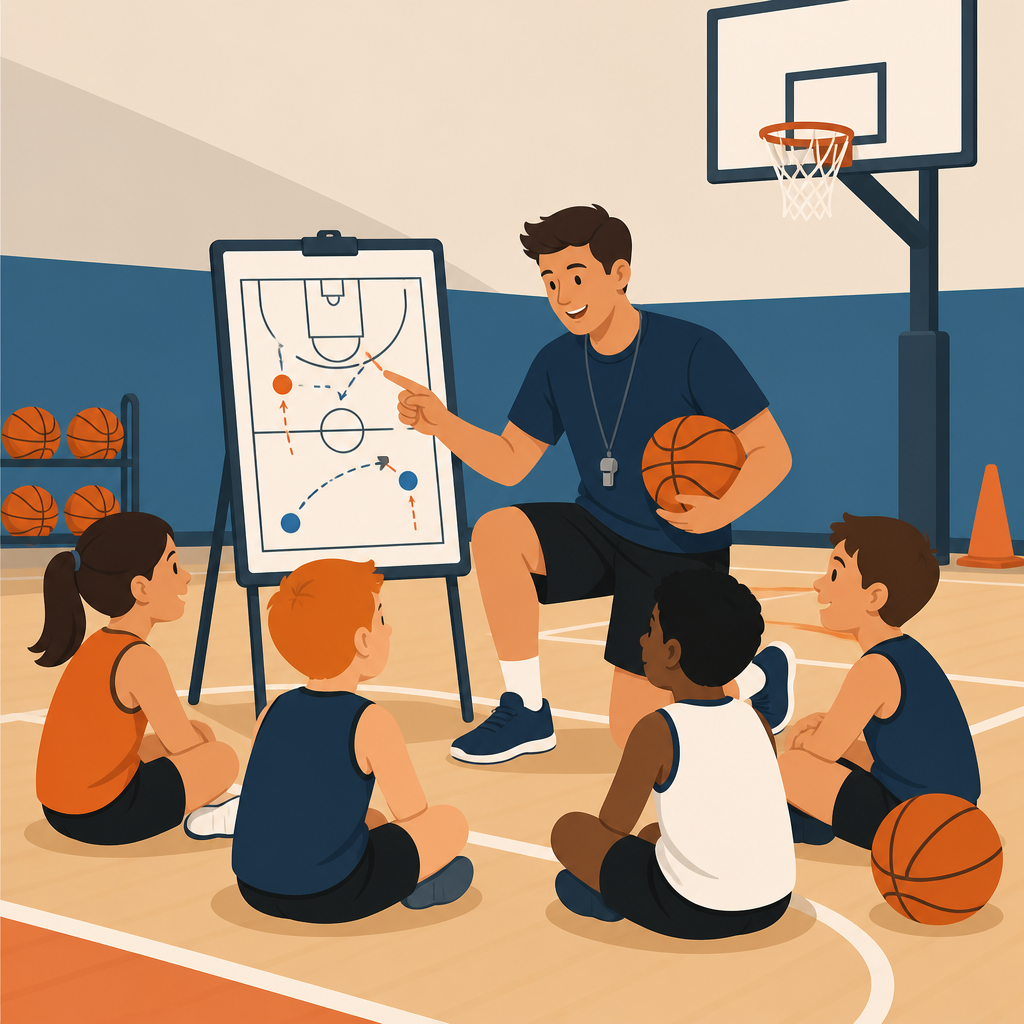
Teaching basketball rules to young players is one of the fastest ways to build confident teams, safer practices, and more enjoyable games, but it only works when coaches present the rules in a way children can actually absorb. In youth basketball, “rules” means more than memorizing violations and fouls. It includes court boundaries, dribbling limits, defensive contact, substitutions, timing, sportsmanship, and the small game routines that keep play organized. “Young players” can mean first-time six-year-olds, competitive middle school athletes, or any group still learning how the sport functions. The coaching challenge is that attention spans are short, energy is high, and abstract explanations rarely stick unless they are tied to movement.
I have found that the best youth basketball coaching starts by treating rules as part of basketball skill development, not as a separate lecture. A travel, double dribble, or blocking foul is not just a whistle; it is feedback about footwork, ball control, spacing, balance, and decision-making. When players understand that connection, rules stop feeling like restrictions and start feeling like tools that help them play better. That shift matters because children who know why a rule exists usually remember it longer and apply it more consistently under pressure.
This topic matters for every youth basketball coach because rule confusion creates avoidable frustration. Players get embarrassed by repeated violations, parents question officiating when they do not know the standard, and practices lose rhythm when coaches constantly stop play to correct the same mistakes. Clear rule instruction reduces dead time, improves game IQ, and supports athlete development. It also helps with retention. Kids stay engaged when they understand what is happening and feel capable inside the game environment.
As a coaching hub, this guide covers the core methods that make basketball rules teachable: choosing age-appropriate priorities, using games instead of speeches, building rule learning into practice plans, correcting mistakes without draining energy, and helping players transfer lessons from drills to real competition. Whether you coach beginners or advanced youth teams, the goal is the same: teach the game in plain terms, keep players moving, and make every rule lesson feel relevant to scoring, defending, and playing together.
Start with the rules that affect play most often
Young players do not need a full referee clinic on day one. They need the few rules they will encounter constantly. In most youth basketball settings, that means out-of-bounds, traveling, double dribble, basic personal fouls, jump-ball or possession-arrow procedures, and simple inbounds administration. If your league has modified rules such as no pressing, restricted zone defenses, shortened free-throw lines, or equal playing time requirements, those should be included early because they directly shape decisions.
A practical coaching sequence is to teach rules in layers. First, cover boundary and ball-handling rules because players touch those on almost every possession. Second, teach contact rules, especially what legal guarding position looks like and why reaching across the body often leads to fouls. Third, add game-management rules such as substitutions, timeouts, and free-throw lane spaces. This progression matches how children experience games. They notice first whether the ball is still live, whether they can keep dribbling, and whether contact is allowed.
When I introduce a rule, I use one sentence for the definition, one sentence for the reason, and one live example. For traveling: “A travel happens when you move your pivot foot illegally before dribbling or passing. The rule exists so players cannot gain an unfair advantage by running with the ball.” Then I demonstrate a jump stop, establish a pivot, and show the common mistake. That structure keeps explanations short and concrete.
Different age groups also need different levels of precision. Eight-year-olds can learn “stop, plant, pivot.” Twelve-year-olds can learn gather timing, jump-stop options, and why catching on the move changes footwork. Good youth basketball coaching is not dumbing rules down; it is matching the wording to the player’s stage so attention stays on the court instead of drifting during long verbal breakdowns.
Teach rules through movement, not lectures
The quickest way to lose young players is to line them up and talk for ten straight minutes. Rule learning sticks when athletes move while they listen. That is why effective basketball coaching uses walk-throughs, freeze moments, guided discovery, and short competitive games. If you are teaching out-of-bounds, put players near the sideline and ask them to save a ball legally, then intentionally step on the line so they can see the difference. If you are teaching double dribble, have them stop the dribble, pump fake, then ask whether they may dribble again. Immediate action creates immediate recall.
Small-sided play is especially useful because it multiplies repetitions. In a 3-on-3 half-court game, one traveling call becomes a 20-second teaching point. In a full 5-on-5 scrimmage, the same correction can disappear into spacing mistakes, transition confusion, and off-ball distractions. Younger athletes need a high number of clean repetitions before rules become automatic.
I also recommend using “whistle and explain in five seconds” as a coaching standard. Blow the whistle, name the rule, show the body position, restart play. Long speeches drain pace and make players associate corrections with boredom. Fast restarts preserve attention and make the rule feel like part of the game’s rhythm. This is the same principle used in strong station-based practices: concise cues, visible demonstration, immediate repetition.
Questions can sharpen engagement if they are specific. Ask, “Can you dribble after picking it up?” rather than “Does anyone know the rule?” The first question asks for a clear answer. The second often produces silence. Young athletes focus better when the task is narrow and success is obvious.
Build a practice plan that hides rule learning inside fun drills
The smartest way to teach basketball rules without losing attention is to embed them into drills players already enjoy. A dribbling relay can include a pivot requirement at each cone. A layup line can require players to identify whether they used the correct footwork. A closeout drill can stop only when defenders make illegal contact, turning foul instruction into a live defensive lesson. Players think they are doing basketball, which is exactly the point.
Rule-based games work because they tie consequences to action. One drill I use is “clean possession,” where teams score only if they complete a possession with no travel, no double dribble, no offensive foul, and proper spacing on the inbounds. Another is “referee for a rep,” where one waiting player watches a 2-on-2 action and calls a single designated rule. That role builds understanding fast because children enjoy judging what they just learned.
To keep instruction organized, divide the week by themes. Monday might focus on footwork violations, Wednesday on defensive contact, and Friday on game administration. This keeps repetition high without making practice feel repetitive. The method also creates natural internal links across your broader youth basketball coaching curriculum: footwork rules connect to ball handling, contact rules connect to defense, and administration rules connect to game readiness.
| Practice focus | Rule to teach | Simple drill | Coaching cue |
|---|---|---|---|
| Ball handling | Double dribble | Stop-start dribble tag | Once you pick it up, pass or shoot |
| Footwork | Traveling | Jump-stop and pivot race | Land balanced, keep one foot down |
| Defense | Personal fouls | Closeout to chest-up contest | Beat with feet, not hands |
| Sideline play | Out-of-bounds | Save or let it go game | Line is out, space is in |
| Game flow | Inbounds count | 5-second inbound challenge | See receiver early, cut with purpose |
This approach is effective because it respects how children learn. They rarely remember a paragraph, but they remember a race, a challenge, a whistle, and a clear cue attached to a movement pattern.
Use simple language, vivid examples, and repeatable cues
Rule instruction fails when coaches explain like attorneys instead of teachers. Young players need plain language. “You cannot hit the shooter’s arm” works better than a technical monologue on illegal contact. “The sideline belongs to out-of-bounds” is easier to remember than “contact with the boundary line causes the ball to be dead.” Precision still matters, but precision can be delivered simply.
Memorable cues are essential in youth basketball coaching because they save time during games. For traveling, use “jump stop, then decide.” For defense, use “show hands, move feet.” For inbounds, use “catch, chin, scan.” These short phrases become shared team language. Once players know them, a coach can correct behavior in two words instead of stopping practice.
Examples should come from situations players actually face. A third grader may not need to hear about backcourt pressure rotations before understanding why picking up the dribble in a trap is risky. A middle school guard benefits from seeing how a retreat dribble avoids a double dribble and a panic pass. Rule teaching becomes sticky when it solves an immediate basketball problem.
Video can help if used briefly. A 20-second clip showing a legal block, a charge, and a no-call can clarify more than a two-minute explanation. Tools like Hudl, SportsEngine, or simple phone video let coaches capture practice mistakes and replay them on the spot. Keep the clip short, identify one rule, and return to movement quickly. Technology should support attention, not hijack it.
Correct mistakes without embarrassing players
Many children tune out rule instruction because they associate whistles with shame. Good coaches separate the mistake from the player. Instead of saying, “You always travel,” say, “Your pivot foot moved before the pass.” That language is specific, neutral, and fixable. The athlete hears a correction, not a label.
One useful method is public teaching, private emotion. Correct the visible basketball action in front of the group if everyone can learn from it, but handle frustration, confidence issues, or repeated mistakes quietly and directly. Young athletes are often willing to try again if the correction feels safe. They shut down when the gym becomes an audience for their errors.
Praise should also be tied to rule execution, not just hustle. When a player jump-stops cleanly under pressure or walls up without fouling, name it. “That was legal guarding position.” “Great inbounds footwork.” This teaches the team what right looks like. It also balances correction with reinforcement, which is critical for attention and motivation.
Officials can be partners here. If possible, invite a local referee to a preseason practice for 15 minutes. Players listen differently when they hear why certain actions get called. Referees can demonstrate hand-checking, verticality, and throw-in procedures in practical terms. That small investment often reduces game-day confusion for players, coaches, and parents alike.
Prepare players for real games, league variations, and sportsmanship
Every youth league has differences, and strong coaching accounts for them early. Some leagues use a possession arrow instead of a jump ball after the opening tip. Some prohibit zone defense at younger ages. Others modify pressing rules, foul counts, or free-throw distances. If players learn generic basketball rules but not local competition rules, they will still be surprised in games. Always review your league handbook and build those differences into practice scenarios.
Game transfer matters more than perfect drill performance. Run short scrimmages where assistant coaches or captains act as referees and emphasize one rule theme per segment. In one five-minute block, call every travel tightly. In the next, emphasize legal screens or hand contact. This creates realistic pressure while letting players adapt to officiating standards. They learn that games are not random; they are structured environments with enforceable expectations.
Sportsmanship is also a rule topic, even when it is not written on the scorebook. Young players must know how to hand the ball to the official, line up properly for free throws, avoid arguing calls, and respond after fouls. These habits protect team culture and reduce technical fouls or bench distractions later on. More importantly, they help children understand that basketball is a shared activity governed by respect as much as by violations and whistles.
Parents should hear the same message. A short preseason note explaining the main rules you are teaching, along with league-specific modifications, can reduce confusion in the stands. When adults understand why certain calls happen, they reinforce learning instead of undermining it. Consistency between coach, player, parent, and official creates the best environment for growth.
Teaching basketball rules to young players without losing their attention comes down to one principle: make every rule feel useful, active, and immediately connected to better play. Start with the most common rules, explain them in plain language, and teach them through movement instead of speeches. Build rule learning into dribbling, footwork, defense, and scrimmage work so players absorb the game while doing the game. Use short cues, visible demonstrations, and fast restarts. Correct mistakes specifically, protect confidence, and reinforce good rule-based habits when they appear.
For youth basketball coaching, this approach delivers more than cleaner games. It improves decision-making, reduces frustration, sharpens fundamentals, and helps players enjoy competition because they understand what is happening around them. It also gives coaches a practical hub for the wider coaching subtopic: practice planning, communication, player development, game preparation, and parent alignment all connect back to how rules are taught.
If you want your team to learn faster this season, pick three rules that cause the most problems, design one active drill for each, and teach them with one clear cue. Keep players moving, keep the language simple, and revisit the same ideas all month. That is how rules become habits, and habits become smart basketball.
Frequently Asked Questions
What is the best way to explain basketball rules to young players without overwhelming them?
The best approach is to teach rules in small, practical pieces instead of trying to cover everything at once. Young players learn faster when rules are connected to actions they can see and repeat, such as staying in bounds, stopping after a whistle, dribbling without traveling, and keeping hands to themselves on defense. Start with the rules that affect every possession and every practice. For beginners, that usually means boundaries, basic dribbling rules, simple passing situations, personal space on defense, and what happens when a coach or referee blows the whistle. Once those habits are familiar, add more detail like jump balls, substitutions, free throws, or timing rules.
It also helps to use a “show, don’t just tell” method. Demonstrate the rule, then let players act it out correctly and incorrectly so they can spot the difference. For example, show a legal pivot, then show traveling, and ask the group what changed. This turns rules into a game of observation instead of a lecture. Keep explanations short, use age-appropriate language, and repeat the same terms consistently. Instead of giving a long technical definition of a violation, say something simple and memorable like, “Once you stop your dribble, you must pass or shoot.” Young players respond well to clear, repeatable phrases that they can recall during play.
Most importantly, pace the teaching so players experience quick success. If practice becomes a long list of warnings and corrections, attention disappears. If players feel like they understand what is happening and can apply it right away, they stay engaged. A strong rule-teaching plan builds confidence because children know what is expected, feel safer in contact situations, and make better decisions during games. The goal is not to create rule experts in one day. The goal is to build understanding over time in a way that keeps the sport fun and manageable.
Which basketball rules should coaches teach first to beginner and first-time youth players?
Coaches should begin with the rules that create structure, safety, and flow. The first priority is court awareness: where the boundaries are, which basket the team is attacking, and what happens when the ball goes out of bounds. If players do not understand where play happens, every drill becomes confusing. The next priority is ball-handling basics, especially dribbling rules. Young players need to understand that they cannot run while holding the ball without dribbling, cannot start dribbling again after picking it up, and should stop when the whistle blows. These ideas form the foundation for almost everything else in the game.
After that, teach simple defensive and contact rules. Young athletes need to know that defense is about moving feet, staying balanced, and guarding without pushing, grabbing, or hitting. This is essential not only for game success but also for safety and sportsmanship. It is also helpful to explain possession routines early, such as throw-ins, basic substitutions, where to stand during dead balls, and how to listen for instructions from coaches and referees. These small organizational habits often determine whether a youth game looks chaotic or controlled.
For very young or first-time players, it is smart to delay more advanced or less frequent rules until the fundamentals are understood. You do not need to begin with every possible foul, lane violation, or clock management detail. Instead, teach what they will encounter most often in practices and games. A simple order is: boundaries, dribbling, traveling, passing and shooting choices after a stopped dribble, legal defense, whistle response, and sportsmanship. As players grow more comfortable, coaches can layer in spacing rules, screening, free-throw procedures, game timing, possession arrow situations, and league-specific differences. Starting with the most common situations prevents overload and gives players a usable framework right away.
How can coaches make basketball rules fun and engaging for kids during practice?
The easiest way to keep attention is to turn rules into active learning instead of passive listening. Young players rarely absorb rules from long explanations at center court, but they respond well to movement, competition, and quick challenges. One effective method is to build rules into mini-games. For example, create a dribbling game where players earn points for legal stops and pivots, or run an out-of-bounds challenge where they must quickly decide whether the ball is still in play. You can also use “right or wrong” demonstrations, where one player performs an action and the group decides whether it follows the rule. This invites participation and makes players think.
Short stations work especially well. One station can focus on pivoting and traveling, another on defensive positioning without fouling, and another on inbounding and spacing. Because the activities change every few minutes, attention stays higher than it would during a single long talk. Coaches can also use call-and-response teaching. Ask, “If you stop dribbling, what are your choices?” and let the team answer together: “Pass or shoot.” Repetition through sound and action helps younger athletes remember rules during real game situations.
Fun does not mean unstructured. The most effective practices are organized, fast-moving, and purposeful. Keep explanations brief, then get players doing something immediately. Praise good rule decisions as much as successful shots. If a player makes a smart stop before stepping out of bounds or avoids a reach-in foul by moving their feet, point it out. That teaches children that understanding the rules is part of playing well, not a separate classroom lesson. When coaches frame rules as tools that help players succeed, rather than as restrictions that ruin the fun, kids stay engaged and improve faster.
How do you teach basketball fouls, violations, and sportsmanship in a way young players understand?
The key is to connect each rule to fairness, safety, and game flow. Young players do better when they know why a rule exists. Instead of only saying, “Don’t foul,” explain that pushing, reaching across the body, or bumping from behind can hurt someone and create an unfair advantage. Instead of only saying, “That’s traveling,” explain that dribbling is what allows a player to move with the ball legally. When children understand the purpose behind the rule, they are more likely to remember it and accept corrections without frustration.
Use simple categories when teaching. Violations can be described as ball-control mistakes, such as traveling, double dribbling, stepping out of bounds, or carrying the ball incorrectly. Fouls can be explained as contact mistakes, such as pushing, holding, blocking, or hitting. Sportsmanship can be taught as behavior rules: listening to officials, helping teammates, respecting opponents, and responding appropriately after mistakes. This categorization keeps the game easier to organize in a young player’s mind. Rather than feeling like there are dozens of unrelated rules, children begin to see understandable groups of behaviors.
Role-playing is especially useful here. Show what legal defense looks like compared with reaching, leaning, or shoving. Let players practice standing in guarding position, sliding laterally, and contesting shots with controlled hands. For sportsmanship, rehearse routines such as lining up properly, handing the ball to the referee, saying “good game,” and resetting mentally after a turnover or foul call. Coaches should also correct calmly and consistently. If one child is called for contact in practice, explain it clearly and move on. Overreacting can make players anxious and hesitant. Good rule instruction should make players feel more secure, not afraid to participate. When fouls, violations, and sportsmanship are presented as part of playing smart and respecting others, young athletes are much more likely to understand and apply them.
How often should coaches review basketball rules with young players during the season?
Basketball rules should be reviewed regularly throughout the season, not just during the first few practices. Young players need repetition because their understanding develops through experience. A rule that seems clear in week one may not truly make sense until they encounter it in a scrimmage or game. That is why the most effective coaches revisit rules in short, focused bursts. A two-minute review before a drill, a quick reminder during water breaks, or a short discussion after a game situation is usually far more effective than occasional long lectures.
It helps to match rule reviews to what players are currently experiencing. If the team is repeatedly traveling when catching the ball, review jump stops, pivots, and balance. If there are frequent reach-in fouls, revisit legal defensive position and hand discipline. If players look confused on dead balls, rehearse substitutions, inbound spacing, and whistle routines. This makes the review timely and relevant, which improves retention. Children pay more attention when they can immediately connect a rule lesson to something that just happened.
Season-long rule teaching should also be progressive. Early in the season, focus on the most common and essential rules. Midseason, add more game-specific understanding, such as how to defend without fouling under pressure, how possession changes work, or what to do in free-throw situations. Later in the season, continue reinforcing habits while clarifying finer details and league-specific expectations. Consistent review builds automatic behavior, which is the real goal. When players no longer have to stop and think about basic rules, they can focus more fully on teamwork, decision-making, and enjoyment of the game. In that sense, regular rule review is not extra work. It is one of the clearest ways to create smoother practices, smarter play