
Lane violation in basketball is one of those rules that looks simple until you watch a close free throw, hear the whistle, and realize half the arena is guessing. In NBA rules, a lane violation happens when a player enters, leaves, or occupies a restricted position around the free throw lane before the ball legally allows that movement. Fans usually notice obvious early step-ins, but they miss the timing details, the positional restrictions, and the difference between violations by the shooter, defenders, and rebounders. Because free throws often decide playoff games, understanding lane violation calls is essential for anyone following game rules seriously.
I have spent years breaking down officiating clips, coaching youth players through rule interpretations, and reviewing NBA rulebook updates after controversial endings. The same confusion appears every season: when can players move on a free throw, who may line up where, what happens after a miss, and why are some violations ignored while others are whistled immediately? This article answers those questions directly and also serves as a hub for the broader game rules category. If you understand lane violations, you gain a clearer view of spacing, rebounding rights, dead-ball procedure, and how referees manage the line between strict enforcement and practical game flow.
First, define the key terms. The lane, often called the key or paint, includes marked spaces along both sides of the free throw lane line where players may line up during a free throw. A free throw attempt begins when the official places the ball at the shooter’s disposal. The restrictions stay in place until the ball touches the ring, the free throw ends, or possession changes under a specific rule. A violation is a rules breach by the offense or defense that does not involve illegal physical contact; unlike a foul, it usually results in the ball becoming dead and an award based on who violated first or whether the shot was successful. Lane violations are therefore timing and positioning violations tied to free throws.
This topic matters beyond trivia. In the NBA, one point can swing win probability sharply in the final minute, and free throw rebounding is often the hidden possession that changes the game. Coaches teach players to lean, time the shooter’s release, and attack space without crossing early. Officials watch feet, bodies, and the rim at once, then apply a surprisingly detailed set of consequences. For fans building real basketball literacy, lane violation knowledge connects directly to broader game rules such as goaltending, loose-ball fouls, alternating possession concepts in other leagues, and end-of-game officiating mechanics.
What Counts as a Lane Violation on a Free Throw
The simplest answer is this: during a free throw, certain players cannot enter the lane or leave their required spaces until the ball contacts the ring or the free throw otherwise ends. The shooter cannot step over the free throw line before the ball hits the rim. Players in marked lane spaces cannot move into the lane, swap positions, or cross restrictions early. Players outside the three-point line and above the free throw line extended also face location restrictions until the attempt reaches the rim. In practice, the most common lane violation fans miss is the rebounder’s foot breaking the plane of the lane line before the ball touches iron.
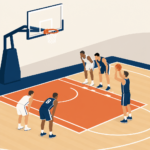
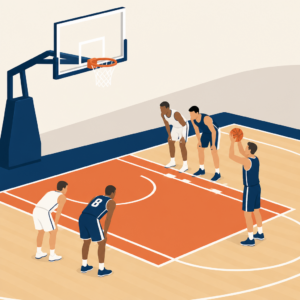
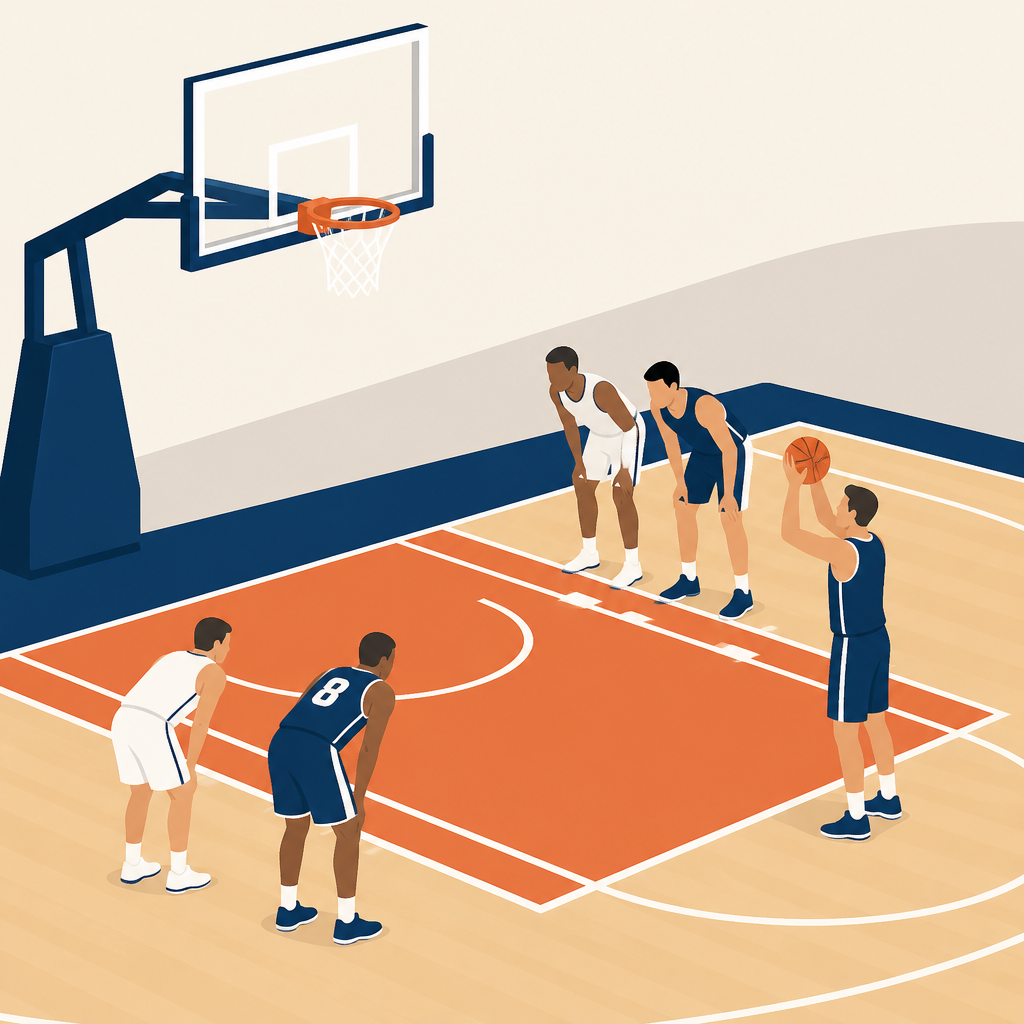
Under NBA procedure, the bottom lane spaces nearest the basket must be occupied by the opposing team of the free throw shooter. The next spaces may be occupied by either team, typically alternating for balance and safety. Teammates of the shooter cannot take the lowest spaces because defenders have first claim there. The shooter’s teammates and all other non-lane players must remain behind the three-point line and above the free throw line extended until release conditions are satisfied. This structure is designed to prevent unfair rebounding advantages and dangerous collisions under the rim.
Timing is the heart of the rule. Players may legally move once the ball leaves the shooter’s hand on some levels of basketball, but NBA enforcement ties key restrictions to the ball touching the ring. That distinction is why fans who learned the game in high school gyms or international play sometimes misread NBA calls. The shooter, however, has a separate restriction: stepping on or over the line too soon is a shooter violation even if everyone else behaves legally. If the shooter commits the violation and makes the shot, the point does not count. If the shooter misses, the miss simply stands and play continues or is awarded according to the dead ball.
Who Can Stand Where During a Free Throw
Positioning rules are more exact than broadcasts usually explain. Along each side of the lane are marked blocks and spaces. The first marked space on each side, closest to the basket, belongs to a defender. The second space is generally for an offensive player. The third, if used under the league’s floor markings and procedures, returns to the defense. Not every free throw has all spaces occupied, but when players line up, they must respect those assignments. Referees will direct players into legal spots before handing the ball to the shooter.
These assignments matter because free throw rebounding is highly structured. Defenders closest to the basket get inside leverage, while offensive rebounders try to angle their hips and shoulders for the carom without stepping early. In film sessions, I often point out that many apparent “hustle rebounds” were actually created by legal patience: a player waited the extra beat, the opponent jumped too soon, and the violation erased the rebound chance. That is one reason veteran players look calmer on the lane than rookies. They understand that half a step too early is not aggression; it is a dead-ball mistake.
| Player category | Where they must be | When they may move | Common fan misconception |
|---|---|---|---|
| Free throw shooter | Behind the free throw line, within the semicircle | Cannot cross the line until the ball touches the ring | If the shot goes in, the step-in does not matter |
| Defenders in lowest lane spaces | First marked spaces nearest the basket | Cannot enter the lane early | They may step in as soon as the shooter releases |
| Other lane players | Assigned marked spaces only | Cannot leave space or enter lane early | Leaning over the line is always legal if feet stay planted |
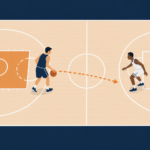
| Players outside the arc | Behind the three-point line and above free throw line extended | Restricted until the ball reaches the rim | Only players on the lane lines are covered by the rule |
Notice the broader point: a lane violation is not only about stepping into the painted area. It can involve failing to remain in the designated outside position, entering a disallowed lane slot, or crossing the free throw line as the shooter. That broader definition explains why some violations seem unrelated to the lane itself. Officials are enforcing the entire free throw formation, not just the paint.
Penalty Outcomes: What Happens After the Whistle
The penalty depends on who violated and whether the free throw was made. If the shooter violates and the shot goes in, the basket is canceled. If the shooter violates and misses, the ball becomes dead immediately, and no point can be scored on the attempt. If a defender violates and the free throw is missed, the shooter usually gets a replacement free throw. If the defender violates and the shot is made, the point counts and the violation is ignored because the offense was not disadvantaged. That is the classic “delayed consequence” fans hear officials describe.
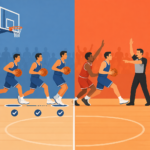
When an offensive teammate of the shooter commits a lane violation and the shot misses, the defense receives the ball for a throw-in or possession according to the free throw sequence. If the offense violates and the shot goes in, the score is wiped away. Double violations create another layer. If both teams violate on the same free throw, no point can score unless a separate rule exception applies, and the ball is put back in play according to the free throw status, often with a jump-ball style resolution under league procedure for simultaneous violations. Broadcasts rarely unpack this, which is why double-lane calls sound mysterious.
The practical officiating standard also matters. NBA referees do not hunt for microscopic movement that creates no advantage, but they will call clear early entry, displacement, or shooter line breaks, especially in late-game situations when coaches, replay rooms, and the league office all expect clean mechanics. This balance between literal text and game management frustrates some fans. Still, it reflects how basketball is officiated at the highest level: preventive direction before the shot, selective whistle during routine attempts, and tighter enforcement when the violation materially affects the play.
Why Fans Miss Lane Violations in Real Time
Most viewers watch the ball, not feet. During a free throw, the camera centers on the shooter’s upper body and rim, while the decisive action often happens at the lane line half a second earlier. Human attention follows the release, arc, and bounce, so subtle early steps disappear unless the replay isolates them. Arena reactions add more confusion. Players crash the boards on every miss, making an early move look normal because legal and illegal entries blend together at full speed.
Another reason is cross-level rule confusion. NCAA, NFHS, FIBA, WNBA, and NBA interpretations are similar in principle but not identical in wording, enforcement emphasis, and timing details. A fan who played high school basketball twenty years ago may carry the wrong cue into an NBA game. Even commentators sometimes simplify the explanation to “he went in early,” which is accurate but incomplete. The real issue may have been who occupied the slot, whether the player outside the arc crept below the free throw line extended, or whether the shooter crossed the stripe before contact with the rim.
There is also a psychology factor. Fans expect common-sense outcomes: if a player misses badly, they assume the miss caused the result; if the ball goes in cleanly, they assume minor footwork should not erase it. The rulebook does not work from common-sense impressions. It works from competitive equity. Free throws are controlled restarts, and controlled restarts require exact restrictions. Once you view the free throw as a set play with prescribed geometry, lane violations make far more sense.
Famous Situations and Strategic Implications
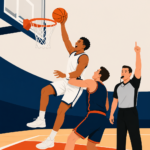
Late-game examples show why this rule matters. Imagine a team trailing by two with three seconds left. The shooter misses intentionally, hoping for a rebound tip. If an offensive rebounder enters the lane early, the possession dies before the scramble can produce a tying basket. On the other side, a defender protecting a one-point lead may be tempted to crash early on a likely miss. If that defender violates and the shooter misses, the offense gets another chance at the line, which is often a massive swing. The rule therefore shapes risk management as much as rebounding technique.
Coaches teach players specific counters. Defenders in the low blocks try to hold legal inside position without grabbing, then release explosively only after rim contact. Offensive rebounders watch the shooter’s rhythm and the trajectory of the ball, but disciplined staffs emphasize hearing or seeing rim contact before committing. Some teams even script intentional misses to the strong-side elbow area, counting on legal timing and angle rather than pure luck. In those moments, understanding the lane violation rule is not academic; it directly affects possession design.
This page also sits within the broader game rules hub for NBA Rules. Fans learning this topic should next study closely related areas: personal fouls on rebounders, basket interference after a free throw contacts the rim, backcourt and frontcourt status after live rebounds, and dead-ball substitution procedure during multi-shot free throw sequences. Together, those rules explain what can happen in the few chaotic seconds after a free throw leaves the shooter’s hand. Mastering lane violations gives you a framework for understanding all of them.
How to Read the Officials and Judge the Call Yourself
If you want to spot lane violations live, stop watching only the ball. Check the shooter’s lead foot, then glance at the lowest lane spaces. If a player’s foot crosses into the lane before rim contact, note which team gained the advantage. Watch for players outside the arc creeping below the free throw line extended. Listen for the whistle timing too. An immediate whistle often signals a shooter violation or obvious early entry; a delayed whistle after a miss often indicates the official allowed the shot outcome to determine the penalty application.
The best habit is to think in sequence: legal formation, ball at disposal, shooter release, rim contact, rebound. That sequence mirrors how officials process the play. It also keeps you from arguing the wrong point. Many fans complain about contact on the rebound when the actual reason play stopped was an earlier lane violation that made everything afterward irrelevant. Once the violation occurs, the later scramble usually has no legal significance.
Lane violations will never be the flashiest part of basketball, but they are a revealing one. They show how the NBA balances fairness, rhythm, and precision in a single routine play. Learn the positioning rules, the movement timing, and the penalties for each team, and you will read free throws like an official rather than a guesser. For anyone building a solid understanding of game rules, this is one of the quickest knowledge upgrades available. Keep this guide handy, and the next time a whistle interrupts a free throw rebound, you will know exactly why.
Frequently Asked Questions
What exactly is a lane violation on a free throw in basketball?
A lane violation is a free-throw infraction that happens when a player breaks the timing or positioning rules around the lane before the shot legally changes their rights to move. During a free throw, players lined up along the lane cannot simply step in whenever they want. The shooter must release the ball within the allowed time, lane players must stay in their assigned spaces until the ball leaves the shooter’s hand, and players outside the three-point line and behind the free-throw line extended also have restrictions until the ball touches the rim. In other words, the rule is not just “don’t step in early.” It also covers where players are allowed to stand, who can occupy the marked spaces, and when movement becomes legal.
This is why lane violations create so much confusion for fans. Most people are watching the ball and only notice the obvious case where a rebounder lunges in before the release. But officials are also watching whether the shooter crossed the free-throw line too early, whether defenders and teammates were properly positioned in the marked lane spaces, and whether perimeter players moved in too soon. The violation can be committed by the free-throw shooter, by one or more players along the lane, or by players outside the arc who enter before they are allowed. That broader definition is what makes the rule seem simple at first and surprisingly technical once a whistle blows.
When are players actually allowed to move during a free throw?
The key timing point is the release of the ball by the shooter. Players in the lane spaces are generally not allowed to enter the lane or leave their assigned positions until the shooter releases the free throw. Players behind the three-point line and those above the free-throw line extended must wait even longer in many cases, because they cannot cross into the lane or toward the basket until the ball touches the rim, misses, or otherwise makes the shot attempt live for a rebound situation. The shooter, meanwhile, cannot fake the attempt in a way that violates the motion requirements and cannot step over the free-throw line until the ball contacts the rim, backboard, or the free throw ends.
That timing difference is what fans often miss. Lane players are focused on the release; outside players are often tied to the ball contacting the rim; the shooter has a separate restriction involving the free-throw line itself. So two players can move “early” in different ways and for different reasons. A player in the first lane space stepping in before the release is one kind of violation. A shooter following the shot and stepping over the line before the ball hits the rim is another. A player outside the arc crashing in before rim contact is another. Officials are judging a sequence, not a single frozen moment.
Who is allowed to stand in the lane spaces, and why do positions matter so much?
Not every player can stand anywhere along the lane during a free throw. The lane spaces are assigned by rule. Typically, the lowest marked spaces nearest the basket on each side are reserved for the defensive team, giving the defense the first rebounding position. The next spaces, if occupied, are for the offense, and the remaining spaces are again for the defense, subject to league rules and lineup choices. The free-throw shooter is alone at the line, and players not in marked lane spaces must remain outside the three-point line and behind the free-throw line extended until they are legally allowed to move.
This matters because a lane violation is not only about stepping in early. It can also be about illegal occupancy or improper alignment. If a player lines up in a space not available to that team, crowds a neutral area, or fails to respect the required setup before the attempt, that can create a violation even before the rebound action begins. Fans often assume the lane is just a race to the ball once the referee hands the shooter the ball, but the setup itself is regulated. Officials want a fair rebounding environment, and the assigned spaces are part of that fairness. That is why positioning details matter just as much as movement timing.
What happens if the shooter commits the lane violation versus another player?
The result depends heavily on who violated and whether the free throw was made or missed. If the shooter commits a violation, such as stepping over the free-throw line too early or violating the motion rules, the free throw cannot count even if it goes in. The ball is dead immediately for scoring purposes on that attempt, and the shooting team loses the point. If it was the final free throw in a sequence, play typically resumes according to the relevant rules, often with the opposing team awarded possession from the baseline or sideline depending on the situation.
When a non-shooter violates, the outcome can be different. If a defender violates and the free throw is missed, the shooter is usually awarded a replacement free throw because the defense should not benefit from entering early. If the defender violates and the shot is made, the point usually counts and the violation is ignored because the offensive team suffered no disadvantage. If an offensive teammate violates and the shot is missed, the defense typically gets the ball because the offense cannot benefit from breaking the rule. If the offensive teammate violates and the shot is made, the point may still be canceled depending on the level and rules in use, with the violation enforced against the shooting team. In cases where players from both teams violate nearly simultaneously, officials may rule a double violation, which usually means no point if the shot was missed and possession is awarded by alternating-possession or other applicable procedure depending on the rules set. That is why it is so important to identify not just that a violation occurred, but exactly who committed it.
Why do fans miss lane violations so often, and what should they watch for during a close free throw?
Fans miss lane violations because the action looks tiny but the rule is precise. In real time, everyone is watching whether the shot goes in, whether the shooter looked nervous, and whether the rebound is clean. The actual violation may be nothing more than a heel lifting early, a shoulder leaning into the lane before release, a player outside the arc taking one impatient step in before rim contact, or the shooter drifting over the line a split second too soon. Those details happen quickly and often at the edge of the frame on television. Unless the broadcast immediately shows a replay from the right angle, the whistle can feel mysterious.
The best way to spot it is to break the play into checkpoints. First, look at the shooter’s feet and make sure the shooter does not cross the line before the ball hits the rim. Second, watch the lane players nearest the basket and see whether they enter the lane before the release. Third, check players outside the arc and above the free-throw line extended to see whether they crash in too soon. Finally, remember that the officials are also monitoring legal lane occupancy before the shot even starts. Once you understand those layers, lane violations stop looking random. They become one of those classic basketball rules that is easy to describe casually but much more exact when enforced by the book.