
Passing is the skill that turns five individual basketball players into one coordinated offense. In every level of the game, from youth leagues to the NBA, teams that pass crisply create easier shots, fewer turnovers, and better spacing. When people search how to improve passing in basketball, they usually want more than a definition of a chest pass or bounce pass. They want to know when to use each pass, how to throw it correctly, how to read defenders, and how to train passing so it holds up under pressure. That is exactly what this hub covers.
In simple terms, a pass is any intentional transfer of the ball from one offensive player to another. Good passing combines mechanics, timing, deception, vision, and decision-making. A technically sound pass that arrives late is still a bad pass. A creative pass that reaches the target but exposes the ball to a steal is also a bad pass. Effective passing means delivering the right pass, to the right teammate, at the right time, in the right spot. That standard sounds basic, but in practice it requires footwork, hand placement, body control, and constant reading of the floor.
I have coached passing progressions with youth guards, high school wings, and adult rec players, and the same pattern appears every season. Most players think their problem is arm strength. Usually the real issue is lower-body alignment, weak decision-making, or slow recognition of help defenders. Passing is not just an upper-body action. The best passers transfer force from the floor, step to a target, keep their eyes active, and understand angles. They also know that different game situations demand different solutions. A chest pass in transition, a bounce pass on a backdoor cut, and an overhead pass against a zone are not interchangeable.
This article is the central guide to basketball passing. It explains the core types of passes, the mechanics that make them accurate, the common mistakes that lead to turnovers, and the drills that build repeatable skill. It also covers advanced topics such as passing windows, skip passes, drive-and-kick reads, and communication. If you want to become a better point guard, a safer decision-maker, or simply a teammate coaches trust with the ball, mastering passing is one of the fastest ways to improve your overall basketball skills.
Why passing matters and what great passers actually do
Passing matters because it shifts the defense faster than the dribble. A defender can stay attached to the ball for several dribbles, but one sharp pass can force a closeout, trigger rotation, and open an advantage on the next action. This is why elite offenses value “paint touch to pass out,” extra passes around the perimeter, and quick ball reversals. The ball moves faster than any player, so accurate passing creates efficient offense even when no one is beating their defender one-on-one.
Great passers share a few habits. First, they pass on time. In coaching terms, this means throwing the ball when the receiver is becoming open, not after they have been open. Second, they pass away from defenders. A correct target is often the receiver’s outside hand, front shoulder, or path to the rim rather than the middle of the chest. Third, they stay balanced. Off-balance jump passes are risky unless the passer is highly skilled and the read is obvious. Fourth, they anticipate the second defender. Many turnovers happen because the passer sees the primary defender but ignores the help defender lurking in the gap.
Team context matters too. Motion offenses rely on quick swings and cuts. Pick-and-roll systems demand pocket passes, lobs, and spray-outs to shooters. Zone offense often requires overhead and skip passing to shift weak-side defenders. Even within one game, passing choices change based on the scouting report. Against long, aggressive teams, direct line drives are dangerous, so pass fakes and angle changes become essential. Against compact defenses, quick interior feeds and touch passes can be more effective.
Players who improve passing usually see gains in several other areas. Their turnovers drop. Their teammates cut harder because they trust the ball will arrive. Their coaches can put them on the floor in close games because they make stable decisions. Strong passing also improves shooting opportunities, because the same vision used to find teammates helps players recognize when they themselves are open. Passing is not a side skill. It is a core basketball skill that influences offense, pace, and trust.
Core passing techniques: chest pass, bounce pass, overhead pass, and push pass
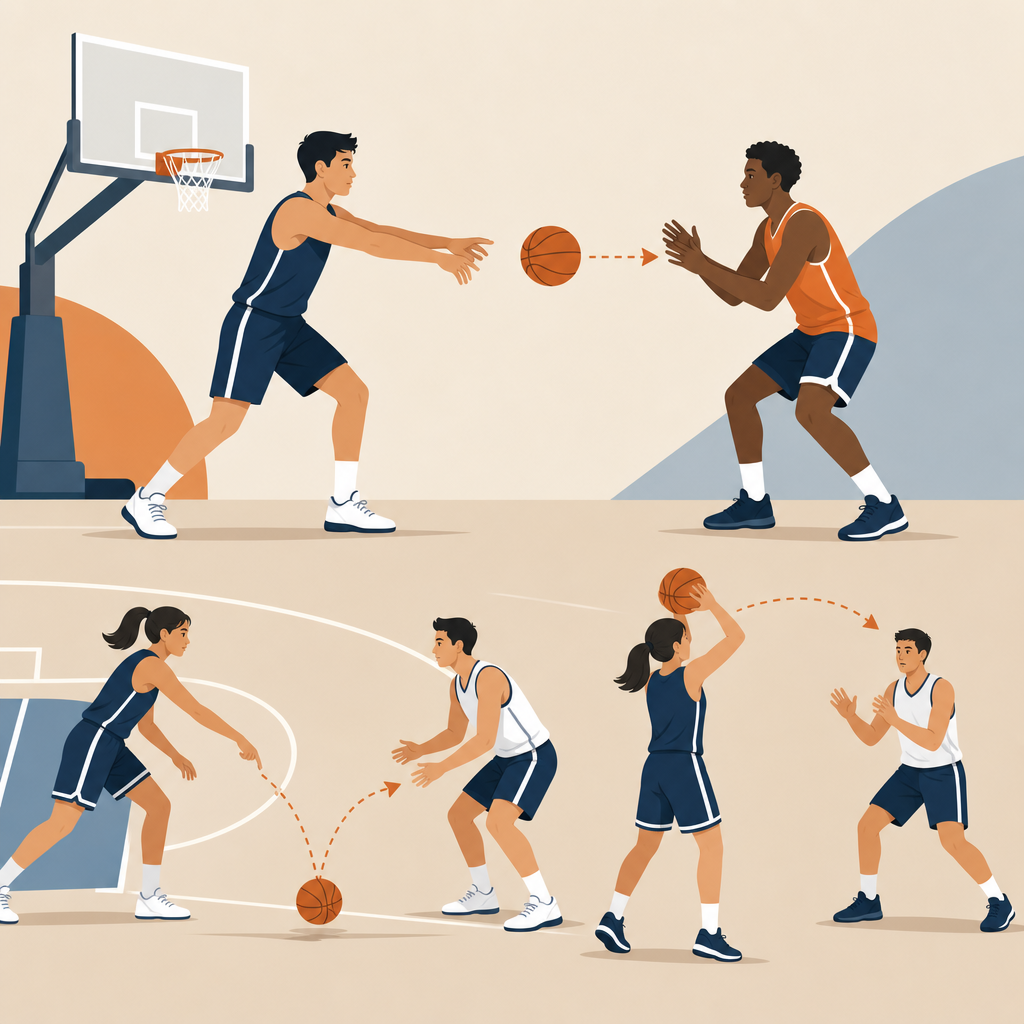
The chest pass is the foundation. Start with both hands on the ball, fingers spread, elbows close enough to stay compact but not pinned. Step toward the target, extend both arms, and finish with thumbs turning down and wrists snapping through the ball. The pass should travel on a straight line to the receiver’s chest or outside hand. A good chest pass is quick, firm, and easy to catch. It is best for perimeter ball movement, transition outlets over short distance, and situations where the passing lane is clear.
The bounce pass is ideal when a defender’s hands take away the direct line. The key teaching point is aiming the ball to hit the floor about two-thirds of the way to the receiver, though exact distance changes with speed and spacing. The ball should bounce up to the receiver’s waist or chest area. Bounce passes are especially useful on cuts, interior feeds, and pick-and-roll pocket deliveries because they can slip under reaching arms. The common mistake is bouncing too close to the passer, which slows the pass and invites a steal.
The overhead pass uses two hands above the head and is valuable against pressure, zones, and traps. It creates a higher release point and can cover more distance than a chest pass. Players often use it for quick reversals, post entries over smaller defenders, and outlet passes after a rebound. The risk is exposing the ball if the passer brings it low before delivering. Keep the ball strong, elbows active, and step into the throw. Against athletic defenders, use a pass fake first, then deliver before the defense recovers.
The push pass is a one-hand or two-hand variation often used off the dribble. Guards use it constantly in modern basketball because it can be thrown without gathering into a full chest pass. On a drive, the passer plants, keeps eyes up, and “pushes” the ball to a shooter, roller, or cutter with minimal windup. This pass is faster than many young players realize. It is perfect for drive-and-kick action because the passer can deliver from a compact position while still protecting the ball from help defenders.
| Pass type | Best use | Main coaching cue | Common error |
|---|---|---|---|
| Chest pass | Quick perimeter movement, short transition passes | Step to target and snap wrists | Floating the ball without pace |
| Bounce pass | Cuts, interior feeds, pocket pass situations | Hit floor two-thirds of the way | Bouncing too early or too softly |
| Overhead pass | Outlets, zone reversal, passing over pressure | Keep release high and direct | Dropping ball before passing |
| Push pass | Drive-and-kick, pick-and-roll reads, tight windows | Compact release with eyes up | Overusing arm only without body alignment |
Footwork, hand placement, and body mechanics for accurate passing
Accurate passing starts from the floor. Players who throw with only their arms tend to spray the ball high, wide, or late. The fix is sequencing. Get your base under you, turn your hips and shoulders to the target, then transfer weight through the pass. On stationary passes, step with the lead foot toward the target. On movement passes, use a stride stop or jump stop so the upper body can stay stable. This matters even more when passing after a hard dribble or after changing direction.
Hand placement affects spin and control. Spread the fingers, keep the ball on the pads rather than deep in the palms, and finish through the target. For two-hand passes, the wrists should snap cleanly. For one-hand push passes, the guide hand leaves early and the passing hand controls direction. Young players often twist their torso and fling the ball across the body. That creates sidespin and makes catches harder. The goal is clean backspin or controlled forward action depending on the pass type.
Vision and posture also influence mechanics. Passing with eyes down usually produces late reads and awkward releases. Keep the chin level and scan before the catch when possible. Coaches call this playing with “early eyes.” If you know where the help defender is before the ball arrives, your feet can land ready for the next pass. This is one reason great ball movers look smooth. They are not reacting late. They have already mapped the floor.
Another overlooked detail is passing from different platforms. In games, players rarely get perfect chest-high catches with ideal balance. You need to pass from low pickups, one-foot stops, pivots, and contact. I teach players to rehearse right-left and left-right footwork, jump stops into pivots, and same-hand same-foot awkward situations because those are what show up against live defense. Fundamentals are not static. They must survive movement, fatigue, and imperfect spacing.
Decision-making: choosing the right pass at the right time
Good decision-making separates a safe passer from a dangerous creator. Before every pass, process three things: defender position, receiver advantage, and game context. If the defender is behind a cutter, a lead pass is available. If the defender is in the lane with active hands, a bounce or hook-angle pass may be safer than a direct line. If the shot clock is low, the priority may shift from perfect ball movement to a simple, on-time pass that lets a teammate attack immediately.
Passing windows are real. A window opens and closes in less than a second. This is why late passes turn into deflections. The best passers throw to where a teammate is going, not where they are standing. Think about a wing making a backdoor cut. If you wait until the cutter is under the rim, the help defense has already rotated. If you throw early to the space in front of the cut, the layup is there. Timing beats velocity when the read is correct.
Risk management matters too. Not every creative pass is a good pass. A cross-court skip against a rotating zone can be excellent. The same skip against a long, ball-hawking man defense may be reckless. Coaches usually grade passing decisions by expected value: does this pass create a quality advantage without exposing the team to a high-probability turnover? In film sessions, I often tell players that the best pass on a possession is the one that preserves or improves the advantage. Sometimes that is a highlight assist. Sometimes it is a simple reversal.
Communication helps decision-making. Call names, use hand targets, and recognize spacing cues. A post player sealing on the high side wants a different entry than a shooter drifting to the corner. Verbal and visual signals reduce hesitation. At advanced levels, teams build passing language into offensive structure: “45 cut,” “shake,” “lift,” “dunker,” and “slot” all tell the passer where teammates should appear. Understanding those concepts speeds reads and reduces guesswork.
Game situations: transition, half-court offense, post entries, and breaking pressure
In transition, the best pass is usually the earliest simple pass that creates a numbers advantage. Pitch-ahead passes to the sideline, hit-ahead passes to a sprinting wing, and quick advance passes after rebounds all matter. The mistake many players make is overdribbling the break. Two quick passes are often better than four dribbles because they force defenders to turn and sprint. In youth basketball, teams that can rebound and make one accurate outlet plus one accurate advance pass score easy points without needing complex offense.
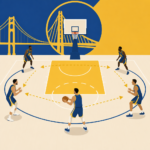
In half-court offense, passing should support spacing and advantage creation. Ball reversals move the defense side to side. Drive-and-kick passing punishes help. Short-roll passes in pick-and-roll create four-on-three situations. Against switching defenses, quick slips and seals need direct, on-time passes. Against zones, skip passes and high-post entries are critical because they collapse structure. The pass should not just move the ball. It should move the defense.
Post entries are a specialized skill. Feed the post from an angle, not straight above whenever possible. Use pass fakes to shift the top defender. Deliver to the correct side: high-side seal usually means throw high and outside, while a low seal may call for a bounce or direct pass to the target hand. Poor post entries often come from bad spacing. If the passer stands too close, the help defender can cover both players. A better angle creates a cleaner lane and gives the post room to work.
Against full-court pressure, calm passing beats heroic dribbling. Use the sideline carefully because it acts like an extra defender. Keep spacing wide, flash to the middle, and pivot away from traps. The inbounder should know the next two options before releasing the ball. Once the ball is caught, meet passes, chin the ball, and reverse quickly if the first line is denied. Teams break pressure not because they are flashy but because they maintain spacing, angles, and composure through each pass.
Best drills to improve passing under game pressure
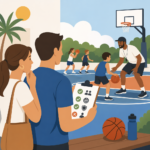
Drills should train accuracy, timing, and decisions, not just repetition. Start with partner passing: chest, bounce, overhead, one-hand push, and off-dribble deliveries. Emphasize stepping to the target and catching with ready hands. Then add movement. Pass while cutting, relocating, and sprinting into catches. A simple drill I use is pass-follow-replace around the perimeter, where players must communicate, move after every pass, and stay balanced on the catch.
Wall passing is underrated when done correctly. Instead of mindless rapid throws, choose targets on the wall, alternate pass types, and work both hands. Add footwork such as pivot-pass, retreat step-pass, or hop into a push pass. This builds mechanics without needing a full group. For younger players, accuracy games help. Mark squares on the wall and score points for hitting them with the right pass type.
Decision-making drills are where passing really improves. Use small-sided games such as three-on-three no-dribble, four-on-four advantage starts, or two-on-one plus trailer. No-dribble games force players to cut, pivot, and pass on time. Advantage drills teach reading the help defender. Pick-and-roll passing drills should include pocket pass, lob, and kick-out reads against a coach or defender showing different coverages. This is more game-like than static lines.
Film review is another drill in disguise. Track turnovers by category: late read, poor angle, telegraphed pass, off-balance pass, or receiver spacing error. Patterns show up quickly. Many players are surprised to learn that their “bad hands” teammates were not the main problem; the pass location was. If you want passing gains to transfer into games, combine technical work, live reads, and review. Repetition builds comfort, but representative repetition builds usable skill.
Common passing mistakes and how to fix them
The most common mistake is telegraphing the pass by staring at the target. Defenders read eyes, shoulders, and ball position. Fix this with pass fakes, eye discipline, and quicker decisions. Look a defender off, then deliver. The second mistake is passing while off balance. If possible, jump stop, pivot, or gather before throwing. When a rushed pass is necessary, shorten the motion and use the body to stabilize the release.
Another frequent issue is throwing to the receiver instead of to the advantage. A cutter needs a lead pass. A shooter relocating to the corner needs the ball in the shooting pocket. A post player sealing needs the pass away from the defender’s reach. Precision matters. “Catchable” is not the standard. “Catchable and useful immediately” is the standard. The better the pass location, the faster the next action can happen.
Players also misuse bounce passes and skip passes. Bounce passes are not automatically safer; if they are slow, they become steals. Skip passes are powerful only when thrown with timing and enough pace to beat rotation. Finally, many teams ignore receiver responsibility. Good passers need good targets. Teammates must show hands, meet the ball, maintain spacing, and communicate. Passing is a shared skill between passer and receiver.
To improve passing in basketball, master the basics, then train them in realistic situations. Build your chest pass, bounce pass, overhead pass, and push pass on strong footwork and clear reads. Learn to pass on time, hit the right target, and protect the ball from help defenders. Study transition, half-court movement, post entries, and pressure breaks because each demands different solutions. If you want a practical next step, choose three passing drills, film one workout this week, and track your turnovers in your next games. Small improvements in passing create immediate gains for your entire game and for every teammate on the floor.
Frequently Asked Questions
What are the most important types of basketball passes, and when should you use each one?
The most important basketball passes to learn are the chest pass, bounce pass, overhead pass, one-hand push pass, and skip pass. Each one solves a different problem on the court, and improving as a passer means knowing not just how to throw them, but when each pass gives your team the best advantage. The chest pass is the foundation. It is the quickest and most direct option when a teammate is open and there is a clear passing lane. It travels in a straight line, gets to the target fast, and is ideal for ball movement around the perimeter, passing out of triple threat, or hitting a cutter before the defense can react.
The bounce pass is best when a defender is pressuring the passing lane with active hands or when you need to deliver the ball under a reaching defender. A good bounce pass hits the floor about two-thirds of the way to your teammate so it rises naturally into their hands. This pass is especially useful in crowded areas, on interior feeds, and in pick-and-roll situations where defenders are trying to deflect direct passes. The overhead pass is valuable when you need extra distance or a higher release point, such as throwing over a smaller defender, making outlet passes in transition, or reversing the ball quickly against pressure.
The one-hand push pass is common in fast-paced offenses because it can be thrown off the dribble and delivered quickly without fully gathering the ball. Guards use it often in transition, on drive-and-kick plays, and when threading a pass through a tight window. The skip pass is used to move the ball across the court, usually to punish help defense and create open shots on the weak side. It can be highly effective, but it must be thrown with good timing and enough velocity, or it becomes vulnerable to steals. In general, better passers do not force one type of pass into every situation. They read spacing, defender positioning, teammate movement, and game speed, then choose the safest pass that still creates an advantage.
How do you throw a proper chest pass and bounce pass with good form?
A proper chest pass starts with balance, hand placement, and a strong follow-through. Begin in an athletic stance with your knees bent, feet shoulder-width apart, and eyes up. Hold the ball at chest level with both hands on the sides of the ball and your elbows relaxed rather than flared too wide. Step toward your target as you extend your arms, then snap your wrists so your thumbs turn down at the finish. The ball should travel in a straight line from your chest to your teammate’s chest. The step gives the pass force, and the wrist snap gives it speed and control. A common mistake is pushing the ball with only the arms and no lower-body involvement, which leads to soft passes that float and invite deflections.
The bounce pass uses many of the same mechanics, but the target changes. Instead of aiming directly at your teammate’s chest, you aim for a spot on the floor so the ball rebounds into their hands around waist to chest height. In most situations, that bounce point is about two-thirds of the distance from you to the receiver, though it can vary based on speed, spacing, and the angle of the defense. Keep the pass firm. Many players make the mistake of throwing bounce passes too softly, which gives defenders time to recover. You still want a step toward the target, full arm extension, and a crisp wrist snap.
For both passes, accuracy matters as much as power. Lead your teammate into space whenever possible instead of making them reach behind, bend low, or stop their momentum. A great pass is easy to catch and puts the receiver in position to shoot, drive, or make the next pass immediately. Practicing fundamentals slowly at first, then adding speed, movement, and defensive pressure, is the best way to build passing form that translates into games.
How can you read defenders and avoid turnovers when passing?
Reading defenders is what separates a technically sound passer from a truly effective one. Before you pass, scan the floor and identify where the defenders are positioned, where the help defense is coming from, and whether the passing lane is open, crowded, or baited. A defender with one foot in the gap and active hands may be trying to tempt you into a pass that looks open for a split second but will be deflected. Good passers learn to see not only their teammate, but also the space between themselves and the receiver. If that lane is shrinking, changing angles, or occupied by help defenders, the pass may not be there.
One of the best ways to reduce turnovers is to use pass fakes and eye discipline. If you stare directly at your target for too long, defenders will anticipate the pass and jump the lane. Looking off a defender, showing the ball, or using a quick fake can shift the defense just enough to open a safe window. Footwork also helps. Sometimes the right answer is not a riskier pass, but a better passing angle created by a pivot, a retreat dribble, or one extra dribble to improve vision. Strong passers understand that creating the angle is often more important than forcing the delivery.
You also need to read your teammates. Passing to a player who is not ready, is covered, or is moving into traffic often leads to turnovers even if the throw itself is accurate. Timing matters. Hit cutters early, deliver kick-out passes on balance, and avoid throwing jump passes into crowds unless you clearly see the outlet. In general, the safest effective pass is usually the best pass. Crisp ball movement does not mean gambling. It means making early reads, moving defenders with your eyes and body, and delivering on time to the right spot.
What drills are best for improving passing in basketball?
The best passing drills combine technique, repetition, movement, decision-making, and pressure. Start with partner passing to build mechanics. Stand a short distance apart and perform chest passes, bounce passes, and overhead passes with perfect form. Focus on stepping into the pass, hitting a consistent target, and receiving the ball cleanly. As you improve, increase the distance and speed. Wall passing drills are also useful because they allow for many repetitions in a short time. Pick specific targets on the wall and practice delivering sharp, accurate passes with both hands and from different angles.
Next, add movement. Passing on the move is far more game-like than stationary passing. Try partner passing while both players jog up and down the court, emphasizing leading the receiver. Work on drive-and-kick action by attacking off the dribble and firing a pass to a spot-up shooter. Practice passing out of pivots, jump stops, and triple threat. You can also run cutting drills where one player changes speed and direction while the passer learns to deliver early and accurately. These drills teach timing, anticipation, and touch.
To make the training more realistic, include defenders or decision constraints. A simple keep-away drill, 3-on-2 passing drill, or small-sided half-court game forces you to read hands, angles, and help defense under pressure. Passing improvement happens fastest when drills require choices, not just rote repetition. Finally, train with both your dominant and non-dominant hand. Even if most of your game passes are two-handed, being comfortable passing one-handed off either side makes you much harder to defend. The most effective passing workouts progress from form, to movement, to live reads, so the skill holds up when the game speeds up.
How long does it take to become a better passer, and what habits make the biggest difference in games?
Most players can become noticeably better passers within a few weeks if they practice consistently and focus on the right habits, but meaningful game-level improvement comes from regular repetition over time. Passing is not only a mechanical skill. It is also tied to court awareness, decision-making, timing, and trust with teammates. You may improve your chest pass form quickly, but becoming a passer who consistently makes the right read under pressure usually takes longer because it depends on experience and pattern recognition. The good news is that even small improvements in accuracy, timing, and ball security can have a big effect on your team offense right away.
The habits that make the biggest difference start with playing under control. Keep your head up, come to balanced stops, and avoid leaving your feet without a plan. Players often create turnovers by rushing, predetermining passes, or trying to throw through defenders instead of around them. Another major habit is passing early rather than late. A teammate who is briefly open is often only open for a moment. Delivering the ball on time keeps the offense flowing and prevents the defense from recovering. Quick, simple passes are usually more effective than flashy ones.
It also helps to make every pass purposeful. Do not pass just to get rid of the ball. Pass to improve spacing, shift the defense, feed a cutter, create a shot, or trigger the next action. Communicating with teammates, learning where they like the ball, and understanding your offense will improve your passing almost as much as technical drills. If you combine daily fundamentals, live decision-making reps, and the habit of reading the floor before you pass, you will steadily become the kind of player who makes the game easier for everyone around you.