
The Los Angeles Lakers championships story is one of the defining histories in American sports, spanning multiple cities, ownership eras, playing styles, and generations of stars. Few franchises can claim sustained relevance from the early days of professional basketball through modern global media, but the Lakers have done exactly that, collecting titles in Minneapolis, dominating in Los Angeles, and winning again inside the 2020 Orlando bubble. For fans researching NBA team histories, this franchise provides the clearest example of how identity can evolve without losing continuity. The championships are not isolated banners; they form a timeline that explains the league’s growth, the economics of sports, and the changing idea of basketball greatness.
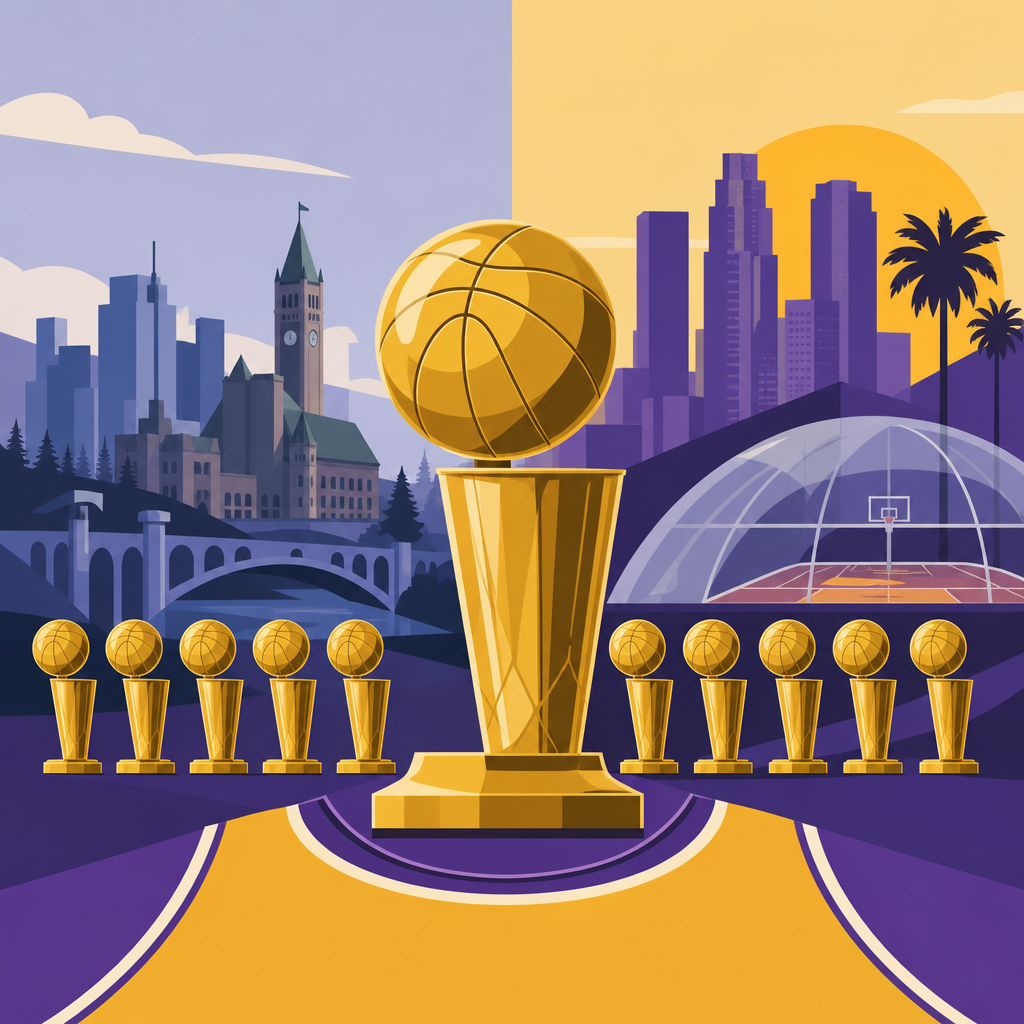
In practical terms, a championship means winning the NBA Finals, or, in the early years, the league title recognized by the Basketball Association of America, the National Basketball League, or the newly merged NBA. The Lakers’ official title count includes five championships won as the Minneapolis Lakers and twelve won after the move to Los Angeles before the 2020 season added another. That continuity matters because the organization treats its Minneapolis roots as part of one unbroken franchise history, even while some fans debate how city identity should shape legacy conversations. In every serious record book, the Lakers’ championships belong to one franchise line.
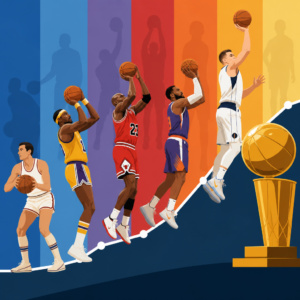
I have worked with historical team profiles long enough to know that casual summaries usually flatten the Lakers into a few familiar names: George Mikan, Magic Johnson, Kobe Bryant, LeBron James. The fuller story is richer. Each championship run reflects a distinct basketball problem solved at the highest level. In the 1950s, the Lakers proved size and interior organization could anchor a dynasty. In the 1970s, they combined star power with veteran structure. In the 1980s, they turned pace, passing, and depth into a championship machine. In the 2000s, they leaned on elite shot creation, triangle principles, and dominant interior play. In 2020, they adapted to a disrupted season and won in conditions no previous champion had ever faced.
This article serves as a hub for Lakers team history by organizing every title into eras, explaining who led each run, why each championship mattered, and how the franchise kept reinventing itself. If you want a clean answer to how many championships the Lakers have, the answer is seventeen through the 2020 title. If you want the more useful answer, the championships show how one organization stayed central to the NBA for more than seven decades. Understanding every Lakers title means understanding professional basketball itself.
Minneapolis Foundations: The First Lakers Dynasty
The franchise began as the Detroit Gems of the NBL, moved to Minneapolis in 1947, and soon became the sport’s first true powerhouse. The team name came from Minnesota’s identity as the “Land of 10,000 Lakes,” and the championships came quickly because the Lakers had the most dominant player in basketball: George Mikan. Standing 6-foot-10 in an era with fewer athletes of comparable size and coordination, Mikan controlled the paint offensively and defensively in ways that forced the sport to adapt. Rule changes involving goaltending and lane dimensions were tied directly to the kind of advantages big men like Mikan created.
The Lakers won titles in 1949, 1950, 1952, 1953, and 1954. The 1949 and 1950 championships came before and during the NBA’s formation period, which can confuse modern readers, but official franchise histories include them because the BAA-NBL merger carried those records forward. More important than technical league labels was Minneapolis’s dominance. Coached by John Kundla, the Lakers used disciplined half-court play, strong rebounding, and Mikan’s interior force to set the template for early championship basketball. Teammates such as Jim Pollard, Vern Mikkelsen, and Slater Martin gave the team balance, toughness, and dependable execution.
Those titles matter beyond their count. The Minneapolis Lakers established the franchise expectation that contention was not occasional but normal. They also gave the NBA one of its first marquee teams, helping the young league market itself around recognizable stars and repeat winners. When people ask when the Lakers became the Lakers, the honest answer is that the championship identity began before Los Angeles was ever involved. The banners from Minneapolis are not a footnote. They are the foundation.
From Relocation to Renewal: The 1972 Championship
The franchise moved to Los Angeles in 1960, a major strategic shift that placed professional basketball in one of America’s biggest media markets. The move immediately raised the Lakers’ profile, but the early Los Angeles years were defined as much by heartbreak as success. Elgin Baylor and Jerry West made the team glamorous and consistently excellent, while Wilt Chamberlain later added overwhelming talent, yet the Lakers repeatedly ran into the Boston Celtics in the Finals. That stretch shaped the franchise’s mentality. Los Angeles was visible, star-driven, and relevant, but not always rewarded with championships.
The breakthrough came in 1972. Coached by Bill Sharman, the Lakers finished 69-13 and produced one of the most important seasons in league history. Their 33-game winning streak remains the longest in major American professional team sports. West provided leadership and shot-making, Chamberlain anchored the defense and rebounding, and Gail Goodrich supplied scoring punch from the backcourt. Baylor retired early that season because of injuries, which adds a bittersweet layer to the title, but the championship finally ended years of near misses for the Los Angeles era.
The 1972 title was significant because it redefined the franchise outside its Minneapolis past. This was not Mikan’s team in another city; it was a distinctly Los Angeles champion, built around veteran stars, national visibility, and a style that could thrive under intense pressure. It also demonstrated that great teams are often remembered not just for superstar names but for functional structure. Sharman introduced organized practice habits and conditioning methods that helped an older roster sustain excellence. The result was the Lakers’ first championship in Los Angeles and one of the clearest proof points that experience, when disciplined properly, can still overpower youth.
The Showtime Era and Five Titles in the 1980s
No period defines the Lakers more vividly than Showtime. Beginning with the 1979 draft selection of Magic Johnson and accelerated by owner Jerry Buss’s entertainment-driven vision, the Lakers became basketball’s most glamorous dynasty. Showtime was not just a nickname. It described a system and an atmosphere: quick outlet passes, fast breaks, creative passing, deep frontcourt finishing, and a home arena experience that turned games into cultural events. On the court, head coach Pat Riley and his staff refined a transition attack that punished slow defensive conversions. Off the court, the Lakers became the NBA’s premier television product.
The championships came in 1980, 1982, 1985, 1987, and 1988. Magic’s rookie-season title in 1980 remains one of the sport’s iconic stories because he started at center in the Finals clincher after Kareem Abdul-Jabbar’s injury and delivered 42 points, 15 rebounds, and 7 assists. By 1982, the Lakers had fully embraced the pace-and-space principles available in that era, with Magic controlling tempo and Kareem remaining an elite half-court scorer. The 1985 championship mattered for another reason: it was the first time the Lakers defeated the Celtics in the Finals, reversing a psychological burden that had shadowed the franchise for decades.
The back-to-back titles in 1987 and 1988 confirmed that the Lakers were more than spectacular; they were durable. Kareem aged gracefully, Magic reached his strategic peak, James Worthy became a devastating finisher, Byron Scott stretched defenses, Michael Cooper brought elite perimeter defense, and Riley demanded precision within speed. The team could run opportunistically, execute in the post, and close games in the half court. In my experience reviewing dynasties across leagues, the best ones share one trait: they can win in more than one style. Showtime had flair, but it also had counters, discipline, and championship-grade depth.
| Championship Era | Titles | Core Stars | Defining Strength |
|---|---|---|---|
| Minneapolis Dynasty | 1949, 1950, 1952, 1953, 1954 | George Mikan, Jim Pollard, Vern Mikkelsen | Interior dominance and early league control |
| Early Los Angeles Peak | 1972 | Jerry West, Wilt Chamberlain, Gail Goodrich | Veteran cohesion and historic winning streak |
| Showtime | 1980, 1982, 1985, 1987, 1988 | Magic Johnson, Kareem Abdul-Jabbar, James Worthy | Transition offense, depth, and star versatility |
| Three-Peat and Repeat Era | 2000, 2001, 2002, 2009, 2010 | Kobe Bryant, Shaquille O’Neal, Pau Gasol | Elite shot creation, interior pressure, playoff adaptability |
| Bubble Championship | 2020 | LeBron James, Anthony Davis | Defensive flexibility and resilience in unusual conditions |
Kobe, Shaq, and the Early 2000s Three-Peat
After the 1988 title, the Lakers remained important but did not return to championship level until another superstar pairing changed the league. Shaquille O’Neal arrived in 1996 free agency, and Kobe Bryant joined via draft-night trade the same year. Their partnership was not always smooth, but at its best it was almost unsolvable. O’Neal overwhelmed opponents with size, power, and touch near the rim. Bryant supplied perimeter scoring, difficult shot-making, and relentless competitive pressure. When Phil Jackson became head coach in 1999, he installed the triangle offense, giving the Lakers a structure that balanced star freedom with spacing, reads, and role clarity.
The Lakers won three straight championships in 2000, 2001, and 2002. The 2000 title was the breakthrough, featuring a dramatic Western Conference Finals against Portland and a Finals victory over Indiana. In 2001, Los Angeles produced one of the greatest playoff runs ever, going 15-1 in the postseason. Bryant’s slashing and playmaking complemented O’Neal’s Finals dominance, and role players like Derek Fisher and Robert Horry delivered high-leverage moments. In 2002, the Lakers completed the three-peat by surviving a brutally difficult Western Conference, including a famous seven-game series against Sacramento that remains one of the era’s defining matchups.
What made that run special was not simply talent concentration. It was matchup pressure. Most teams had no individual defender for Bryant and no interior answer for O’Neal, which forced impossible compromises. Double the post, and Bryant attacked rotating defenses. Stay home on shooters, and O’Neal scored efficiently or earned free throws. The Lakers were not invincible; they had internal friction and occasional defensive lapses. But in playoff basketball, where elite advantages matter most, their top-end force was overwhelming.
Kobe’s Redemption and the 2009-2010 Back-to-Back
When O’Neal left in 2004, the next championship question centered on Kobe Bryant’s ability to lead a title team as the undisputed centerpiece. For several seasons, the roster around him was not strong enough. The Lakers remained high profile but not complete. That changed with a series of front-office moves, especially the 2008 trade for Pau Gasol. Gasol’s arrival gave Bryant a skilled interior partner who could pass from the elbow, score in the post, and fit seamlessly into Jackson’s offensive structure. Andrew Bynum, Lamar Odom, Derek Fisher, Trevor Ariza, and later Metta World Peace added needed size, versatility, and experience.
The 2009 championship validated Bryant’s second act. The Lakers beat Orlando in five games, with Bryant controlling tempo, creating offense from the perimeter, and making difficult late-clock shots that few players in league history could generate consistently. Gasol was outstanding throughout the run, and the supporting cast gave Los Angeles lineup flexibility. The 2010 title carried even more emotional weight because it came against Boston in the Finals, reviving the league’s most famous rivalry. Game 7 was ugly and physical, but that suited the moment. Bryant struggled shooting, yet he rebounded relentlessly, Gasol battled effectively inside, and the Lakers won through persistence and defense.
Those two titles are essential to Lakers history because they expanded Bryant’s legacy from brilliant scorer to unquestioned championship leader. They also showed how the franchise repeatedly retools around a transcendent player rather than accepting decline. In team-building terms, the lesson was clear: stars need ecosystem fit. Gasol was not just another All-Star; he solved specific offensive and structural needs that transformed the roster from dangerous to champion.
The 2020 Bubble Championship and Modern Lakers History
The Lakers’ most recent title came in 2020, under conditions unlike any in NBA history. After the COVID-19 pandemic suspended the season in March, the league resumed in a controlled environment at Walt Disney World in Orlando. There were no home crowds, routines were disrupted, family separation weighed on players, and mental endurance became as important as tactical preparation. Some critics tried to minimize the achievement because the setting was unusual. That criticism does not hold up. Every team faced the same environment, and winning required exceptional focus, health management, and adaptability.
Led by LeBron James and Anthony Davis, the Lakers entered the restart with championship expectations and met them. Frank Vogel built a defense-first team with strong rim protection, flexible help schemes, and enough shooting to support James as the primary creator. Davis was devastating as a two-way big, capable of switching defensively, scoring from the midrange, and finishing at the rim. James controlled games with pace, passing, and strength, reminding the league that championship basketball still begins with decision-making under pressure. The Lakers defeated Portland, Houston, Denver, and Miami to secure the franchise’s seventeenth title, tying Boston at the time for the most in league history.
The 2020 championship also carried emotional significance because it followed the death of Kobe Bryant earlier that year. Inside the organization and among fans, the title became part competition, part tribute, and part stabilizing moment during a chaotic period. Historically, it reinforced the Lakers’ defining trait: adaptability across eras. From Mikan’s paint dominance to Magic’s pace, from Kobe’s shot creation to LeBron’s all-around control, the methods changed, but the standard did not.
The Los Angeles Lakers championships record is best understood as a sequence of reinventions built on one constant expectation: contend for titles, not merely playoff appearances. Seventeen championships through 2020 were not won by one formula. They came from an early big-man dynasty in Minneapolis, a veteran breakthrough in 1972, the open-floor brilliance of Showtime, the overpowering star tandem of Kobe and Shaq, Kobe’s later leadership with Gasol, and the resilient bubble run led by LeBron and Davis. Each era answered the same question differently: what does championship basketball require right now?
For anyone exploring NBA team histories, the Lakers are the essential hub because their titles map directly onto league evolution. They show how rules, travel, television, free agency, coaching philosophy, sports science, and global celebrity changed the sport while one franchise stayed central. The main takeaway is simple: the Lakers’ championship history is not only long, it is structurally important to understanding the NBA itself. If you are building out a broader study of team histories, use this article as your starting point, then compare how other franchises sustained success, handled decline, and responded to changing eras.
Frequently Asked Questions
How many championships have the Los Angeles Lakers won, and do the Minneapolis titles count?
The Lakers have won 17 NBA championships, a total that includes both their Minneapolis and Los Angeles eras. That full count matters because the franchise’s history did not begin in California. The team was founded as the Minneapolis Lakers and won five championships before relocating to Los Angeles in 1960. Those early titles, won in 1949, 1950, 1952, 1953, and 1954, are officially part of the same franchise record recognized by the NBA. After the move, the Lakers added 12 more championships in Los Angeles, with title runs in 1972, 1980, 1982, 1985, 1987, 1988, 2000, 2001, 2002, 2009, 2010, and 2020. When fans, historians, or analysts discuss the Lakers’ championship history, they are talking about one continuous franchise story that stretches from George Mikan in Minneapolis to LeBron James and Anthony Davis in the Orlando bubble. That continuity is a major reason the Lakers are viewed as one of the league’s most iconic and successful organizations.
What made the Minneapolis Lakers so important to the franchise’s championship history?
The Minneapolis era established the Lakers as a powerhouse long before Hollywood, Showtime, or modern television exposure turned the team into a global brand. Led by George Mikan, the first dominant big man in professional basketball, the Minneapolis Lakers became one of the sport’s earliest dynasties. Their five championships helped define what winning looked like in the NBA’s formative years and gave the franchise its first identity as a team built around superstar talent. Mikan’s impact was so great that he influenced the way basketball itself evolved, including rule changes designed to address his dominance near the basket. Those early Lakers teams were not simply collecting titles in a less important period; they were shaping the early league and helping professional basketball gain credibility. For the franchise, the Minneapolis championships created a tradition of competing for titles that carried into Los Angeles. Without that foundation, the Lakers would still be a historic team, but the scale and depth of their legacy would look very different.
Which Lakers championship eras are considered the most influential?
Several Lakers title eras stand out because each one changed the way the franchise was perceived and, in some cases, influenced the NBA as a whole. The first was the George Mikan-led Minneapolis dynasty, which gave the organization its earliest championships and established it as a premier franchise. The next major era came with Wilt Chamberlain, Jerry West, and Gail Goodrich, culminating in the 1972 championship team that won a then-record 33 consecutive games and remains one of the most respected title teams in league history. Then came Showtime in the 1980s, led by Magic Johnson, Kareem Abdul-Jabbar, and coach Pat Riley. That era produced five championships and became synonymous with fast-paced, glamorous, star-driven basketball, helping the NBA grow into a major entertainment product. The early 2000s brought another dynasty with Shaquille O’Neal and Kobe Bryant, who powered the Lakers to a three-peat from 2000 through 2002. Kobe later returned the franchise to the top with back-to-back titles in 2009 and 2010. Finally, the 2020 championship matters for its own reasons: it ended a decade-long title drought, tied the franchise with the Boston Celtics at 17 championships at the time, and came under unprecedented bubble conditions. Each of these eras contributed something different—foundational legitimacy, cultural impact, dominance, resilience, or reinvention.
Why is the 2020 bubble championship such a significant part of Lakers history?
The 2020 championship holds a unique place in Lakers history because it combined competitive difficulty, emotional weight, and historical symbolism. Played inside the NBA’s Orlando bubble after the COVID-19 pandemic shut down the season, the title came under conditions unlike any in league history. Teams were isolated from normal travel, home-court advantage disappeared, routines were disrupted, and players had to sustain focus in an environment with extraordinary mental and emotional pressure. For the Lakers, the moment carried even more meaning because it came in the same year as the death of Kobe Bryant, a franchise icon whose legacy shaped multiple generations of Lakers basketball. On the court, the team led by LeBron James and Anthony Davis was dominant, defending at a high level and adapting well to the playoff setting. The championship was also historically important because it gave the Lakers their 17th title, matching the Celtics for the most in NBA history at that time. Some fans debate bubble championships across the league, but within the broader context of NBA history, the 2020 Lakers had to navigate a uniquely demanding path and earned a title that is now an essential chapter in the franchise story.
Who are the most important players and coaches in Lakers championship history?
Lakers championship history is so extensive that it spans multiple generations of transformational players and coaches. George Mikan is indispensable because he was the centerpiece of the Minneapolis dynasty and the franchise’s first true superstar. In Los Angeles, Jerry West and Elgin Baylor helped define the team’s early identity, even though Baylor did not win a title as an active Finals contributor in the same way other legends did. Wilt Chamberlain was central to the 1972 championship breakthrough. The Showtime era brought Magic Johnson and Kareem Abdul-Jabbar to the forefront, with coach Pat Riley turning talent into a fast, disciplined, championship machine. In the 2000s, Shaquille O’Neal and Kobe Bryant became the faces of another dynasty under Phil Jackson, whose coaching credentials with the Lakers place him among the most important figures in franchise history. Kobe’s later back-to-back titles in 2009 and 2010 further cemented his standing as one of the defining Lakers ever. In the modern era, LeBron James and Anthony Davis led the team to the 2020 title, proving the franchise could still build a championship roster in a completely different basketball landscape. When discussing the Lakers’ championships, the key figures are not limited to one generation because the franchise’s greatness comes from repeated reinvention around elite stars and high-level coaching.