
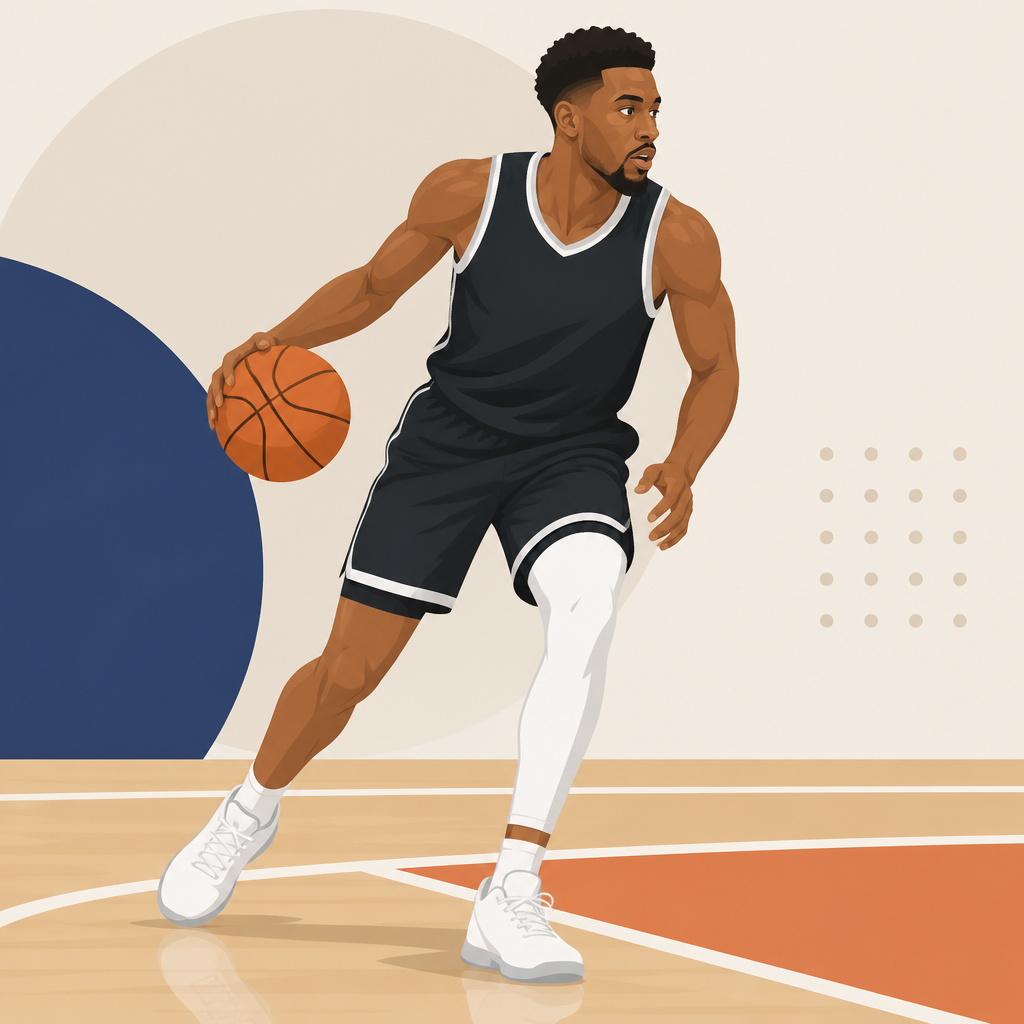
One leg sleeves have become one of the most recognizable pieces of NBA gear because they sit at the intersection of performance, injury management, personal routine, and style. Fans notice them immediately: a single compression sleeve running from thigh to calf, often paired with short uniforms and signature sneakers, can look like a fashion statement. In practice, the reason is usually more specific. NBA players wear one leg sleeve to support a particular muscle group, manage soreness, create a sense of stability after injury, improve comfort during games, or maintain a pregame routine that helps them feel prepared. The “one” matters because basketball stress is rarely perfectly symmetrical. A player may have a history of irritation in one knee, tightness in one hamstring, or scar tissue on one side that responds better to compression.
In locker rooms and training spaces, gear choices are rarely random. Over years covering basketball equipment trends and speaking with performance staff, I have seen that players tend to keep anything that consistently makes them feel loose, warm, and confident. The NBA allows a wide range of compression apparel under uniform rules, so leg sleeves became a practical solution for players who wanted support without the bulk of a brace. For readers exploring NBA culture, gear and style start here: sleeves, tights, shooting accessories, sneaker pairings, and visible routines all communicate something about how a player wants to perform and be seen. Understanding the one leg sleeve is useful because it explains a bigger truth about NBA culture: what looks cosmetic often begins as function, and what begins as function often becomes identity.
Compression, warmth, and muscle support
The most direct answer to why NBA players wear one leg sleeve is compression. A leg sleeve applies graduated pressure to soft tissue, usually covering the calf, knee area, quadriceps, or the full leg depending on the cut. That pressure can help a player feel more supported during repetitive sprinting, jumping, lateral slides, and abrupt deceleration. Basketball places constant load on the quads, hamstrings, calves, patellar tendon, and surrounding connective tissue. Even when a sleeve does not materially change biomechanics, it often improves proprioception, the body’s awareness of position and movement. Players describe that as feeling “held together” or “more stable,” especially late in games.
Warmth is another practical reason. Muscles generally perform better when they are warm, and NBA arenas can feel cooler than fans expect because of climate control and long periods on the bench between bursts of action. A compression sleeve helps retain heat in a single leg that may tighten more quickly than the other. Veteran players often become highly specific about this. One athlete may want a full tight under both legs, while another only wants a right-leg sleeve because the left side feels fine and the extra fabric would be distracting. Basketball players are obsessive about comfort details, and tiny differences matter when you are cutting at full speed.
The scientific evidence on compression garments is mixed but useful. Research has shown modest benefits in perceived soreness, recovery, and comfort, while direct in-game performance gains are less consistently proven. That is normal in elite sport. Not every useful tool adds measurable vertical leap or sprint speed. Sometimes the benefit is that the player trusts the gear, moves freely, and stops thinking about a nagging sensation. At the NBA level, reducing doubt is valuable in itself.
Injury history and return-to-play routines
For many players, one leg sleeve is tied to an injury history. Knee tendinopathy, quadriceps contusions, calf strains, hamstring tightness, post-surgical swelling, and general overuse can all lead a player to wear compression on one side. The sleeve is not a cure and it is not a substitute for rehabilitation, but it can become part of a larger return-to-play plan that includes strength work, mobility, soft tissue treatment, and load management. Team medical staffs track asymmetries closely because basketball players rarely land, plant, and rotate evenly over an 82-game season.
A common example is a player coming back from knee irritation who no longer needs a hinged brace but still wants tactile support. A sleeve is lighter, less restrictive, and visually cleaner than a brace, so it often becomes the middle ground between no support and heavy support. Another example is a player with recurring calf tightness in the push-off leg. He may wear a sleeve only on that side during games, then switch to recovery tights afterward. The public sees one accessory; the training staff sees a maintenance protocol.
This is also why players keep the same look long after the original issue improves. Routines are sticky. If an athlete wore a left-leg sleeve during a strong playoff run after returning from soreness, that sleeve can become psychologically tied to readiness. Superstition is too simple a word. Elite players build repeatable systems because consistency reduces variables. In that context, a single sleeve is part medical tool, part sensory cue, and part ritual.
Why only one leg instead of both?
The short answer is that basketball problems are often unilateral. Most players have a dominant takeoff leg, a preferred stopping pattern, and a side that absorbs more stress on certain moves. Guards who attack off one foot repeatedly may overload a specific knee or calf. Wings who favor one spin direction may notice one hip and quad working differently. Big men battling for rebounding position may feel more strain on the leg they use to anchor contact. Because the issue is often side-specific, the gear becomes side-specific too.
There is also a comfort and mobility calculation. Some players dislike the sensation of balanced compression on both legs because it feels hotter, tighter, or unnecessary. NBA uniforms already involve multiple equipment choices, including socks, ankle braces, finger tape, padded undershirts, and sometimes arm sleeves. Adding fabric where it is not needed can be irritating. The best game gear disappears mentally. If one sleeve addresses the concern, two sleeves may feel excessive.
Fit matters as well. Compression garments work best when correctly sized. Too loose and they do little. Too tight and they can feel restrictive. A player who finds a single sleeve setup that keeps one knee warm without pulling awkwardly at the waistband may stick with it for years. Equipment managers are used to players requesting highly specific cuts, lengths, and brands for exactly this reason.
| Reason for one leg sleeve | What the player is usually trying to achieve | Common real-world example |
|---|---|---|
| Compression support | Improve comfort and body awareness in one leg | Guard wears a calf-to-thigh sleeve on the takeoff side |
| Heat retention | Keep a tight muscle group warm during stoppages | Veteran forward uses one sleeve for recurring hamstring tightness |
| Post-injury routine | Maintain confidence after rehab or soreness | Player replaces a bulky knee brace with a lighter sleeve |
| Style and identity | Create a recognizable look linked to on-court persona | Star keeps the same one-leg setup throughout a signature season |
| Habit and ritual | Repeat a setup that feels mentally reliable | Player continues wearing one sleeve after a strong playoff run |
Style, branding, and the visual language of NBA culture
Although performance is usually the starting point, style is absolutely part of the story. The NBA is a visual league. Broadcast close-ups, tunnel fits, social media photography, video games, and signature campaigns turn equipment into image. A one leg sleeve changes silhouette immediately. It creates contrast, lengthens the line of the leg, and draws attention to footwear. On some players, it becomes as recognizable as a shooting form or pregame handshake.
That matters because NBA culture is built on repeatable visual cues. Think about the history of accessories: headbands, arm sleeves, short shorts, long shorts, padded socks, masked faces after injuries, taped fingers, and custom PE sneakers. Once a player wins while wearing a distinctive item, fans associate the gear with that player’s identity. Young players copy the look in high school and AAU, sometimes without fully knowing the original functional reason. Over time, the sleeve moves from treatment tool to style language.
Brands understand this clearly. Nike, adidas, Under Armour, and specialist compression companies design sleeves that balance technical fabric, moisture control, and clean aesthetics. NBA uniform policy also affects presentation because accessories generally need to coordinate with team colors or approved tones. As a result, the one leg sleeve looks intentional rather than improvised. That polished appearance helps explain why it survives even among healthy players: if an item feels good and photographs well, it tends to stay.
How sleeves compare with braces, tights, and other lower-body gear
A leg sleeve sits in the middle of the support spectrum. It offers more coverage than simple tape but less structural control than a brace. That distinction is important. If a player needs joint stabilization because of ligament laxity or a recent serious injury, medical staff may prefer a brace. If the goal is broader warmth and compression, full tights may be better. A one leg sleeve is usually chosen when the player wants targeted support without adding bulk, changing movement mechanics, or trapping too much heat.
Compared with knee sleeves alone, a full one-leg compression sleeve spreads pressure over a larger area and may feel smoother under shorts. Compared with full tights, it leaves the unaffected leg free, which many players prefer. Compared with taping, it is faster to put on, easier to replace, and less variable from day to day. These tradeoffs explain why the one-leg format has remained popular through different fashion eras in the league.
There are limits. A sleeve cannot correct poor landing mechanics, replace eccentric strength work, or prevent every soft tissue problem. Players who rely on it without addressing workload, sleep, hydration, and rehabilitation are missing the point. The best teams treat gear as one layer inside a full performance system. That system typically includes force-plate testing, manual therapy, sprint load tracking, and individualized practice plans. The sleeve is visible, but the real work happens behind it.
What fans, young players, and coaches should take from the trend
For fans, the main takeaway is simple: one leg sleeves usually reflect a specific need, not just a random fashion choice. For young players, the better lesson is not “copy the accessory,” but “understand the purpose.” If a sleeve helps with warmth or comfort, fine. If pain persists, the answer is evaluation from a qualified athletic trainer or physical therapist, not more compression. Coaches should also be careful about assuming gear equals toughness or seriousness. Some players need it; some do not. The right standard is function.
As the hub for NBA gear and style, this topic connects to bigger conversations about arm sleeves, undershirts, sneaker rotations, protective masks, finger tape, and team color rules. All of those items tell a similar story: NBA equipment choices blend biomechanics, league policy, personal preference, and image. A one leg sleeve may start as a way to calm a knee or keep a calf warm, then evolve into a signature part of a player’s look. That is why the accessory has lasted across eras, positions, and fashion cycles.
So why do NBA players wear one leg sleeve? The real reasons are support, heat retention, post-injury comfort, habit, and style, usually in that order, though the balance changes by player. The sleeve is popular because it solves a practical problem while fitting the aesthetics of modern basketball. If you are building a deeper understanding of NBA culture, pay attention to gear choices. They reveal how players manage their bodies, shape their identities, and turn small competitive edges into lasting visual trademarks. Explore the rest of the NBA Culture gear and style guides to see how every accessory on the court carries a performance story behind the look.
Frequently Asked Questions
Why do NBA players wear one leg sleeve instead of two?
In most cases, an NBA player wears one leg sleeve because only one leg needs extra support, compression, or protection. Basketball puts repeated stress on the knees, quads, hamstrings, calves, and lower legs, and it is very common for a player to have one side that is more sore, more injury-prone, or recovering from a previous issue. A single sleeve can help create a snug, supported feeling around that area without adding unnecessary gear to the other leg. For example, a player dealing with mild swelling, muscle tightness, or lingering discomfort in one quad or calf may prefer targeted compression on that side only.
There is also a practical side to it. NBA players are extremely sensitive to how their bodies feel during movement, and even small differences in fabric, tightness, and temperature can affect comfort. If one sleeve gives them the physical sensation they want on the affected leg, there is no real reason to duplicate it on the other side. So while fans may see one leg sleeve as a signature look, players and trainers usually view it as a specific tool applied to a specific need.
Do one leg sleeves actually help performance on the court?
They can help, but not usually in the way fans sometimes assume. A one leg sleeve is not a magic performance booster that suddenly makes a player faster or more explosive. Its value is more subtle. Compression gear can help a player feel more supported, warm, and stable during constant sprinting, cutting, jumping, and landing. That matters in the NBA, where games are fast, physical, and repetitive, and players rely heavily on routine and body awareness. If a sleeve helps a player feel looser before tip-off or more comfortable through four quarters, that alone can make it worthwhile.
Some athletes also believe the sleeve helps with circulation, muscle readiness, and post-exertion soreness, especially over the course of a long season. Even when the measurable physical benefit is modest, the confidence factor can be significant. Players often stick with gear that helps them feel locked in mentally and physically. So the real performance benefit is often about support, consistency, and comfort rather than a dramatic, visible athletic advantage.
Are NBA leg sleeves mainly for injury prevention or for recovering from injuries?
Usually, they are more closely tied to injury management and day-to-day maintenance than to pure prevention. Many NBA players use a one leg sleeve because they are dealing with a minor issue, protecting an area with injury history, or trying to reduce soreness during the grind of the season. A player coming back from a strained quad, knee irritation, calf tightness, or general overuse may wear a sleeve as part of a broader recovery and support plan developed with trainers and medical staff. It can serve as a reminder to protect that leg and help the area feel more secure during play.
That said, prevention still plays a role. Even if a player is not currently injured, he may know that one leg tends to tighten up more quickly or absorb more stress due to movement patterns, prior wear and tear, or natural imbalances. In that situation, wearing one sleeve is a proactive choice. It does not eliminate injury risk, but it may help the player manage the physical demands of games and practices more effectively. In the NBA, where almost every veteran is managing something, the line between prevention and recovery is often very thin.
Is wearing one leg sleeve also a fashion statement in the NBA?
Yes, but fashion is often the secondary reason rather than the primary one. One leg sleeves have become visually iconic because they stand out immediately on the court. They create a sharp, asymmetrical look that pairs well with modern uniforms, accessories, and sneakers, and some players absolutely embrace that aesthetic. Over time, once a player starts wearing a sleeve for support or recovery, it can become part of his recognizable image. Fans begin to associate the look with that player’s identity, and the gear takes on a style dimension of its own.
Still, most NBA equipment choices begin with function. Players are creatures of habit, and they rarely keep wearing something game after game unless it serves a purpose or feels right physically. The style factor grows from there. In other words, a one leg sleeve can be both useful and fashionable at the same time. That overlap is a big reason it has remained so common in the league: it solves a practical need while also fitting the visual culture of professional basketball.
Why has the one leg sleeve become so common in modern basketball?
Its popularity comes from a combination of sports science, player preference, and visibility. Modern NBA players are more intentional than ever about recovery, load management, muscle care, and individualized gear. As training staffs have become more sophisticated, players have adopted equipment that helps them manage specific physical issues, even if the benefit is mostly about feel and routine. A one leg sleeve fits perfectly into that environment because it is simple, targeted, and easy to integrate into a game-day setup.
There is also a copycat effect in basketball culture. When high-profile players wear a particular piece of gear consistently, younger players and fans notice it. What starts as a practical support item can quickly become normalized across all levels of the sport, from the NBA to college to youth leagues. Because the one leg sleeve looks distinctive and professional, it spreads easily. But at the highest level, the enduring reason it remains common is that it offers a believable mix of comfort, targeted compression, recovery support, and personal ritual—exactly the kinds of details that matter to elite athletes over the course of a long season.