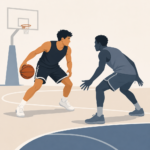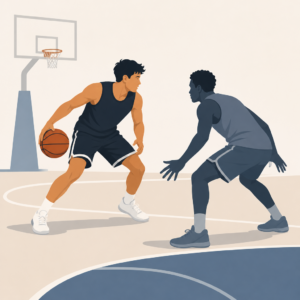

The pick-and-roll is the backbone of modern basketball offense because it forces two defenders to solve one problem in real time. At its simplest, a screener stands in the path of an on-ball defender, the ball handler uses that screen to create separation, and both offensive players read the defense after contact or rejection. In practice, the action is far richer. Coaches build entire playbooks around high pick-and-roll, side pick-and-roll, Spain pick-and-roll, empty-corner pick-and-roll, and drag screens in transition because one action can create a layup, lob, pull-up jumper, corner three, or a second rotation that opens the weak side. That flexibility is why the play appears from youth gyms to the NBA Finals.
Understanding pick-and-roll advantages and disadvantages matters because offense is not about memorizing a diagram; it is about recognizing when a concept gives your team leverage and when it exposes a weakness. I have installed pick-and-roll packages with guards who could bend defenses at will, and I have also watched the same concept stall because the screener never made real contact, the ball handler drifted sideways, or the defense had the personnel to switch every action. A good offense hub should explain not only what the play is, but why it works, what counters exist, and how it fits into the bigger offensive system.
For players and coaches, key terms need to be clear. The ball handler is the player using the screen. The screener is the player setting it, often a big but not always. The roll means the screener turns and moves toward the basket after screening. The pop means the screener spaces to the perimeter instead. A hedge is when the screener’s defender steps out to contain the ball. Drop coverage keeps the big closer to the paint. A switch exchanges assignments. Tags, stunts, low man help, and nail help describe the rotations behind the first two defenders. If you understand those terms, the offense becomes easier to read.
This article serves as a hub for basketball offense because the pick-and-roll connects almost every offensive skill: ball handling, passing, shooting, finishing, spacing, screening, decision-making, and pace. It also connects to related offensive topics such as transition offense, half-court spacing, off-ball movement, post entries, drive-and-kick play, and late-clock execution. If you can diagnose the strengths and failures of this action, you can understand why an offense scores efficiently or bogs down. The sections below break down when the pick-and-roll creates clear advantages, when it becomes vulnerable, and how smart teams decide whether to lean on it or move to another option.
Why the Pick-and-Roll Creates Offensive Advantages
The first advantage is numerical and immediate: the action places two defenders in conflict while the offense keeps other players spaced. If the on-ball defender is screened cleanly and the screener’s defender helps too high, the roller slips behind the coverage into open space. If that big stays back, the guard can turn the corner into a pull-up, floater, or rim attack. That is why elite guards such as Chris Paul, Luka Doncic, and Jalen Brunson have lived off this action. They do not need a perfect play design every trip. They need one defender trailing and another hesitating.
The second advantage is that the pick-and-roll simplifies reads without making the offense simple-minded. A young team often struggles to execute long pattern offenses, but it can learn three core reads from a side pick-and-roll: hit the roller if the big steps up, take the jumper if the big drops, and skip to the weak-side shooter if the low man tags. Those reads are teachable, repeatable, and measurable on film. In my experience, once a guard can identify the weak-side tag early, turnovers drop and quality shots rise because the pass is made on time rather than after the defense recovers.
Third, the action targets specific defenders. Offense is often about hunting matchups, and the pick-and-roll is the cleanest way to involve a weak defender in the primary action. If a team hides a slower guard in the corner, you can bring that defender into a ghost screen or force a switch through angle pick-and-roll. If the opposing center is excellent at rim protection but struggles in space, high ball screens pull that center away from the basket. The 2015 through 2018 Warriors and countless spread offenses used this logic repeatedly: force difficult choices, then punish whichever compromise the defense accepts.
The fourth advantage is efficiency. League-wide tracking has shown for years that shots at the rim, free throws, and open threes are the most valuable outcomes in half-court offense. A well-run pick-and-roll tends to generate exactly those shots. The guard gets downhill, the roller pressures the rim, help rotates in, and shooters receive catch-and-shoot looks. Even when the initial action does not score, it often shifts the defense enough to produce a second-side advantage. Coaches call this creating an advantage then sustaining it. One good screen can distort the shell of the defense for the rest of the possession.
What Makes the Play Work in Real Games
A pick-and-roll works when spacing, timing, and screening detail are all present at once. Spacing means the corners are occupied, the dunker spot is used intentionally, and off-ball teammates do not drift into driving lanes. Timing means the screener arrives when the ball handler is ready, not three beats early while the defense loads up. Detail means the screener sets a legal, physical screen with the right angle and the guard rubs shoulders off it instead of rejecting it by accident. Most failed pick-and-rolls are not ruined by the concept itself. They are ruined by poor execution of those basics.
The best ball handlers manipulate pace rather than sprinting blindly. They may walk the defender into the screen, hesitate to freeze the big, then explode downhill. They keep the defender on their back hip, which is a classic pocket-pass setup. Steve Nash mastered that dribble patience, and modern guards still copy it because it turns the screen from a collision into an advantage. When the guard is under control, the screener has time to roll on balance, weak-side defenders must commit longer, and passing windows become clearer.
The screener’s skill level matters more than many fans realize. A productive screener does not just stand still. He or she chooses an angle based on coverage, makes contact without moving, opens to the ball quickly, and then rolls, short rolls, or pops with purpose. Draymond Green became so valuable in this role because he could short roll into the middle, draw help, and hit corner shooters or cutters. That is not a small wrinkle. It is often the difference between a decent two-man action and an offense that forces multiple rotations.
| Situation | Best Offensive Response | Why It Works |
|---|---|---|
| Drop coverage | Pull-up jumper, floater, or pocket pass | The big concedes space to protect the rim |
| Hard hedge | Hit the short roll quickly | Two defenders show to the ball, exposing the middle |
| Switch | Attack mismatch or slip early | The defense trades size for containment |
| Ice on side pick-and-roll | Reject baseline denial and re-screen | The defense tries to keep the ball away from the middle |
| Blitz or trap | Pass out early and play four-on-three | Immediate release beats the extra pressure |
Personnel fit is the final ingredient. The ideal lineup has a decision-making guard, a screener who can either finish or pass, and at least two shooters who must be respected. Add a corner cutter or a lift from the wing and the defense has even more to process. This is why empty-corner pick-and-roll is so dangerous. By removing one help defender from the strong side, the ball handler and roller have more room to attack. If the low man is late from the weak side, the pass to the corner or dunker spot becomes simple and highly efficient.
Common Defensive Counters and Why the Play Fails
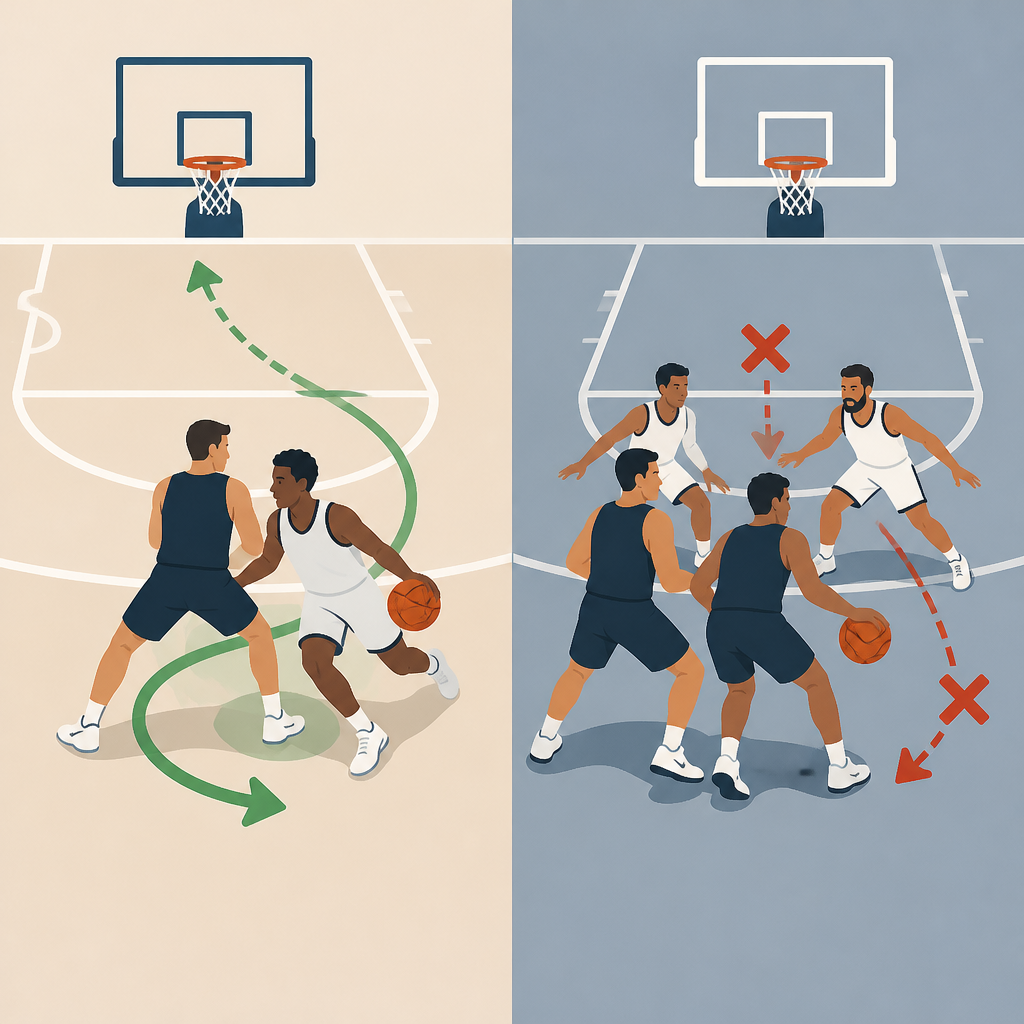
The pick-and-roll fails when the defense dictates the route and the offense has no answer. Switching is the most obvious example. If both defenders are mobile and disciplined, the screen does not create separation; it simply changes matchups. Against teams with multiple similar-sized defenders, a basic ball screen can become a wasted action unless the offense is prepared to punish the switch in the post, attack the big in space, or force a second screen. The Boston Celtics and other switch-heavy teams have shown that strong communication can flatten many routine pick-and-roll possessions.
Another failure point is poor spacing. If a non-shooter stands one pass away, the help defender can tag the roller and still recover. If a big clogs the dunker spot without timing a cut, the rim protector has two bodies to guard in one area. If the weak-side wing sinks too low, skip passes become longer and easier to intercept. Coaches often blame the ball handler after a turnover, but film usually shows a chain reaction: crowded spacing narrowed the lane, delayed the read, and turned a simple pocket pass into a risky one.
Screen quality is a constant issue at every level. Young players often slip too early because they are eager to score, which means no defender is actually screened. Veterans sometimes angle the screen poorly and send the ball handler toward help instead of away from it. Illegal screens also kill possessions, especially when officials emphasize movement. A good screen should create a line of attack. A bad one creates confusion for the offense and comfort for the defense.
Predictability is another major disadvantage. Some teams overuse the same high ball screen every trip, from the same side, for the same ball handler, with the same weak-side alignment. Defenses study tendencies. If a team knows the guard wants the pocket pass on the second dribble or always rejects to the left hand, it can preload help and sit on those options. In late-season scouting, this becomes a serious problem. Playoff basketball especially punishes repetitive offense because elite defenders recognize timing, spacing, and preferred reads faster than regular-season opponents do.
The final reason it fails is decision speed. The pick-and-roll rewards early reads and punishes late ones. Against a blitz, a guard who holds the ball invites a turnover. Against drop, a guard who refuses the open pull-up lets the trailing defender recover. Against a switch, a roller who waits too long to seal loses the inside angle. The windows are often open for less than a second. Offensive success depends on processing as much as talent.
How Teams Adjust the Action Within a Complete Offense
Smart offenses do not abandon the pick-and-roll when defenses adjust; they layer counters around it. A re-screen changes the angle after the first coverage holds. A ghost screen from a shooter can force a switch without real contact, creating confusion and opening a pop three. Spain pick-and-roll adds a back screen on the screener’s defender, often freeing the roller for a lob while also creating a shooter lifting out. These are not gimmicks. They are structured answers to common coverages, and they keep the defense from solving the same math problem every possession.
The action is also strongest when connected to the rest of the offense. Transition drag screens flow naturally from defensive rebounds. Early offense pistol action can lead into side pick-and-roll without resetting the floor. Horns sets let teams disguise which big will screen and whether the second big will dive, pop, or hand off. That connectivity matters because the best offense is not a single play. It is a chain of actions where one advantage leads to the next. When I build practice plans, we work on the ball screen, but we also drill the shake-up from the corner, the low-man tag read, and the second-side swing that punishes overhelp.
There are times when the correct offensive choice is not to call a pick-and-roll at all. Against a dominant shot blocker sitting in deep drop, you may need more off-ball screening and movement to shift that defender before the drive. Against a switch-everything lineup, post seals, cuts, and offensive rebounding pressure may produce better returns than endless ball screens. Against zone, a traditional pick-and-roll can help, but middle flashes and overloads may be more important. Good offense is adaptive. The pick-and-roll is a core tool, not a religion.
As a hub concept within basketball offense, the pick-and-roll teaches a broader lesson: efficient scoring comes from creating an advantage, reading help, and converting that read into the best available shot. Whether the next article focuses on spacing, finishing at the rim, shooting off the catch, or passing against pressure, the same principle applies. Learn the coverage, know your personnel, and choose the action that forces the defense into the hardest rotation.
The pick-and-roll works because it compresses basketball offense into a clear sequence of pressure and response. It creates downhill drives, lobs, free throws, and kick-out threes while giving players a teachable framework for decision-making. When spacing is correct, the screen is physical and legal, the ball handler changes pace, and teammates occupy help defenders, the play is one of the most reliable engines in the sport. That is why it remains central to youth development, college systems, international play, and the NBA.
Its disadvantages are just as important to understand. Switching defenses can erase the first advantage. Poor spacing can shrink passing lanes. Weak screen angles, predictable play calls, and slow reads can turn a strong concept into empty dribbling. The lesson is not that the pick-and-roll is overrated. The lesson is that offense depends on context. No action succeeds on reputation alone. It succeeds when your personnel, spacing, timing, and counters all align against the coverage in front of you.
If you want to improve your team’s offense, start by charting your next five games or practices. Track screen angle, coverage faced, first read, and result. You will quickly see when the pick-and-roll is generating real advantage and when it is wasting possessions. Use that evidence to sharpen your spacing, teach better counters, and connect this action to the rest of your offensive package. Master that process, and every other basketball offense skill becomes easier to organize and more productive on the floor.
Frequently Asked Questions
Why is the pick-and-roll considered one of the most effective plays in basketball?
The pick-and-roll is so effective because it creates immediate pressure on the defense with a simple two-player action. One offensive player sets a screen on the ball handler’s defender, and that moment forces two defenders to make a fast, connected decision. If they are late, the ball handler can turn the corner and attack downhill. If they overcommit to the dribbler, the screener can slip to the rim or pop into open space. If help defenders rotate in, the offense often creates open kick-out threes, dump-off passes, or secondary driving lanes.
What makes the play especially powerful is its flexibility. Teams can run it at the top of the floor, on the wing, out of the corner, or as part of a larger sequence like Spain pick-and-roll or empty-corner pick-and-roll. It also works across different levels of basketball because the core idea is universal: force defenders to communicate, move, and decide under time pressure. When the ball handler is skilled at reading coverage and the screener understands timing, angles, and spacing, the action can generate high-value shots repeatedly.
In modern basketball, where spacing and decision-making are everything, the pick-and-roll remains a foundational action because it puts defenders in conflict. It does not rely on one perfect outcome. Instead, it creates multiple possible advantages from the same setup, which is exactly why coaches build entire offensive systems around it.
What are the biggest advantages of running the pick-and-roll on offense?
The biggest advantage is that it helps the offense create an advantage without needing a complex set play. A well-set screen can free the ball handler for a drive, a pull-up jumper, or a pocket pass to the rolling big. That means one action can produce rim pressure, mid-range opportunities, and open perimeter shots depending on how the defense reacts. Because of that, the pick-and-roll is efficient, repeatable, and easy to adapt to personnel.
Another major benefit is that it targets weak defenders and forces communication. Offenses often use the action to involve a defender who struggles laterally or a big man who is uncomfortable defending in space. Once that player is pulled into the action, the offense can attack the mismatch directly. Even strong defensive teams can break down if their on-ball defender, screener defender, and weak-side help are not perfectly synchronized.
The pick-and-roll also simplifies reads for players while still stressing the defense at a high level. The ball handler usually has a progression: read the on-ball defender, read the big, then read the low man and weak-side help. The screener reads whether to roll, short roll, slip, or pop. Because those reads are structured, teams can teach them clearly, then layer in counters based on coverages like drop, hedge, switch, blitz, or ice. That balance between simplicity and sophistication is one of the play’s greatest offensive strengths.
When does the pick-and-roll usually fail or become ineffective?
The pick-and-roll tends to fail when spacing, timing, or decision-making breaks down. If the screener arrives late or sets a poor angle, the ball handler never gains a real advantage. If the ball handler uses the screen too early, too wide, or without pace, the defender may recover easily. If weak-side spacing is crowded, help defenders can collapse into the lane without giving up a clean passing window. In those situations, what should be an advantage-creating action becomes a clogged possession.
It also becomes ineffective against disciplined defensive coverage when the offense cannot make the right counters. For example, a strong drop defense can neutralize a ball handler who cannot hit pull-up jumpers. A switch-heavy defense can flatten the action if the offense cannot exploit mismatches quickly. A blitz can force the ball out of the handler’s hands, and if the screener cannot short roll and pass, the possession stalls. The play itself is not failing in theory, but the personnel or execution may not be good enough to punish the defense’s chosen response.
Turnovers are another common failure point. Pocket passes can be deflected, skip passes can hang in the air too long, and overdribbling can allow the defense to reset. Some teams become too reliant on the pick-and-roll and become predictable, which lets opponents preload help and anticipate the next read. When an offense runs the action without pace, variety, or strong counters, even a good concept can lose its edge.
How do defensive strategies change the success of a pick-and-roll?
Defensive coverages have a huge impact because the pick-and-roll is really a read-and-react battle. In drop coverage, the screener’s defender stays back to protect the paint while the on-ball defender fights over the screen. This often invites pull-up jumpers, floaters, or pocket passes if the ball handler is patient and skilled. Against hedge or show coverage, the big steps out to slow the dribbler, which can disrupt rhythm but also opens short-roll space behind the coverage if the offense moves the ball quickly.
Switching changes the equation by removing the immediate confusion the offense hopes to create. Instead of chasing over and recovering, defenders simply trade assignments. That can stop the first action, but it can also create mismatches. A quick guard may end up defended by a slower big, or a rolling center may seal a smaller defender near the rim. Whether switching helps the defense often depends on how well the offense recognizes and attacks those mismatches before help arrives.
More aggressive coverages like blitzing or trapping are designed to get the ball out of the handler’s hands. These schemes can be effective against star creators, but they demand excellent backside rotations. If the screener catches the ball on the short roll and makes the right pass, the defense can end up playing four-on-three behind the trap. That is why elite offenses often beat pressure with quick decisions rather than flashy dribbling. Ultimately, the success of any pick-and-roll depends on whether the offense can identify the coverage early and punish its built-in weakness.
What makes a team or player especially good at executing the pick-and-roll?
Great pick-and-roll execution starts with the ball handler. The best guards change pace, keep defenders on their hip, come off screens tightly, and stay balanced enough to pass or shoot at any moment. They do not just run the play; they manipulate it. They know when to reject the screen, when to snake dribble into the middle, when to hit the roller early, and when to force the big defender to commit before making the final read.
The screener is just as important. A great screener creates contact legally, chooses smart angles, and understands when to roll hard, slip early, short roll into space, or pop to the perimeter. Good bigs do more than set picks; they become playmakers after the screen. In today’s game, a screener who can catch, finish, and pass on the move turns a standard pick-and-roll into a complete offensive engine.
Team context matters too. Strong spacing from shooters, a dunker spot threat, and players who cut at the right moments all increase the action’s effectiveness. Coaching also plays a major role through play design, spacing rules, and built-in counters for different coverages. The teams that dominate with the pick-and-roll are usually the ones that combine skilled handlers, intelligent screeners, reliable spacing, and fast decision-making. When those pieces are in place, the play becomes much more than a basic screen action. It becomes a system for creating efficient offense possession after possession.