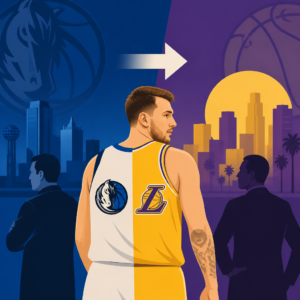

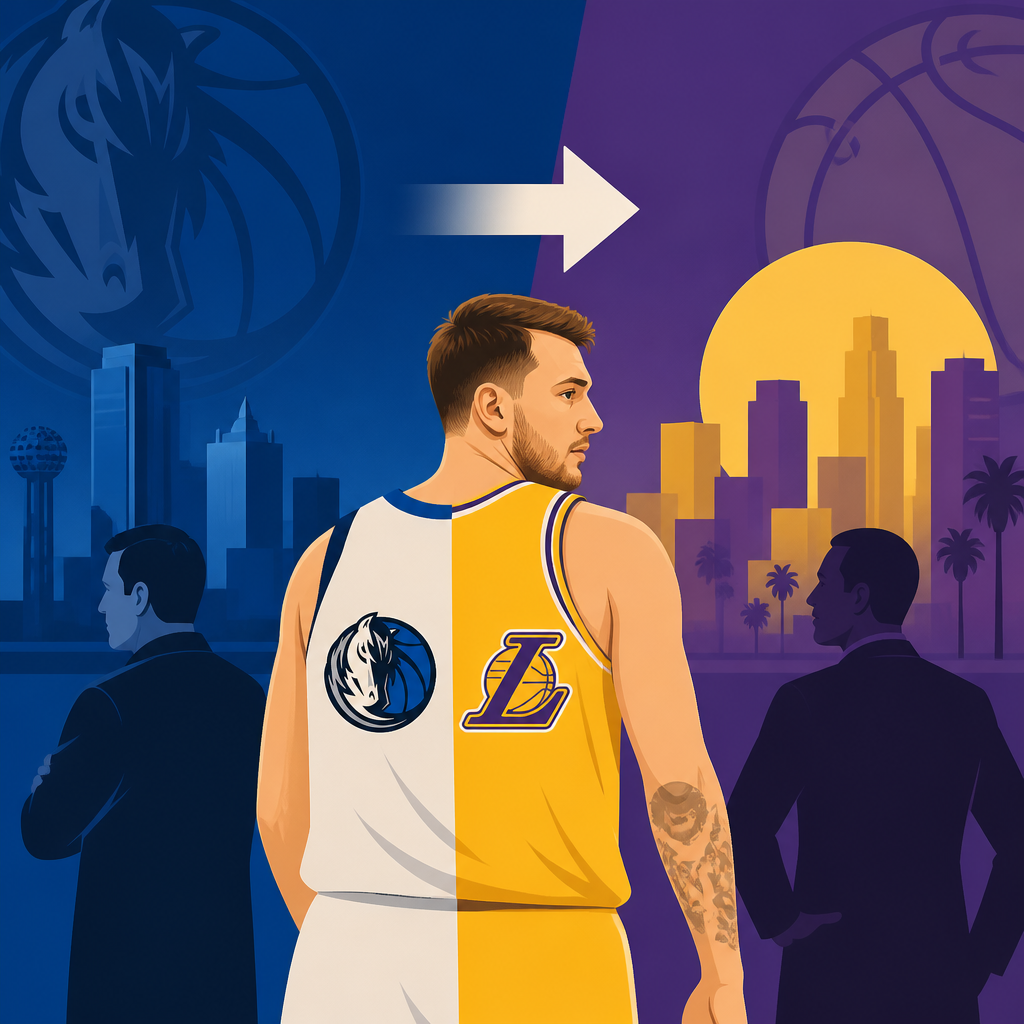
Luka Doncic Lakers trade rumors have become a recurring flashpoint in NBA discourse because they combine three forces fans rarely separate: superstar valuation, franchise timeline pressure, and the modern trade market’s hard financial constraints. To explain why Dallas would ever consider moving a player of Doncic’s caliber, you have to start with a clear definition of terms. A superstar trade is not simply a high-profile transaction; it is the transfer of a player whose offensive engine, commercial pull, and postseason gravity shape an entire organization’s identity. A player profile hub, meanwhile, is meant to do more than summarize a biography. It should connect skill set, role, injury history, contract structure, roster fit, and legacy stakes in one place. That is exactly how I evaluate players when building editorial frameworks around the league.
Doncic sits at the center of that framework because he is one of the NBA’s most influential offensive players. Since entering the league in 2018, he has functioned as a heliocentric creator, meaning possessions are designed around his pick-and-roll reads, isolation scoring, post mismatches, skip passes, and late-clock shot creation. Few players blend volume and efficiency at his usage rate. He controls pace rather than merely reacting to it, and that trait is why any discussion involving a Luka Doncic Lakers trade instantly escalates beyond gossip into structural analysis. If a team trades a player like that, the decision is never just about talent. It is about timing, economics, leverage, health projections, and belief in alternative roster-building paths.
This matters for readers following NBA Players because player profiles are the foundation of understanding every major league storyline. Trades, awards, playoff runs, and contract disputes all begin with the same question: what is this player worth in actual basketball terms? In Doncic’s case, the answer is unusually broad. He is a perennial All-NBA level initiator, a top-tier postseason shot creator, and a marketable face of the sport with international reach. But he also carries the burdens common to mega-usage stars: ball-dominant scheme dependence, constant defensive targeting by opponents, and roster construction demands that narrow team flexibility. Dallas has spent years trying to optimize around those realities. The Lakers, whenever linked to him, represent the opposite side of the equation: a glamour franchise seeking its next era-defining centerpiece after LeBron James.
So why frame this article as both a Luka Doncic Lakers trade explainer and a broader player profile hub? Because fans searching this topic usually want several answers at once. They want to know who Doncic is as a player, why Dallas might even discuss moving him, why the Lakers are always mentioned in star scenarios, what a realistic trade package would require, and what happened next after each wave of reporting or speculation. Those are not separate conversations. They are layers of one larger profile. Understanding the player explains the trade logic; understanding the trade logic clarifies the franchise consequences. That is the goal here: a direct, complete, and practical guide to the player, the rumor mechanics, the team incentives, and the aftermath.
Luka Doncic player profile: style, strengths, and team-building implications
Luka Doncic is a 6-foot-6 primary ball handler whose game is built less on vertical explosiveness than on deceleration, manipulation, balance, and elite processing speed. That profile makes him unusual even among superstar guards. He wins angles early, uses screens patiently, forces weak-side help to commit, and punishes every defensive coverage with a different answer. Against drop coverage, he walks into pull-up threes or snakes into floaters. Against switches, he hunts slower bigs in isolation or enters the post against smaller guards. Against blitzes, he fires crosscourt passes to open shooters. Coaches design systems around players who can solve that many coverages because they raise a team’s offensive floor every night.
When I have evaluated Dallas over the past several seasons, the same truth keeps surfacing: Doncic is both a solution and a design challenge. He guarantees elite creation, but he also determines the shape of the roster. Teams around him need secondary ball handling, above-the-break shooting, rim pressure, and defenders who can survive at the point of attack without needing offensive touches. That is harder to assemble than many fans realize. It is not enough to add talent in the abstract; the pieces must reduce his burden without disrupting his rhythm. Dallas has tried different combinations, from Kristaps Porzingis as a floor-spacing big experiment to Kyrie Irving as a second star creator. Some stretches have worked brilliantly. Others have exposed how thin the margin is when so much offense begins with one player.
Any serious Luka Doncic Lakers trade discussion has to start here. Trading him would mean surrendering a player who can single-handedly manufacture a top offense. Acquiring him would mean accepting the responsibility of designing everything around him. That is why his profile is ideal for a hub page under NBA Players. He is not just statistically productive. He is architecturally important. Every teammate, coach, and executive decision around him is influenced by his style.
Why Dallas would consider dealing a superstar
The short answer is that teams discuss even unthinkable moves when the long-term risk curve changes. A franchise does not trade a player like Doncic because he is not good enough. It considers it only if leadership doubts the current core can reach championship level, fears contract or relationship instability, or sees an opportunity to regain control over a fragile roster timeline. In practice, those pressures usually build slowly, then surface all at once through reporting, body-language scrutiny, and front-office leaks.
For Dallas, the reasons commonly cited in trade speculation have been familiar across NBA history. First is playoff ceiling anxiety. If a front office believes it has already seen the limits of a roster built around a heliocentric star, it may wonder whether depth, defense, and future picks are more sustainable than doubling down. Second is financial rigidity. Max and supermax contracts, luxury tax penalties under the current collective bargaining agreement, and apron restrictions make it difficult to keep adding premium veterans. Third is interpersonal uncertainty. Superstars do not need to formally request a trade for a front office to sense rising tension over coaching, roster quality, conditioning narratives, or organizational direction.
None of that means Dallas should trade Doncic lightly. In fact, the historical record argues the opposite. Teams almost always lose the best-player part of a superstar trade. The package may include elite prospects, multiple first-round picks, swaps, and matching salary, but a 25-year-old offensive engine is nearly impossible to replace. That is why the threshold for a deal would be extreme, and why every rumor should be filtered through one basic principle: Dallas would need to believe the relationship or the championship path had become materially compromised.
Why the Lakers are linked to every megastar
The Lakers appear in star rumors for structural reasons, not just tabloid energy. They are one of the league’s signature brands, play in a major market, carry extensive commercial appeal, and have a long record of converting star interest into actual transactions. That history matters. Players know the franchise can amplify legacy, endorsement reach, and visibility. Agents know attention around the Lakers creates leverage. Rival teams know even a speculative Lakers link can reset the public framing of negotiations.
In basketball terms, the fit is easy to understand. The Lakers eventually need a post-LeBron centerpiece, and Doncic is one of the few players capable of inheriting that level of offensive responsibility. He could operate in the same broad ecosystem that has historically attracted stars: big-stage games, national television, and pressure that comes with title expectations. But fit on the court is only one piece. The harder issue is acquisition cost. The Lakers rarely control the kind of surplus blue-chip assets required for a player in Doncic’s tier unless a star specifically narrows the market.
That gap between desirability and feasibility is why Luka Doncic Lakers trade talk persists. The Lakers make narrative sense. The transaction math often does not. Both facts can be true at the same time.
What a realistic trade package would require
A realistic package for Doncic would have to satisfy three categories at once: premium draft equity, at least one foundational young player, and enough salary ballast to comply with trade rules. Even then, Dallas would ask whether those assets create a better future than simply keeping the superstar and continuing to build.
| Requirement | What Dallas would likely seek | Why it matters |
|---|---|---|
| Draft capital | Multiple unprotected first-round picks plus swaps | Superstar trades demand long-horizon upside and recovery paths |
| Young talent | An All-Star trajectory prospect or elite two-way starter | Picks alone rarely replace present value |
| Matching salary | Large contracts that legally complete the trade | CBA rules require practical cap compliance |
| Optionality | Assets from a third team if needed | Expands Dallas’s ability to reshape the roster immediately |
For the Lakers specifically, that framework creates obvious pressure points. Future firsts are valuable but limited. Young players may be promising, yet not necessarily franchise anchors. Large contracts can help matching, but they do not automatically raise the appeal of the offer. If another team can outbid Los Angeles with more draft control and a better prospect base, Dallas has little reason to prefer the Lakers unless Doncic strongly influences the destination.
This is where many public trade ideas collapse. Fans often treat superstar movement like fantasy basketball, but front offices price the downside of regret. If Dallas trades Doncic and the return tops out as good-not-great starters plus late first-round picks, the organization has surrendered the hardest asset in the sport to acquire: a young player already capable of being the best offensive engine in a playoff series.
What happened next: rumor cycles, reality checks, and roster outcomes
What happened next after most Luka Doncic Lakers trade waves was not a blockbuster deal but a predictable sequence. National reporting or social speculation would raise the possibility, Dallas would publicly or privately signal commitment to Doncic, the Lakers would remain a logical hypothetical destination, and the market would cool once trade mechanics were examined. That pattern tells you something important about the NBA information economy: attention spikes long before actual negotiability exists.
Meanwhile, real events kept reshaping the context. Dallas adjusted the roster, changed supporting personnel, and tried to improve lineup balance around Doncic. The franchise’s moves consistently indicated a team attempting to retain and maximize its star rather than preparing to exit the relationship. When clubs behave that way, trade noise usually reflects leaguewide fascination more than imminent action.
For readers using this as a player profile hub, that outcome matters. “What happened next” is often less dramatic than the rumor itself, but more useful. The aftermath reveals organizational intent. If the Mavericks keep retooling around Doncic, the clearest takeaway is that his value to Dallas remains greater than any plausible package. If the Lakers continue to monitor superstar opportunities without landing this one, that reinforces another league truth: destination appeal helps, but asset power closes deals.
How to evaluate player profiles inside the NBA Players hub
Doncic is the ideal model for evaluating every profile within an NBA Players hub because his case forces a complete framework. Start with role: primary creator, secondary scorer, rim protector, switch defender, movement shooter, or connective passer. Then assess production in context: usage, efficiency, on-ball burden, playoff translation, and lineup dependence. Add durability, age curve, contract status, and scheme fit. Finally, weigh market value. A player’s reputation is never enough; the league prices what he can do, how scalable it is, and how expensive it will be to keep building around him.
Applied broadly, that method helps readers move beyond headlines. It explains why some stars are untouchable, why others are discussed despite huge numbers, and why trade rumors frequently say more about team-building strain than about a player’s quality. Doncic remains central to those lessons because he is both elite and demanding in the strategic sense. He raises your ceiling, but he also dictates the engineering.
Use this page as the starting point for related profiles across the NBA Players category: lead guards who dominate usage, wings who scale more easily across lineups, bigs who anchor defense, and veterans whose contracts affect contender mobility. Comparing those archetypes makes every trade conversation clearer, not just the Lakers scenarios.
The Luka Doncic Lakers trade explained in full is less about one completed transaction than about understanding why such a move is discussed at all. Doncic is a franchise-defining creator whose skill set changes everything around him. Dallas would only consider dealing him if championship doubts, financial constraints, or relationship tension became severe enough to outweigh the value of keeping an offensive engine almost impossible to replace. The Lakers are linked because they offer market gravity, legacy appeal, and an obvious need for a future centerpiece, but wanting a superstar and being able to acquire one are very different things.
The most important takeaway for readers following NBA Players is that player profiles should connect talent, contract, fit, and organizational context. Doncic shows why. His scoring and playmaking are elite, yet the real story includes roster demands, trade mechanics, and franchise risk. That broader view is what turns rumors into analysis and headlines into understanding.
If you are building your knowledge of NBA player movement, start with profiles like this one and compare them across roles, ages, and team situations. The better you understand the player, the easier it becomes to understand every major decision that follows.
Frequently Asked Questions
Why would the Mavericks even consider a Luka Doncic Lakers trade if he is a true franchise superstar?
The short answer is that teams do not evaluate superstar trades based on talent alone. They evaluate the entire competitive timeline, the structure of the roster around the star, long-term financial obligations, and whether the current version of the team is actually moving toward championship contention. In Luka Doncic’s case, the reason rumors keep surfacing is not because Dallas would casually shop a player of his caliber. It is because the NBA trade market forces front offices to ask uncomfortable questions when a roster becomes expensive, top-heavy, or misaligned with the age and development curve of its best player.
A true superstar trade is fundamentally different from a normal roster move. Doncic is not just a high-scoring guard or a marketable name. He is the offensive engine of a franchise, the player who drives usage, late-game creation, playoff planning, and organizational identity. Moving that kind of player only becomes thinkable when decision-makers believe one of two things: either the current build around him is unlikely to produce a title, or the cost of trying to fix the team year after year has become too restrictive under the league’s financial rules. That does not mean Dallas would want to move him. It means the conversation exists because the modern NBA makes every major decision a balance between basketball value and cap reality.
There is also the timeline issue. A franchise can love its superstar and still worry that repeated first- or second-tier playoff disappointments, injuries around the roster, or limited flexibility could create pressure down the line. If a front office believes it cannot properly build around a player at his salary level, it may at least explore what a return package would look like. That is especially true when another team, such as the Lakers, has the brand power, urgency, and star-chasing reputation to be linked to virtually every elite player who might become available. So when people ask why Dallas would ever consider it, the real answer is this: not because Doncic is expendable, but because superstar trades are sometimes driven by structural realities bigger than one player’s greatness.
Why are the Lakers so often connected to Luka Doncic in trade rumors?
The Lakers appear in superstar trade conversations for the same reason they have for decades: they are one of the league’s most aggressive, visible, and historically star-driven franchises. Whenever a top-tier player enters even the outer edge of speculation, the Lakers become part of the story because fans, media, and rival executives all understand that Los Angeles thinks in championship windows and marquee talent. Luka Doncic is exactly the kind of player that naturally gets tied to that environment.
There are several layers to that connection. First, the Lakers operate with enormous public attention, so even a minor rumor involving them becomes national news faster than similar talk involving smaller-market teams. Second, they have a long track record of pursuing transformational talent rather than relying solely on patient internal development. Third, their timeline pressure is almost always intense. Whether the focus is maximizing the remaining prime years of an established star or setting up the next era of contention, the organization is frequently expected to think big. A player like Doncic represents not just production, but succession planning, relevance, and long-term offensive identity.
That said, rumor volume should not be confused with deal probability. Many Lakers links are driven by fit in theory rather than realism in practice. Fans see a heliocentric playmaker, imagine the market appeal, and assume Los Angeles would try to make it happen. But actual NBA trades require matching salaries, satisfying collective bargaining constraints, meeting the selling team’s demands, and assembling enough draft and player value to justify moving a superstar. That is where many rumors fade. The Lakers are connected to Doncic so often because the concept is compelling, not necessarily because the mechanics are easy. In NBA discourse, compelling ideas often travel much faster than feasible transactions.
What financial and roster-building issues make a superstar trade this complicated?
This is the part many casual discussions skip, but it is the part front offices care about most. In the modern NBA, superstar trades are constrained by salary-matching rules, apron restrictions, available draft capital, contract length, and the quality of the supporting players included in the package. A team cannot simply decide it wants Luka Doncic and then complete the move based on basketball desire alone. The economics of the league shape what is possible.
For Dallas, trading Doncic would require a return that addresses both present and future needs. That means the Mavericks would likely want a combination of high-end young talent, premium draft picks, and contracts that either keep them competitive immediately or preserve flexibility for a rebuild or retool. For the Lakers, that creates a challenge. Even if they have players another team likes, acquiring a superstar at Doncic’s level usually means surrendering a large portion of the roster, meaningful draft assets, and often some of the very depth that would make the new star situation appealing in the first place.
Then there is the broader payroll question. The NBA’s stricter team-building environment punishes expensive rosters with fewer avenues to improve once they cross certain financial thresholds. That matters because a team trading for a superstar is not just paying for the player; it is also accepting the roster-design consequences that follow. A front office must ask whether it can still field enough defense, size, shooting, and bench reliability around the star after the trade is completed. In other words, the trade is not evaluated as one move. It is evaluated as the first move in a chain reaction that affects every subsequent decision.
This is why the idea of a Luka Doncic Lakers trade is always bigger than a headline. It is not simply “Would Dallas trade him?” or “Would the Lakers want him?” It is “Can one side justify moving an offensive centerpiece, and can the other side build a championship-caliber team after paying the acquisition cost?” Until those questions line up, the rumor remains fascinating but difficult.
If Dallas actually moved Luka Doncic, what kind of return would make sense?
A realistic return for a player of Doncic’s stature would have to be enormous, not just in quantity but in quality and strategic fit. Dallas would not move a player like that for a standard all-star package or a collection of decent starters. The return would need to reflect the fact that they are giving up one of the league’s defining offensive forces, a player who can anchor an entire system and shape a franchise for years.
At minimum, Dallas would likely look for multiple unprotected or lightly protected first-round picks, pick swaps, and at least one premium young player with real star-level upside or established high-end production. Beyond that, the team would need to decide what path it is taking. If the Mavericks wanted to remain competitive immediately, they would prioritize players who can create offense, defend at a high level, and absorb major usage. If they were shifting toward a longer reset, they would be more focused on age, flexibility, and future asset control. That distinction matters because not every massive package is equally useful. A pile of picks sounds impressive, but if the team has no foundational player coming back, the short- and medium-term downside becomes much steeper.
The other factor is leverage. When a superstar is under team control and has not forced a specific destination, the selling team can demand more. If a player’s preferred market narrows the field, that can reduce what comes back unless multiple suitors stay engaged. In a hypothetical Lakers framework, Dallas would almost certainly ask for the strongest possible combination of draft compensation, promising young talent, and contracts that preserve options. Whether Los Angeles could meet that threshold without gutting itself is the central issue. That is why so many superstar trades sound logical in the abstract but become far more difficult when the actual asking price is considered.
What happened next after the Luka Doncic Lakers trade rumors gained momentum?
What usually happens next in a situation like this is not an immediate blockbuster, but a wave of interpretation, denial, leverage testing, and strategic signaling. Once rumors involving a player like Luka Doncic gain traction, they take on a life of their own. Fans read them as evidence a breakup is coming. Agents and front offices may view them as pressure points. Media outlets revisit roster flaws, contract structures, and long-term team direction. In other words, the rumor becomes part of the negotiation environment even if no trade is close.
For Dallas, the next step would typically be one of clarification and internal assessment. The front office must gauge whether the noise reflects real market interest, dissatisfaction around the current roster, or simply the league-wide tendency to connect major stars to glamour franchises. Publicly, teams almost always project confidence and commitment. Privately, they evaluate scenarios, monitor relationships, and determine whether changes around the superstar can solve the underlying problem without moving him. Often, that means exploring coaching adjustments, complementary roster changes, or financial restructuring before considering the most drastic option.
For the Lakers, momentum around the rumor usually reinforces an existing truth: they are expected to chase elite talent whenever the opportunity presents itself. Even if no deal materializes, the speculation reveals how the franchise is perceived league-wide. It also shapes fan expectations, because once a superstar has been linked to Los Angeles, every roster move gets judged against the hypothetical possibility of landing that player.
So what happened next is best understood this way: the rumors deepened the conversation about Dallas