
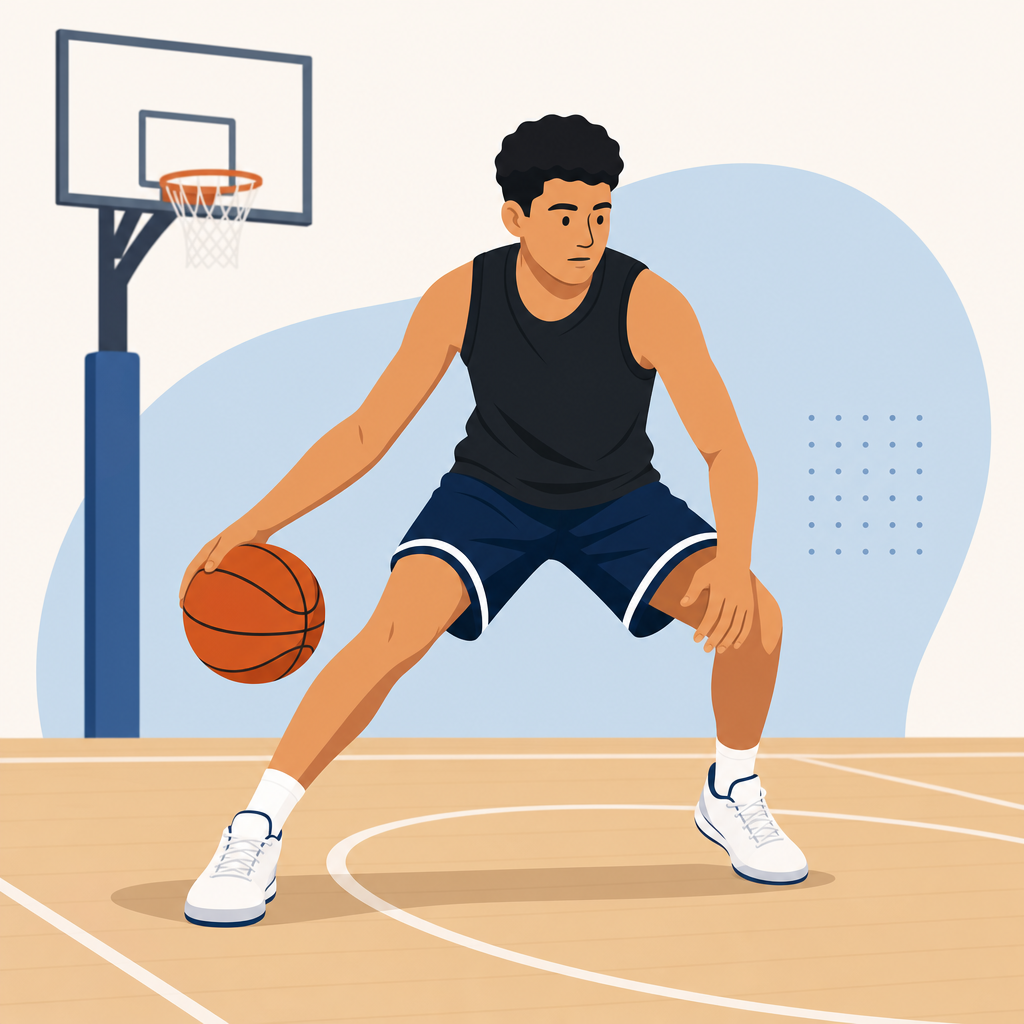
The crossover dribble is one of the first true ball handling moves every beginner should learn because it teaches control, change of direction, timing, and deception in one action. In simple terms, a crossover dribble means moving the ball from one hand to the other in front of your body while changing angle, pace, or both. When taught correctly, it is not just a flashy move. It is a practical skill used to beat pressure, create driving lanes, protect the ball, and set up advanced moves such as the hesitation, in-and-out, between-the-legs crossover, and double crossover.
As a coach and skills trainer, I have seen the same pattern repeatedly: players who skip the fundamentals of ball handling struggle later with game speed, while players who build a dependable crossover early gain confidence in every area of offense. That matters because basketball rewards players who can force defenders to shift their feet. A sharp crossover does exactly that. It makes a defender open up, lean the wrong way, or retreat. Even if the move does not create an immediate blow-by, it changes spacing and puts the ball handler in command of the possession.
For beginners, learning how to crossover dribble in basketball starts with posture, hand placement, footwork, and dribble height. The move is most effective when the ball stays below the knees or near mid-thigh, the chest remains balanced over the hips, and the eyes stay up. Good ball handling is the broader skill set behind that move. Ball handling includes controlling the dribble under pressure, changing hands without exposing the ball, stopping and starting without losing balance, and reading how defenders react. This article serves as a full hub for that topic, giving you the crossover steps, the most common mistakes, drills that build control, and the game situations where each version works best.
Why does this matter so much for beginners? Because ball handling is not only about highlights. It affects turnovers, passing angles, driving efficiency, and even shooting rhythm. A player who cannot keep a live dribble under control gets sped up, picks the ball up too early, and loses options. A player with a reliable crossover can escape traps, attack the top foot of a defender, get to the paint, and create help rotations that lead to better shots for teammates. At youth, high school, and recreational levels, this single skill can raise your entire offensive floor.
What a Crossover Dribble Is and When to Use It
A crossover dribble is a change-of-direction move where the ball transfers from one hand to the other across the front of the body. The purpose is to make the defender believe you are moving one way, then attack the opposite way before they recover. In real games, the best crossover is rarely huge. It is compact, quick, and timed to a defender’s weight shift. Allen Iverson’s iconic crossover is the famous example, but the teaching point for beginners is simpler: get the defender leaning, keep the ball tight, and explode into the new lane.
Use a crossover when a defender is squared up and pressuring your path, when the defender’s top foot is vulnerable, or when you need to reject one side of the floor and attack the other. It also works in transition when a retreating defender backpedals too upright. It is less effective when help defenders are loaded in the lane or when you dribble too high and too wide. Many beginners try the move without first changing pace. The result is a side-to-side dribble with no advantage created. The crossover works because the body sells one direction and the feet accelerate out of the move.
Step-by-Step Mechanics for Beginners
Start in an athletic stance with feet just outside shoulder width, knees bent, hips low, and chest slightly forward. Keep your dribble hand on top and slightly behind the ball, not underneath it. Your off arm should be ready to shield legally, with the elbow bent and relaxed. Begin by dribbling with your dominant hand at a height between the knee and hip. Your eyes should be forward, scanning the defender or a target on the wall if you are practicing alone. If you have to look down at the ball, slow down until control returns.
Next, plant the outside foot and shift your shoulders subtly as if you are driving in the current direction. This body fake is what starts the defender moving. Immediately snap the ball across your frame with your fingertips and wrist, not a sweeping slap from the palm. The ball should bounce in front of your lead foot but close to your body line, usually just outside the frame of your shoes. As the ball crosses, push off the original foot, step into the new lane, and meet the ball with the opposite hand. Once the new hand receives it, take one explosive dribble past the defender’s hip. That exit dribble is where separation is created.
For most beginners, the sequence is fake, bounce, catch, burst. If any one part is missing, the move loses value. Fake without bursting and the defender recovers. Bounce too wide and the ball is exposed. Catch too high and you lose speed. Burst too slowly and the defender slides with you. Keep the move compact enough that the ball stays protected, but forceful enough that your shoulders and hips actually change direction. That combination is the foundation of effective ball handling.
Ball Handling Fundamentals That Make the Move Work
The crossover rests on broader ball handling habits. First is dribble height. Low dribbles are harder to steal and easier to redirect. Second is hand speed. Strong fingertip control lets you push the ball sharply without carrying it. Third is posture. If your hips are high, your first step is slow. Fourth is rhythm. Great ball handlers vary tempo instead of dribbling at one speed. Fifth is vision. Players who see the floor can read when a defender is leaning and when help is waiting.
Beginners should understand that hand strength and coordination matter more than raw quickness at first. I often start players with stationary pound dribbles, pocket dribbles, and alternating crossovers before I ever ask for a game-speed move. This builds confidence in both hands and teaches where the ball should bounce. A common benchmark is being able to complete thirty seconds of low, controlled crossovers without slapping the ball or losing posture. Once that feels stable, movement can be added with walking crossovers, then jogging crossovers, then live attack dribbles against a chair or cone.
| Ball handling element | What beginners should do | Why it matters in a crossover |
|---|---|---|
| Stance | Bend knees, lower hips, keep chest over toes | Creates balance and faster first-step acceleration |
| Dribble height | Keep the ball at knee to mid-thigh level | Reduces steals and shortens the transfer time |
| Eyes | Look ahead, not at the ball | Improves reads and keeps shoulders game-ready |
| Footwork | Plant, shift, then push into open space | Turns the move into a real change of direction |
| Off-hand use | Shield legally without extending the arm | Protects the ball while avoiding offensive fouls |
Common Crossover Mistakes and How to Fix Them
The most common beginner mistake is dribbling too high. High dribbles take longer to cross and give defenders more time to poke the ball loose. Fix it by practicing low pound dribbles and aiming to keep the ball below the knee during the transfer. Another mistake is crossing too far in front. The ball should move across your body, not travel on a wide arc. A simple cue is to bounce the ball just outside your lead shoe, then collect it quickly with the opposite hand.
Another frequent issue is standing upright. Tall posture makes every move slower and weaker. Lowering your hips immediately improves control and lets you explode out of the move. Beginners also telegraph the crossover by staring down at the ball or by winding up their arm before the transfer. Defenders read that early. Work on selling the drive with your shoulders while keeping the hands quiet and efficient. Finally, many players forget the exit. The crossover itself does not beat the defender; the first dribble after the crossover does. Practice taking a long, aggressive push dribble into space after every transfer.
Drills to Build a Reliable Beginner Crossover
Start with stationary drills. Do three sets of twenty low pound dribbles with each hand, then three sets of twenty stationary crossovers. Focus on clean bounces, fingertip control, and quiet shoulders. After that, use a cone or water bottle as a defender. Walk toward it, give a shoulder fake, crossover tightly, and take two hard dribbles away. Repeat on both sides for five minutes. This teaches line of attack and body shift.
Next, use the retreat-and-attack drill. Dribble forward two steps, retreat one step, then crossover and explode. This simulates a defender cutting off your lane. Another useful drill is the tennis-ball reaction drill: hold a tennis ball in your off hand, toss it lightly, execute the crossover, and catch the tennis ball. It forces eyes up and improves coordination. If you have a partner, play guided one-on-one from the wing with one rule: every drive must begin with a crossover or a setup move into a crossover. Guided constraints speed up learning because they create repeated game-like reps.
How to Use the Crossover in Real Games
Game application depends on spacing, angle, and defender behavior. At the top of the key, attack the defender’s front foot. If the left foot is high, threaten left and cross to your right. On the wing, use the sideline as a guide and avoid crossing toward a trap area. In transition, read the defender’s hips. If they turn slightly, cross back into the gap before help arrives. Against aggressive reach defenders, use a hesitation before the crossover to freeze their hands.
Beginners should also know when not to use it. Do not cross directly into a loaded paint. Do not force the move against a second defender waiting at the nail. And do not use a loose crossover late in a possession when a simple advance dribble would be safer. Smart ball handling means using the simplest move that creates an advantage. Sometimes that is one hard crossover. Sometimes it is no crossover at all, just pace and angle. The goal is not style points. The goal is to keep your dribble alive, beat the first defender, and create an efficient shot or pass.
Progressions: From Basic Crossover to Complete Ball Handling
Once the basic crossover is consistent, layer in progressions. The first is the speed crossover, which uses the same hand mechanics but less dramatic body fake and more emphasis on pure pace. The second is the hesitation crossover, where you slightly raise your posture and pause the rhythm before snapping across. The third is the double crossover, useful when the defender guesses right on the first move. From there, players can advance to between-the-legs and behind-the-back counters, which are often safer against pressure because they keep the ball farther from the defender’s reach line.
This is where a true ball handling hub matters. The crossover is the entry point, but complete development includes weak-hand training, change-of-pace work, stop-start footwork, jump stops, retreat dribbles, and pressure protection. If you are building your skills systematically, connect this move to adjacent drills such as stationary control series, cone attack series, finishing off one or two dribbles, and pick-and-roll reads. Those connected skills turn a single dribble move into dependable offensive creation.
A beginner does not need an endless package of moves to become effective. You need one crossover you can trust, a low athletic stance, eyes up, and the discipline to repeat quality reps until the motion becomes automatic. That is the real lesson of learning how to crossover dribble in basketball. The move is simple enough to start today, but deep enough to shape your entire offensive game. It teaches control, timing, pace, protection, and decision-making all at once.
If you remember the essentials, remember these: stay low, sell the first direction, keep the ball tight, and explode out of the catch. Build those habits through stationary work, movement drills, and live reads against real defenders. Over time, your crossover will stop feeling like a rehearsed drill and start functioning like a tool you can use under pressure. That is when ball handling begins to translate from practice to games.
Use this article as your starting hub for Basketball Skills and Ball Handling, then keep building outward into weak-hand development, change-of-pace dribbling, pressure escapes, and finishing after the move. Master the beginner crossover first, and many other skills become easier to learn. Grab a ball, set a timer for ten focused minutes, and start with low, controlled reps today.
Frequently Asked Questions
What is a crossover dribble in basketball, and why is it important for beginners?
A crossover dribble is a basic ball handling move where you dribble the ball from one hand to the other in front of your body while changing direction, speed, or both. For beginners, it is one of the most important foundational skills to learn because it combines several core basketball abilities into one simple action. A good crossover teaches hand control, body balance, footwork, timing, and how to protect the ball under pressure. It also helps players understand how to make a defender react instead of simply dribbling in place.
The reason this move matters so much early on is that it is practical in real game situations. A beginner can use a crossover to get away from defensive pressure, attack an open lane, or shift the defense enough to make a pass or drive. It is not just a flashy move for highlights. When done correctly, it becomes a reliable way to change angles and stay in control. Learning the crossover also prepares players for more advanced moves later, because many combinations in ball handling start with the same ability to transfer the ball cleanly from one side of the body to the other.
How do you do a crossover dribble step by step as a beginner?
Start in a low athletic stance with your knees bent, chest up, and eyes forward. Keep the ball in one hand at your side, not directly in front of your body. Your feet should be about shoulder-width apart so you can stay balanced and explode in either direction. Before you cross the ball over, take one or two controlled dribbles to establish rhythm. This helps the move feel natural instead of rushed.
Next, plant your outside foot and slightly drop your shoulders as if you are attacking that side. This body movement is important because a crossover works best when you sell the first direction. Then push the ball hard and low across the front of your body with your fingertips, not your palm. The ball should bounce from one side to the other just in front of your lead foot, staying below your knees if possible. As the ball moves across, shift your weight and step in the new direction with the opposite foot. Catch the ball with your other hand and immediately continue your dribble into space.
The key is to make the hand movement, footwork, and body shift happen together. Beginners often focus only on moving the ball, but the full move includes changing pace and direction right after the ball crosses over. Once you receive it with the opposite hand, accelerate. That burst is what makes the crossover useful, because the move is designed to create an advantage, not just switch hands.
What are the most common mistakes beginners make when learning the crossover dribble?
The most common mistake is dribbling too high. A high crossover gives defenders time to react and creates a bigger chance of losing control. Beginners should aim to keep the ball low and quick, especially when transferring it from one hand to the other. Another major mistake is staring down at the ball. While it is normal to peek occasionally when first learning, relying on your eyes to control the dribble slows your reactions and makes it harder to read the court. Good habits start with keeping your head up as much as possible.
Another frequent issue is crossing the ball too far in front of the body. When the ball travels in a big looping path, it becomes easy to steal. A better crossover is compact, direct, and protected by your body. Beginners also often forget to use their feet and shoulders. If there is no fake in one direction and no burst in the other, the crossover becomes predictable. The move should include a believable setup, a quick transfer, and an immediate attack.
Finally, many new players try to perform the move too fast before they have control. Speed matters, but clean technique matters more at first. It is better to do a sharp, low crossover at moderate speed than a wild one at full speed. Build control first, then add pace, then add live defenders or pressure.
How can beginners practice the crossover dribble effectively on their own?
The best way to practice the crossover is to begin with stationary repetitions. Stand in a low stance and cross the ball from hand to hand in front of your body, focusing on keeping the dribble low, quick, and controlled. Count your reps and aim for consistency. For example, you can do sets of 20 to 50 crossovers while keeping your eyes up. This helps develop touch, rhythm, and confidence in both hands without worrying about moving at the same time.
After stationary work, move into controlled walking drills. Dribble forward and perform a crossover every few steps, making sure you actually change direction after each one. Then progress to jogging speed. Cones, shoes, or any small markers can help by giving you a target to attack and change direction around. This teaches you how to use the crossover as a movement tool instead of just a dribbling exercise. You can also practice hesitation into crossover, where you pause slightly before changing hands, to build better timing and deception.
To improve game readiness, mix in reaction and pressure-based training. Practice crossing over with your off hand starting the sequence, not just your strong hand. Add drills where you change pace after the move, sprint for two or three dribbles, then reset. If possible, train in short intense sets so you learn to stay low and sharp even when tired. Consistent repetition is what turns the crossover from a drill into a dependable move you can trust during a game.
When should you use a crossover dribble in a real game?
You should use a crossover dribble when it helps you create a clear advantage. That might be when a defender is leaning too far one way, pressuring too tightly, or cutting off your current driving lane. A well-timed crossover can shift the defender’s balance, open a new angle, and give you space to attack. It is especially useful at the top of the key, on the wing, or in transition when you need to change direction without picking up your dribble.
For beginners, the best game situations are simple ones. If a defender overplays your dominant hand, a crossover can move the ball away from pressure and into open space. If you are driving and the lane closes, crossing over can help you redirect before the defense fully recovers. It can also be used to set up a pass by forcing help defenders to react. The important thing is to use the move with a purpose. Do not crossover just because you can. Use it when the defender gives you a reason.
Good players also understand when not to use it. A crossover is risky if you are dribbling into a crowd, standing too upright, or crossing directly in front of an aggressive defender without space. In those moments, ball protection is more important than making a move. The smartest use of the crossover is controlled, timely, and connected to the next action, whether that is a drive, a pull-up, a pass, or another change of direction.