
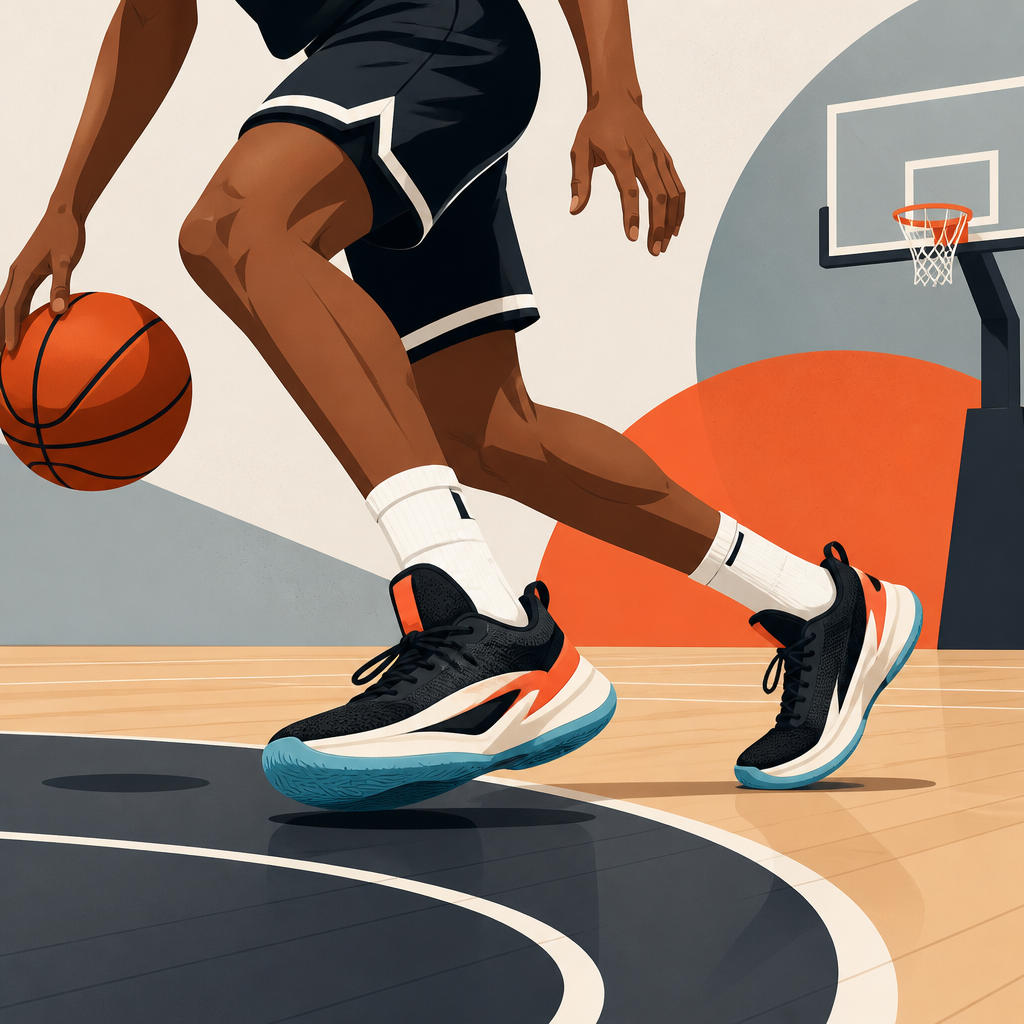
Choosing the best basketball shoes for guards starts with understanding how guards actually play: they accelerate hard, stop on a dime, change direction in tight spaces, and need reliable traction without giving up court feel. In basketball footwear, “court feel” means how clearly a player senses the floor through the midsole and outsole, while “containment” refers to how well the upper and sidewalls keep the foot from sliding during cuts. Guards typically value a low overall weight, responsive cushioning, and a traction pattern that works on both clean and dusty courts more than they value maximum impact protection. That does not mean one shoe fits every backcourt player. A quick point guard who relies on burst may want a lower ride and firmer foam, while a bigger combo guard who absorbs contact in the lane may need more cushioning and torsional support. I have tested guard shoes across hardwood, painted concrete, and dusty school gyms, and the same lesson keeps repeating: the right shoe is the one that matches your movement pattern, foot shape, and playing environment. This footwear hub explains what matters most, ranks the top options for speed, court feel, and traction, and helps you choose a model that supports your game rather than fighting it.
What Guards Need From Basketball Footwear
The best basketball shoes for guards solve three biomechanical problems at once. First, they must create dependable friction with the floor. Herringbone, radial, and data-driven multi-directional patterns all aim to help players brake and re-accelerate, but rubber compound matters as much as pattern depth. Softer rubber often grips better indoors, while harder rubber tends to last longer outdoors. Second, guard shoes need a stable platform for aggressive cuts. A wide outrigger, rigid midfoot shank, and secure lacing system reduce rollover risk when a player plants off one foot. Third, they must balance impact protection with responsiveness. Thick plush cushioning can feel comfortable at first try-on, yet it may delay transitions and mute court feel. In practice, most guards perform better in a setup that feels springy rather than marshmallow-soft.
Fit is equally important. Narrow-footed guards often lock in well with sculpted lasts and integrated lacing, while wide-footed players need a forefoot that allows toe splay without pressure on the fifth metatarsal. Heel slippage is a deal-breaker because it reduces timing on stop-start moves and can lead to blisters. I always tell players to test a shoe with lateral lunges, hard deceleration, and a simulated step-back before deciding. Standing comfort in a store is almost meaningless compared with dynamic fit under load. Materials also influence performance. Knit uppers can feel flexible and breathable, but heavily padded engineered mesh often gives better containment. Premium models may use Zoom Air, Zoom Strobel, Lightstrike, Jet Boost, Nitro foam, or Flow foam, and each system changes how a guard experiences the floor.
How We Rank Speed, Court Feel, and Traction
Ranking basketball footwear for guards requires more than reading brand spec sheets. On-court performance depends on the interaction between outsole geometry, rubber durometer, compression set in the midsole, upper stretch, and the player’s own mechanics. For this hub, the ranking priorities are straightforward. Traction comes first because no guard can use speed without controlled stopping. Court feel comes second because elite ball handlers need precise feedback on gathers, hesitations, and lateral shifts. Speed comes third, but here speed means the total sensation of quickness, not just the scale weight listed by a brand. A shoe can be slightly heavier and still feel faster if the transition is smooth and the base is stable.
I judge traction by initial bite, consistency after dust pickup, and release during pivots. I judge court feel by stack height, forefoot flexibility, and how directly force transfers through the platform. I judge speed by transition shape, forefoot responsiveness, and whether the upper disappears around the foot. Durability, fit range, and outdoor viability matter too because this page serves as a footwear hub, not only a performance ranking. If you later compare low tops, outdoor basketball shoes, or models for wide feet, those categories should still flow from the same criteria described here. The goal is practical selection, not hype.
Best Basketball Shoes for Guards Ranked
The current guard-focused ranking starts with models that consistently combine elite traction, low-to-the-ground responsiveness, and secure containment. Nike Kobe line retros and Protro releases remain the benchmark for many guards because they pair excellent court feel with fluid transitions, though availability and price are major barriers. The Sabrina signature line has become one of the smartest mainstream choices thanks to strong traction, balanced cushioning, and a shape that supports quick guards without feeling bulky. The Curry Flow series continues to stand out on clean indoor courts because Flow foam and outsole technology create exceptional stop-start grip with a seamless ride, although durability outdoors is limited. The New Balance TWO WXY line deserves serious attention for guards who want stability and forefoot response without an overly minimal setup. Adidas AE and select Dame models work well for stronger guards who need more containment and impact protection while still valuing traction.
| Rank | Shoe | Best For | Main Strength | Main Tradeoff |
|---|---|---|---|---|
| 1 | Nike Kobe Protro models | All-around scoring guards | Elite court feel and smooth traction | High price and limited availability |
| 2 | Nike Sabrina line | Quick point and combo guards | Balanced traction, fit, and responsiveness | Not the plushest cushioning setup |
| 3 | Under Armour Curry Flow models | Shifty indoor guards | Top-tier grip on clean courts | Outdoor durability is weak |
| 4 | New Balance TWO WXY | Two-way guards needing stability | Containment and dependable traction | Less minimal court feel than Kobe-style shoes |
| 5 | Adidas AE and Dame models | Power guards attacking downhill | Support and impact protection | Can feel bulkier than pure speed shoes |
If you want the shortest answer, the best basketball shoes for guards right now are the ones that give you predictable traction and a secure one-to-one fit. For pure court feel, Kobe-style setups still set the standard. For value and broad availability, Sabrina models are among the safest recommendations. For indoor traction on clean hardwood, Curry Flow remains a specialist choice. For bigger guards, the TWO WXY and select Adidas guard shoes offer a stronger stability package.
Traction: The Non-Negotiable Performance Feature
Traction is the most important shoe feature for guards because every advanced move depends on deceleration. Crossovers, hang dribbles, split steps, and step-backs all demand controlled stopping before acceleration. A shoe that slides half an inch at the wrong time changes balance, timing, and shot mechanics. In testing, there are three traction realities players should know. First, aggressive patterns do not guarantee better grip if the rubber compound is too hard for indoor use. Second, dust sensitivity can turn a great shoe into an average one within a single run. Third, translucent outsoles sometimes perform brilliantly and sometimes collect dust faster than solid rubber, so there is no universal rule.
Flow technology from Under Armour demonstrates how traction can define a guard shoe. On clean courts, it feels almost adhesive, making quick pull-ups and sharp veer steps extremely confident. The drawback is durability; rough blacktop will wear it down fast. Nike’s best guard shoes often use tightly spaced directional patterns that maintain bite without feeling grabby on pivots. New Balance has improved traction consistency by pairing broad contact areas with compounds that do not turn unreliable after a few dusty possessions. If you play primarily in community gyms where mopping is inconsistent, prioritize shoes known for dust tolerance over shoes that dominate only in pristine conditions. That single decision will help performance more than saving a few ounces in weight.
Court Feel, Cushioning, and the Speed Tradeoff
Guards often ask for maximum bounce and maximum court feel at the same time, but footwear design usually forces a tradeoff. More stack height increases impact protection and can add energy return, yet it also raises the foot farther from the floor and can reduce the immediacy of cuts. Lower-profile setups improve proprioception and make dribble moves feel tighter, but they may punish players who log long sessions or land heavily in traffic. The best basketball shoes for guards manage this tradeoff with targeted cushioning rather than oversized midsoles.
Nike Zoom Air in the forefoot remains a strong example because it can deliver snap without making the ride too mushy. A well-tuned carrier foam around Zoom units lets guards feel explosive while keeping the platform stable. Adidas Lightstrike and Jet Boost combinations can work well for bigger guards who need a little more protection on drives. New Balance FuelCell-based designs often feel smooth in transition, while firmer sidewall geometry preserves control. For younger guards, there is a temptation to buy the softest shoe available, especially after trying on running shoes. That is usually a mistake. Basketball demands lateral support, torsional rigidity, and braking stability that soft foam alone cannot provide. If your game is built on pace changes and sudden pull-ups, a responsive midsole with moderate impact protection will usually outperform a plush setup over time.
Fit, Support, and Outsole Durability by Playing Environment
Fit changes the entire value of a basketball shoe. A model praised by narrow-footed guards can feel unstable for wide-footed players, while a roomy forefoot can be perfect for one athlete and sloppy for another. The key checkpoints are heel lockdown, midfoot security, and forefoot shape. Heel pillows, an internal counter, and a collar cut that grips the Achilles area often determine whether a shoe disappears on foot or needs constant relacing. Midfoot support comes from the lacing path, upper reinforcement, and a shank or plate resisting torsional twist. Forefoot shape determines comfort during hard plants. If your toes are crammed, you will avoid loading the front of the shoe naturally.
Surface matters just as much. Indoor-only players can prioritize softer compounds and thinner outsoles because they benefit from better grip and court feel. Outdoor players should look for deeper tread, harder rubber, and uppers that resist abrasion from toe drags. Many premium guard shoes are not built for concrete, especially models using exposed foam or delicate traction compounds. In my experience, players who split time between school gyms and park runs are better served by owning two pairs: one performance pair for games and one durable pair for outdoor sessions. That approach preserves traction and keeps the game shoe feeling consistent. It also reduces the risk of flattening soft midsoles prematurely.
How This Footwear Hub Helps You Choose the Right Guard Shoe
As a basketball equipment hub, this footwear page should guide the next decision, not just hand out a generic top five. Start with your role. Smaller point guards who live off change of pace should prioritize traction, low ride height, and minimal dead space in the toe box. Combo guards who attack gaps and finish through contact need balanced cushioning with reliable containment. Bigger scoring guards often perform best in slightly more structured shoes that protect them on repeated landings without feeling like forward models. Then match the shoe to your court. Clean hardwood broadens your options, while dusty gyms narrow them fast. Finally, be honest about your foot shape and injury history. Players with recurring arch pain or forefoot soreness may need more underfoot protection than their favorite pro wears.
The main takeaway is simple: the best basketball shoes for guards are not merely the lightest shoes. They are the shoes that let you stop, cut, and rise with confidence every possession. For most players, that means starting with traction and fit, then choosing the level of court feel and cushioning that suits their body and style. Use this footwear hub as your baseline for every related comparison, from indoor versus outdoor models to options for wide feet, low tops, and budget performance pairs. When you evaluate shoes through the lens of speed, court feel, and traction, the marketing fades and the right choice becomes clear. Pick the pair that matches your game, test it in real movements, and let performance decide.
Frequently Asked Questions
What should guards prioritize most when choosing basketball shoes?
Guards should usually prioritize traction, court feel, containment, and responsive cushioning before almost anything else. The reason is simple: guards create offense and defense through sudden movements. They sprint into space, stop hard, shift laterally, attack off the dribble, and recover quickly on the other end. If the outsole does not grip consistently, it becomes much harder to trust sharp cuts or controlled pull-ups. That is why traction is often the first filter when ranking the best basketball shoes for guards.
Court feel is the next major factor because guards benefit from feeling connected to the floor. A lower, more responsive ride can make it easier to react quickly, stay balanced through changes of direction, and maintain control in tight spaces. This does not mean every guard needs an ultra-minimal setup, but many backcourt players perform best when the midsole does not feel overly thick, mushy, or disconnected from the court.
Containment matters just as much, especially for players who make aggressive side-to-side moves. Good containment comes from a secure upper, effective lacing, supportive sidewalls, and a shape that keeps the foot centered over the platform. If the foot slides over the footbed during cuts, even elite traction can feel less effective. Guards should also pay attention to weight, but only in context. A lighter shoe can feel faster, yet a slightly heavier shoe with better traction and containment may perform much better overall. In most cases, the best guard shoe is not the lightest one on the wall. It is the one that gives you the confidence to move at full speed without hesitation.
How important is court feel for guards, and can too much cushioning be a drawback?
Court feel is extremely important for many guards because it affects how directly a player experiences the floor beneath them. When a shoe has strong court feel, movements often feel quicker, more precise, and more natural. Guards who rely on hesitation moves, step-backs, crossovers, and abrupt deceleration often prefer this kind of low-to-the-ground setup because it helps them stay in sync with every foot placement.
Too much cushioning can absolutely become a drawback if it reduces stability or makes the shoe feel high off the floor. Thick, soft foam can be comfortable on landings, but if it compresses too much or creates a delayed response, it may work against a guard’s need for instant movement. A shoe that feels plush in the store can sometimes feel sluggish during actual play, especially for guards who need to explode out of cuts or maintain balance while changing direction at speed.
That said, more cushioning is not automatically bad. The key is balance. Some guards need added impact protection because they play long minutes, train on unforgiving courts, or deal with knee and joint fatigue. In those cases, the ideal shoe offers enough cushioning to reduce stress without sacrificing responsiveness and floor connection. The best basketball shoes for guards usually strike that middle ground: they feel quick and close to the court, but still protect the body over the course of a game. If you are a shifty guard, avoid setups that feel overly tall or unstable. If you are a heavier or high-minutes guard, do not ignore impact protection just to chase the thinnest possible ride.
Why is traction often considered the most important feature in guard basketball shoes?
Traction is often the most important feature because every other performance benefit depends on it. A guard can have great court feel, excellent cushioning, and a perfectly secure upper, but if the shoe slips during a hard plant or sudden stop, performance drops immediately. Guards generate separation through braking and re-acceleration. They depend on the ability to start fast, stop under control, and redirect force efficiently. Reliable traction makes all of that possible.
Good traction also improves confidence, and confidence changes how a player moves. When a guard trusts the outsole, they can attack tighter driving angles, defend more aggressively, and commit fully to quick directional changes. When they do not trust it, they often become more cautious without realizing it. That hesitation can be the difference between beating a defender and getting cut off, or between staying in front of an offensive player and giving up a lane.
It is also worth noting that traction quality is not just about the pattern itself. Rubber compound, groove depth, and court conditions all matter. Some shoes perform beautifully on clean indoor courts but struggle on dusty surfaces. Others have a more forgiving bite that stays playable in less-than-perfect gym conditions. For most guards, the best shoe is the one that consistently grips in the environments where they actually play. That practical consistency is why traction sits at the top of so many guard-focused rankings.
Do guards need low-top basketball shoes, or can mid-tops and high-tops work just as well?
Guards do not automatically need low-top basketball shoes. That idea is one of the most common myths in basketball footwear. The height of the collar alone does not determine whether a shoe is fast, supportive, or ideal for guards. What matters much more is the overall design of the shoe: how low it rides, how flexible it feels, how secure the heel lockdown is, and how well the upper and sidewalls contain the foot during cuts.
Many low-tops are popular with guards because they often feel lighter and less restrictive. They can create a quicker sensation and may better match the preferences of players who want maximum mobility and freedom around the ankle. However, a well-designed mid-top can perform just as well, and sometimes even better, if it offers superior containment and lockdown without feeling bulky. Some high-performance guard shoes use a mid-cut shape to add structure around the rearfoot while still keeping the forefoot agile and responsive.
The more useful question is not “low-top or high-top?” but “Does this shoe let me move naturally while keeping me secure?” If the answer is yes, collar height becomes much less important. Guards should focus on fit, heel stability, forefoot flexibility, and lateral support rather than assuming a lower cut is always better. In real performance terms, a secure, responsive mid-top can outperform a sloppy low-top every time.
How should guards balance lightweight design, containment, and durability when comparing shoes?
Guards should think of lightweight design, containment, and durability as a performance tradeoff rather than three separate boxes to check equally. A very light shoe can feel fast right away, but if the upper is too thin or the sidewalls are too soft, it may not provide enough support during hard cuts. On the other hand, a more structured shoe may weigh a bit more but deliver much better stability and confidence. For most guards, that second option often performs better over full games than an ultra-light model that feels unstable under pressure.
Containment should usually win over raw weight if you have to choose. That is especially true for guards who play with a lot of pace and lateral force. During crossovers, jab steps, and defensive slides, your foot needs to stay centered on the footbed. Features like reinforced uppers, strong lacing systems, sidewall outriggers, and well-shaped heel counters can make a major difference. They may add a little mass, but they also help the shoe translate your movements cleanly and safely.
Durability is also important, particularly if you play often or spend time on rough outdoor courts. Some lightweight guard shoes are built primarily for indoor performance and may wear down faster in outdoor settings, especially at the outsole and upper. If you need one pair to do everything, it can be smarter to choose a slightly more durable model with reliable traction and containment instead of chasing the lightest possible option. In short, guards should not judge a shoe by scale weight alone. The best choice is the one that feels quick on foot, grips consistently, keeps you contained during aggressive movement, and holds up well enough for your playing environment.