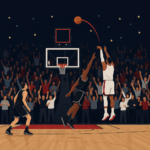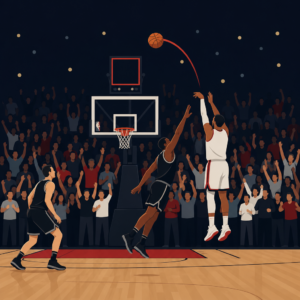

The best NBA playoff buzzer beaters live at the intersection of skill, pressure, and historical consequence, and the series-winning shots ranked highest are the ones that ended an opponent’s season the instant the ball dropped through the net. In playoff history, a buzzer beater is a made basket released before the game clock expires and counted after review, while a series-winning buzzer beater is even rarer: it must end the final game of a series with no time left for response. I have spent years studying postseason film, play-by-play logs, and broadcast angles, and one lesson is constant: context matters as much as shot difficulty. A leaning jumper in Round 1 can be unforgettable, but a shot that closes a conference finals or topples a dynasty carries different weight. That is why ranking the best NBA playoff buzzer beaters requires more than nostalgia. You have to measure stage, degree of difficulty, defensive pressure, player legacy, and the ripple effects on playoff history.
This hub covers playoff history through the lens of the most dramatic endings the sport has produced. It also serves as a practical guide for fans who want quick answers to common questions: What is the greatest series-winning shot in NBA history? How many true series-ending buzzer beaters have there been? Why do Michael Jordan, Kawhi Leonard, Damian Lillard, and John Stockton appear in every serious discussion? The answers depend on definitions and on the record book. Several famous postseason daggers, such as Derek Fisher’s 0.4 shot in 2004 or Ray Allen’s corner three in the 2013 Finals, were not series winners. Others, like Ralph Sampson’s 1986 miracle against the Lakers, ended a game and shifted a series but did not close it out. The shots ranked here all share one trait: when the horn sounded, the series was over.
Series-winning buzzer beaters matter because they compress months of work into one release. Coaches spend a week on matchups, scouting reports, and late-game counters; one clean screen, one switch, or one half-step of separation can erase all of it. These moments also become central reference points for broader playoff history. Jordan’s 1989 jumper announced a new superstar assassin. Stockton’s 1997 three sent Utah to its first Finals. Leonard’s 2019 corner bounce gave Toronto the defining play of its championship run. Lillard’s 2014 and 2019 shots changed the trajectory of franchises and front-office timelines. To rank them properly, this article treats the “best NBA playoff buzzer beaters” as a full playoff history topic, not a highlights package, and builds a hub-level view that explains what happened, why each shot mattered, and how to compare moments across eras.
The ranking criteria for the best NBA playoff buzzer beaters
A credible ranking starts with clear criteria. I weigh five factors. First is stakes: a Game 7 winner outranks a first-round clincher unless the latter radically altered league history. Second is shot difficulty, including distance, balance, defensive contest, and play design. Third is opponent quality; beating a 60-win contender means more than finishing off an overmatched roster. Fourth is legacy impact, meaning whether the shot changed how the player, coach, or franchise is remembered. Fifth is visual and emotional permanence: some plays are so cinematic that they become shorthand for an era. This framework keeps the ranking grounded in playoff history instead of highlight bias.
Using those standards, a small group separates from the rest. Jordan over Craig Ehlo in 1989 is the most famous first-round series winner ever, but Leonard’s four-bounce Game 7 shot in 2019 has a stronger case on difficulty and stage. Stockton’s 1997 conference finals three is less replayed than modern shots yet carried enormous franchise significance. Lillard owns two entries because both met every requirement and each produced immediate structural consequences for the losing team. That is the key to this topic as a hub: the best playoff buzzer beaters are not isolated clips. They are turning points in playoff history, roster building, and superstar reputation.
The ranked list: greatest series-winning shots in playoff history
At number one is Kawhi Leonard’s Game 7 buzzer beater for the Toronto Raptors against the Philadelphia 76ers in the 2019 Eastern Conference semifinals. It remains the only Game 7 series-winning buzzer beater in NBA history. Leonard caught the inbounds pass near the right sideline, fought through Ben Simmons, rose over Joel Embiid from the deep corner, and watched the ball hit the rim four times before falling. The shot was brutally difficult, heavily contested, and delivered under maximum pressure. Toronto went on to win the 2019 title, so the basket became the signature image of the franchise’s greatest season and the defining play of Leonard’s short, legendary Raptors tenure.
At number two is Michael Jordan’s 1989 “The Shot” against the Cleveland Cavaliers. With Chicago trailing by one in Game 5 of a best-of-five first-round series, Jordan took the inbound, drove right, elevated over Ehlo, and buried the jumper at the horn. It is impossible to separate the play from Jordan’s emerging mythology. The Bulls were not yet champions, but this was the moment many fans first saw postseason inevitability in real time. It also marked the beginning of Cleveland heartbreak that would shadow that franchise for years. In terms of pure cultural footprint, no series-winning playoff buzzer beater has been replayed more often.
At number three is John Stockton’s three-pointer in Game 6 of the 1997 Western Conference finals against Houston. This shot deserves more appreciation because of what it settled. Utah had never reached the Finals. The Rockets still had Hakeem Olajuwon, Charles Barkley, and Clyde Drexler. Stockton slid left off a screen, caught Karl Malone’s pass, and drilled the three with 2.8 seconds showing officially, but it functioned as the clinching dagger because Houston had no real answer and Utah’s first Finals berth was secured by that make. In playoff history conversations, this is one of the cleanest examples of a star guard delivering the biggest shot his franchise had ever seen.
At number four is Damian Lillard’s 37-foot three over Paul George in Game 5 of the 2019 first round against the Oklahoma City Thunder. The degree of difficulty was absurd, but the significance was even greater. Lillard waved goodbye after the shot, and that gesture became part of NBA history because the loss accelerated the end of the Thunder’s core. The basket finished a 50-point performance and confirmed Lillard as one of the premier late-game shooters of his era. From a hub perspective, this shot is essential because it links individual shotmaking brilliance to franchise-level consequences.
At number five is Lillard’s 2014 first-round winner against the Houston Rockets. Portland had not won a playoff series since 2000, and the pressure around the franchise was real. Nicolas Batum threw a perfect inbounds pass, Lillard curled around a screen, and hit the catch-and-shoot three with 0.9 seconds left to win the series in six. It was not as deep as the 2019 bomb, but the play design and execution were textbook late-game offense. For fans studying playoff history, this is a clear example of one shot restoring relevance to a franchise and establishing a player’s identity almost instantly.
At number six is Michael Jordan’s 1993 winner against the Cavaliers in Game 4 of the Eastern Conference semifinals. It lacks the mythic scale of the 1989 version, but it was technically a buzzer-beating series clincher and showed how a signature ending can recur against the same opponent. Chicago swept Cleveland, and Jordan’s turnaround over Gerald Wilkins reinforced a hard truth of that era: if the game was close late, the Bulls had the best closer in the sport. The repeat victim matters here because playoff history is often defined by persistent matchup trauma, not just isolated losses.
| Rank | Player | Year | Round | Opponent | Why it stands out |
|---|---|---|---|---|---|
| 1 | Kawhi Leonard | 2019 | East Semifinals, Game 7 | 76ers | Only Game 7 series-winning buzzer beater; elite difficulty; title run hinge point |
| 2 | Michael Jordan | 1989 | First Round, Game 5 | Cavaliers | Iconic image that accelerated Jordan’s playoff legend |
| 3 | John Stockton | 1997 | West Finals, Game 6 | Rockets | Sent Utah to its first NBA Finals |
| 4 | Damian Lillard | 2019 | First Round, Game 5 | Thunder | 37-footer ended a rivalry and foreshadowed roster breakup |
| 5 | Damian Lillard | 2014 | First Round, Game 6 | Rockets | Ended Portland’s long series-win drought |
| 6 | Michael Jordan | 1993 | East Semifinals, Game 4 | Cavaliers | Another Cleveland crusher in a Bulls sweep |
Why these shots changed playoff history
The easiest way to understand these moments is to track what followed. Leonard’s shot did not just beat Philadelphia; it cleared the path for a Raptors team that then survived Milwaukee and defeated Golden State for the championship. Without that basket, the entire modern history of the Raptors changes, including how the Leonard trade is judged. Jordan’s 1989 shot became the emotional bridge between his scoring-title years and his championship years. It told the league that Chicago no longer needed perfect circumstances to survive a series. Lillard’s 2019 winner effectively closed the book on the Thunder’s Damian-versus-Russell Westbrook theater and hastened Oklahoma City’s pivot.
Stockton’s shot illustrates another playoff history principle: some buzzer beaters matter most because of what they validate. The Jazz had been excellent for years, but critics questioned whether the Malone-Stockton partnership could break through in May and June. By sending Utah past Houston, the shot validated continuity, execution, and half-court discipline in an era often remembered for isolation stars. Lillard’s 2014 shot did something similar on a smaller stage by proving that Portland’s young core could convert regular-season promise into postseason substance. These are not just endings; they are evidence points in larger arguments about teams and eras.
What makes a series-winning buzzer beater different from other playoff daggers
Not every dramatic playoff shot belongs in this category. The distinction matters for accurate playoff history. Derek Fisher’s 0.4 in 2004 is one of the greatest clutch baskets ever, but it came in Game 5 of a second-round series the Lakers still had to finish. Ray Allen’s 2013 three saved Miami’s season in the Finals, but San Antonio still had Game 7. LeBron James has several postseason walk-offs, including 2009 against Orlando and 2018 against Toronto and Indiana, yet not all were true buzzer-beating series winners. A series-winning buzzer beater ends the contest and the matchup simultaneously with zero time for rebuttal. That combination is what makes the list so short.
There is also a psychological difference. A game-winner with one second left still allows an inbound and the abstract possibility of chaos. A true buzzer beater denies the opponent even that. Players on the losing side often describe a peculiar silence because there is no next possession, no foul strategy, no timeout diagram, just immediate finality. I have always found that element important when ranking shots. The more absolute the ending, the larger the imprint on playoff memory. It is one reason Leonard’s 2019 shot resonates so strongly: the arena, the players, and the television audience all had to wait together while the ball decided the series on its own time.
How to use this hub for deeper NBA playoffs research
As a sub-pillar hub for NBA Playoffs playoff history, this page should help readers branch into more detailed questions. If you want the broadest historical study, compare these series-winning shots with other categories: Finals game-winners, conference finals daggers, overtime walk-offs, and non-buzzer elimination shots. If your interest is player legacy, Jordan and Lillard offer especially rich case studies because their shots affected how entire careers are narrated. If you are studying tactics, focus on after-timeout design, screen angles, spacing, and the importance of inbound accuracy. The same film that creates iconic moments also teaches late-game offensive structure.
This topic also rewards era comparison. Older playoff environments featured more physical perimeter defense, fewer threes, and lower scoring, which changed what counted as a quality last shot. Modern spacing creates longer closeouts and makes deep pull-up threes more available, as Lillard demonstrated. Video review has changed certainty as well. Leonard’s shot was obviously good once it fell, but many modern endings now pass through replay, timestamp precision, and center-clock synchronization. For a complete understanding of playoff history, readers should view buzzer beaters not as isolated miracles but as products of rules, strategy, talent trends, and postseason pressure that evolve over time.
The best NBA playoff buzzer beaters are memorable because they settle everything at once: the game, the series, and often a major argument about a player or team. When ranked by stakes, difficulty, opponent strength, and historical impact, Kawhi Leonard’s 2019 Game 7 shot against Philadelphia has the strongest case for number one. Michael Jordan’s 1989 dagger remains the sport’s most iconic postseason walk-off. John Stockton’s 1997 three deserves more credit for carrying a franchise to its first Finals. Damian Lillard’s two entries show how one shooter can define an era of long-range closing ability. Together, these shots form a compact history of playoff pressure and postseason greatness.
The main benefit of studying these moments is clarity. You stop treating buzzer beaters as random magic and start seeing the ingredients that create them: elite shotmaking, disciplined execution, matchup targeting, and emotional control under extreme stress. That perspective makes every future playoff ending richer because you can place it within the larger history of the NBA playoffs. If you are building out your understanding of playoff history, start with the ranked shots above, then follow the player legacies, team consequences, and tactical details connected to each one. Rewatch the possessions, compare the contexts, and use this hub as your starting point for the most dramatic endings the postseason has ever delivered.
Frequently Asked Questions
What exactly counts as a playoff buzzer beater, and how is a series-winning buzzer beater different?
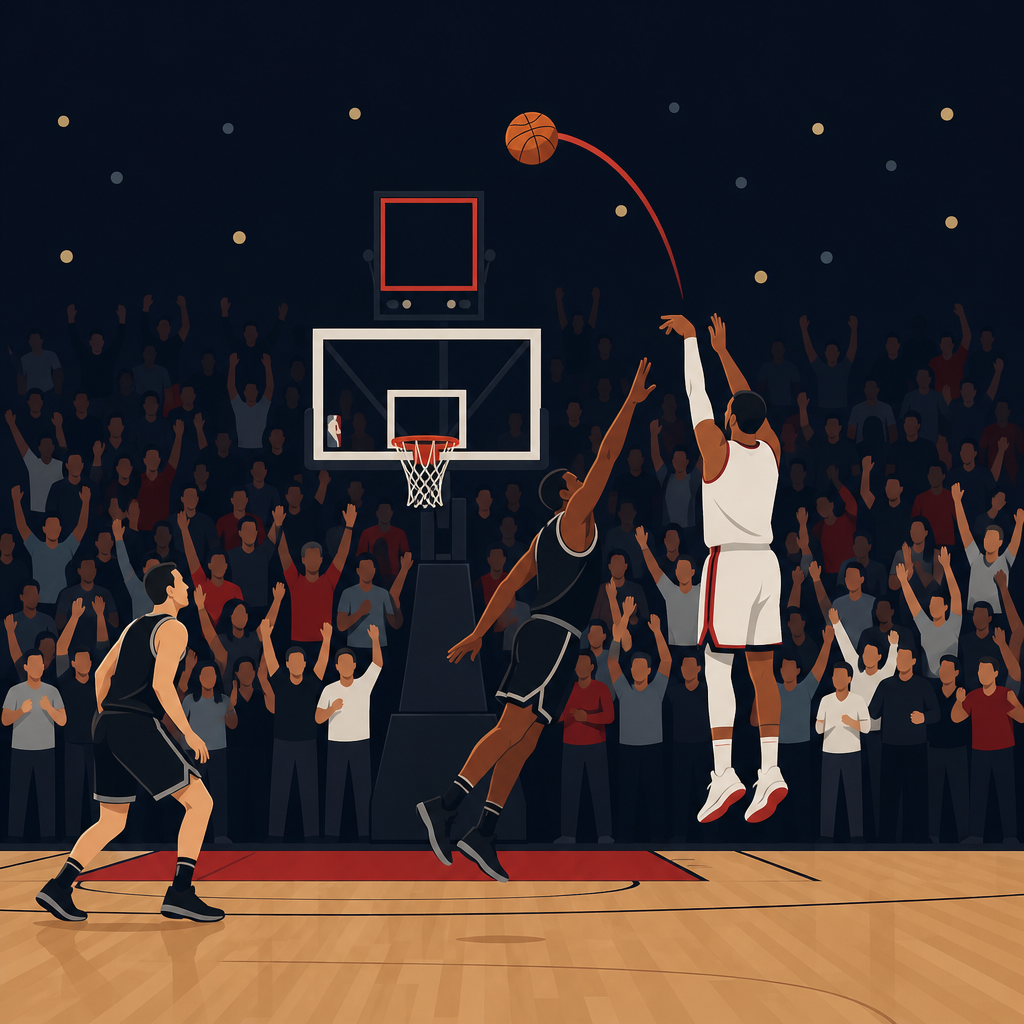
A playoff buzzer beater is a made basket in a postseason game that leaves no time on the clock once the play is complete. The key detail is that the shooter must release the ball before time expires, even if the shot drops after the horn sounds. In the modern NBA, replay review helps confirm whether the ball was out of the player’s hands in time, which is why some of the most famous playoff endings include that dramatic pause before the officials officially signal the basket counts.
A series-winning buzzer beater is a much more exclusive category. It is not just a game-winner at the horn. It must end the final game of a playoff series, instantly eliminating the opponent with no chance for an inbound, a foul, or overtime. That distinction matters when ranking the best NBA playoff buzzer beaters because the historical weight is far greater. A shot that wins Game 3 at the buzzer is memorable, but a shot that wins Game 7 and sends one team home on the spot belongs in a different tier of postseason history.
That is why articles ranking the best NBA playoff buzzer beaters usually separate “clutch playoff shots” from true “series-ending buzzer beaters.” The latter are among the rarest and most dramatic plays the sport can produce, combining technical precision, extreme pressure, and immediate consequence in one moment.
Why are series-winning buzzer beaters considered so rare in NBA history?
They are rare because several conditions have to line up perfectly at the same time. First, the game must be close enough in the final seconds for one shot to decide everything. Second, the shooting team has to get the final possession rather than defend it. Third, the shot has to be released before the buzzer and still go in. Finally, that basket has to clinch the series, which means it must happen in an elimination game or a deciding game with the score arranged so there is no time left for any reply.
Even in a league with a long playoff history, those circumstances do not appear often. Many postseason games are decided by free throws, defensive stops, or baskets made with a few seconds left that still allow one more possession. Others go to overtime, where the drama extends but the purity of a true buzzer beater disappears. That is why the list of genuine series-winning buzzer beaters is so short compared with the broader universe of iconic playoff shots.
The rarity is also part of what gives these moments their staying power. Fans remember them not only because of the shot itself, but because the season ended in a single instant. One franchise moves on in celebration, the other is eliminated on the same play. That level of finality is what makes series-winning buzzer beaters so special and so heavily debated in all-time rankings.
What factors matter most when ranking the best NBA playoff buzzer beaters?
The first factor is historical consequence. A shot that ended a series, especially in a deciding game, almost always carries more weight than one that merely won an early-round contest. From there, context becomes everything: the round, the opponent, the margin for error, and what was at stake for the player and franchise involved. A buzzer beater in the NBA Finals or a Game 7 naturally gets a boost because the pressure is greater and the moment resonates more deeply in league history.
Degree of difficulty is another major consideration. Was the shooter tightly defended? Did the player have to create space with almost no time left? Was the shot a fadeaway, a turnaround, a contested three, or an awkward release over multiple defenders? The visual drama of the play matters too. Some buzzer beaters become immortal because the sequence itself is unforgettable, from the inbounds pass to the bounce on the rim to the crowd reaction after the horn.
Legacy also plays a role. Certain shots define careers, eras, or rivalries. They can elevate a superstar’s postseason reputation or become the signature image of an entire playoff run. When ranking the best NBA playoff buzzer beaters, the strongest entries usually combine all of these elements: elite shot-making, maximum pressure, clear stakes, and a lasting impact on how fans remember the players and teams involved.
Which series-winning playoff buzzer beaters are usually discussed among the greatest ever?
Several shots appear in almost every serious conversation. Michael Jordan’s jumper over Craig Ehlo in 1989 is one of the foundational examples because of its iconic image and lasting place in NBA mythology. It ended the series, delivered one of the sport’s most replayed celebrations, and reinforced Jordan’s emerging identity as the league’s ultimate closer. Damian Lillard’s deep three over Paul George in 2019 also ranks extremely high because it ended the series in spectacular fashion and instantly became one of the defining moments of the decade.
Kawhi Leonard’s four-bounce winner against Philadelphia in 2019 is often placed near the very top because of the stage, the difficulty, and the unforgettable suspense of the ball bouncing on the rim before dropping. It came in a Game 7, making it even more historic, and it remains one of the most cinematic endings in league history. John Stockton’s famous shot against Houston in 1997 is also regularly included in broader discussions of playoff buzzer beaters, though careful rankings often distinguish between true series-ending buzzer beaters and other last-second postseason daggers depending on the exact timing and circumstances.
The exact order varies from list to list because ranking these moments is inherently subjective. Some people prioritize fame and legacy, while others emphasize degree of difficulty or round of competition. But the most respected rankings consistently focus on the handful of shots that ended playoff series instantly and changed the course of postseason history the moment they fell.
Why do these shots remain so important in NBA culture long after the games are over?
They last because they condense everything fans love about playoff basketball into a single play. There is pressure, strategy, individual brilliance, crowd emotion, and irreversible consequence all at once. In a league defined by stars, a series-winning buzzer beater becomes the ultimate snapshot of greatness under stress. It is the kind of moment that is replayed for years because it tells a complete story in just a few seconds.
These shots also become cultural reference points for entire generations of fans. People remember where they were when they saw them, how the arena sounded, and what the celebration looked like afterward. Broadcasters replay the calls, highlight shows revisit the clips, and debates continue about where each shot belongs among the greatest playoff moments ever. In that sense, the best NBA playoff buzzer beaters become larger than the box score. They turn into shared memories that help define eras of the sport.
For players and franchises, the importance is even deeper. A single shot can transform a team’s legacy, validate a superstar’s reputation, or leave a lasting scar on an opponent. That is why a series-winning buzzer beater is never just another made basket. It is often remembered as the emotional high point of a playoff run, and sometimes as the most enduring image in a player’s career.