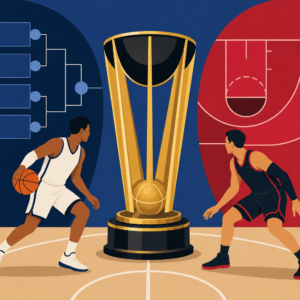

The NBA In-Season Tournament, now officially branded the Emirates NBA Cup, is a regular-season competition layered into the NBA calendar to create high-stakes games before the playoffs and to give fans, players, teams, and broadcasters another meaningful checkpoint during the long schedule. In simple terms, it is a cup competition staged during the season: teams are placed into groups, they play designated tournament games that still count toward the regular-season standings, and the best performers advance to a knockout round for a trophy and cash prizes. Because this event sits inside the broader NBA season format rather than replacing it, understanding the tournament helps explain how the league structures competition, incentives, scheduling, and television interest from October through December.
I have worked through NBA schedule grids, tiebreak sheets, and game logs enough to know that the tournament is easier to follow once you separate three ideas: group play, knockout rounds, and regular-season accounting. Group play is the opening phase, where teams face a small set of opponents inside randomly drawn conference-based groups. The knockout rounds follow, with quarterfinals, semifinals, and a championship game. Regular-season accounting is the wrinkle that confuses most casual fans: most tournament games count as standard regular-season games, while the championship game stands alone and does not count toward the 82-game regular-season record. That design preserves the season structure while adding urgency.
Why does the NBA In-Season Tournament matter? First, the league wanted to make early-season games more meaningful at a time when standings are still crowded and fan attention competes with the NFL, college football, and baseball’s postseason. Second, teams and players respond to incentives, and the NBA attached both competitive prestige and direct financial rewards. Third, the tournament gives the league a format that is familiar globally. Soccer fans know domestic cups; international basketball fans know compact competitions with group stages and knockouts. The NBA adapted those ideas to fit an American league schedule without disrupting playoff qualification, draft rules, or conference alignment.
As a hub for NBA season format, this article explains the entire structure clearly: how the groups are created, how tournament nights fit into the calendar, how teams advance, how tiebreakers work, what the prize structure looks like, and how the event affects standings, strategy, and roster management. If you want the short answer, here it is: the NBA In-Season Tournament is a 30-team competition embedded in the regular season, split by conference, decided first by group play and then by single-elimination rounds, with players and coaches earning escalating cash bonuses and the winning team lifting the NBA Cup. The details below show exactly how that happens and why the format is built the way it is.
How the NBA In-Season Tournament format works
The tournament includes all 30 NBA teams. The league divides teams into six groups of five, with three groups in the Eastern Conference and three groups in the Western Conference. Group assignments are based on the previous regular season’s standings, with teams sorted into pots so each group receives one team from each performance tier. That method is designed to avoid one overloaded group and to preserve competitive balance. In practice, it functions much like a draw in international competitions, except the NBA keeps conference separation intact until later in the bracket.
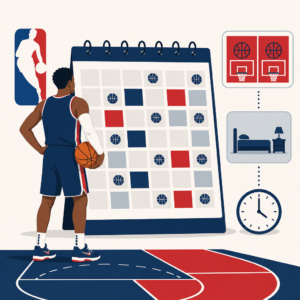
During group play, each team plays four tournament games: two at home and two on the road. Those games are scheduled on designated tournament nights, typically Tuesdays and Fridays in November, which helps fans recognize them on the calendar and helps broadcasters promote a consistent event window. Every team faces each of the other four teams in its group once. Since all of those contests except the final are regular-season games, teams do not have to choose between chasing the tournament and protecting their league record. Winning a group-stage game improves both positions at the same time.
After group play, eight teams advance to the knockout rounds. Those eight are the six group winners, plus one wild card from each conference. The wild card goes to the best second-place finisher in the conference based on tournament record, then tiebreak procedures if necessary. The knockout bracket begins with quarterfinals hosted by the higher-seeded teams. Winners move to the semifinals, and then to the championship game, which is played at a neutral site selected by the league. Las Vegas hosted the final stages in the tournament’s debut season, underscoring the NBA’s effort to turn the event into a standalone spectacle.
The championship game is the only contest that does not count toward the regular-season standings. That detail matters. Every NBA team is still scheduled for 82 regular-season games, but the two finalists effectively play an extra competitive game because the final sits outside the standard record. Teams that do not reach the championship have additional regular-season games scheduled later to complete their 82-game slate. This scheduling flexibility is one reason the tournament could be introduced without rewriting the entire season format.
Group play, standings, and tiebreakers
The most common question fans ask is simple: how do teams move on if several clubs finish with the same record? The answer is that the NBA uses a formal tiebreak sequence tailored to the tournament. Group record comes first, of course. If teams are tied, the league looks at head-to-head record in the group stage when applicable. If a tie remains, point differential in tournament group games becomes critical. After that, the NBA turns to total points scored in tournament group games, then the prior regular season’s record, and finally a random drawing if everything else somehow fails to separate teams.
Point differential is the strategic twist that made the event immediately distinct. In a normal regular-season game, a team leading by twelve late might simply empty the bench and trade clock for comfort. In tournament group play, that same team may continue pushing for clean offensive possessions because every point can matter in the standings table. Coaches must balance sportsmanship, player workload, and the practical reality of tournament math. I have seen late-game decision-making in these spots look much more like knockout basketball than a standard November game.
Because point differential matters only within tournament games, teams cannot carry over margins from non-tournament nights. That keeps the competition self-contained and transparent. It also means one poor group-stage loss can put real pressure on a team in the next game. For example, a contender that loses by eighteen on opening night may need both wins and larger margins later, while a middling team that starts 2-0 can suddenly control its path. That compressed importance is exactly what the NBA wanted from an early-season event.
| Stage | How Teams Qualify | Games Count Toward Regular Season? | Main Tiebreak Focus |
|---|---|---|---|
| Group Play | All 30 teams placed into six groups of five | Yes | Record, head-to-head, point differential |
| Quarterfinals | 6 group winners plus 2 wild cards | Yes | Single-elimination result |
| Semifinals | Quarterfinal winners | Yes | Single-elimination result |
| Championship | Semifinal winners | No | Winner takes cup |
From a season-format perspective, the tiebreak system rewards complete performance rather than just survival. Teams need to win, but they also benefit from efficient offense, disciplined defense, and attention to end-of-game possessions. That is useful for the league because it creates television moments, but it also gives coaches a tangible reason to demand sharp execution early in the season. In other words, the tournament does not just create extra branding. It changes incentives inside real games.
Knockout rounds and scheduling inside the NBA calendar
Once the field is cut to eight teams, the tournament shifts from group math to direct elimination. The quarterfinals are played on NBA home floors, rewarding group-stage success with home-court advantage. That is meaningful because travel, familiarity, and crowd energy still matter in December, even if the playoffs are months away. The semifinals and championship are then staged at a neutral site, giving the league a final-four style event that can be packaged for sponsors, media, and fans traveling in for a concentrated weekend of games.
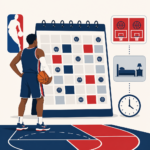
The scheduling challenge was always the central operational question. The NBA solved it by designating specific regular-season dates as tournament windows and by holding back portions of the broader schedule until group-play results were known. That lets the league slot in quarterfinals and fill out remaining non-tournament games for teams eliminated earlier. It is not a trivial exercise. Arena availability, television partners, travel sequencing, and rest-equity concerns all have to line up. But the league’s scheduling office already manages one of the most complex calendars in sports, so adding this layer was difficult, not impossible.
For players and coaches, the timing creates a different kind of pressure than the postseason. Rotations are not fully settled in November, rookies are still adjusting, and veterans may still be on managed workloads. Yet the stakes are high enough that teams generally tighten their approach. Starters often play more playoff-style closing minutes in close tournament games, and scouting reports become sharper because the advancement consequences are immediate. That gives fans a look at serious basketball earlier than usual, even though the official playoffs remain the true championship path.
There are tradeoffs. Some executives have quietly wondered whether extra intensity in December adds fatigue later, especially for contenders with deep postseason ambitions. That concern is fair, but the tournament’s game count is modest. Teams play only four guaranteed group-stage tournament games, and only a few advance beyond that. Since most of those games would be on the schedule anyway, the real added burden is the championship game and the heightened intensity, not a wholesale increase in volume. For most organizations, the benefits in competitive edge and attention outweigh the scheduling complication.
Prize structure, financial incentives, and what teams actually win
The NBA did not leave motivation to symbolism alone. It attached a clear cash-prize ladder to the tournament, with payments increasing by round reached. In the event’s initial structure, players on teams losing in the quarterfinals received $50,000 each, semifinal losers received $100,000 each, championship-game losers received $200,000 each, and players on the winning team received $500,000 each. Coaches also receive prize money, and the league has framed the rewards as meaningful, especially for younger players and role players who are not on maximum contracts.
Those numbers matter differently across rosters. For a superstar earning $40 million or more, $500,000 is not life-changing income. For a rookie on a lower scale, a two-way player establishing himself, or a veteran minimum player, it is substantial. Inside locker rooms, that creates a shared incentive structure. Stars often talk publicly about competing for the younger guys because the bonus has a bigger effect on them. From what I have seen covering team economics and roster hierarchies, that kind of internal alignment should not be underestimated. A prize can be modest at the top and still powerful across the team.
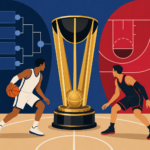
The team reward is the NBA Cup itself, along with the branding value of being the first or latest champion of the event. Franchises care about silverware, but they also care about perception. Winning a new competition will not equal an NBA championship, and nobody inside the league pretends otherwise. Still, banners, trophies, and milestones become part of organizational identity. For teams trying to build a winning culture, a cup run can sharpen habits, energize a fan base, and create a visible success marker before April.
There is also a broader commercial logic. Sponsors gain a branded property. Broadcasters gain appointment viewing during a crowded sports window. The league gains inventory that feels special without inventing meaningless exhibition games. Fans gain a clearer reason to watch Tuesday and Friday nights in November. This is why the prize structure matters beyond player bonuses: it supports the business case for the tournament while preserving competitive credibility on the floor.
Why the tournament changes the NBA season format
The tournament does not replace the playoffs, the play-in tournament, or the importance of the 82-game grind. What it changes is the texture of the early regular season. Before its introduction, many November games blended together unless there was a rivalry, a major injury return, or a standings surprise. Now the league has an embedded event that creates urgency, visual identity through special courts and uniforms, and a simple story line: win your group, protect point differential, reach the knockout stage, and chase the cup.
That matters for different audiences in different ways. Casual fans get easier entry points because the stakes are clearer than in a generic Game 14 of 82. Serious fans get more strategic depth because tiebreakers and margins alter coaching decisions. Teams get another benchmark for evaluating readiness. If a talented roster cannot execute cleanly in a compact tournament setting, that may reveal rotation issues, defensive communication problems, or late-game weaknesses that need work before spring. In that sense, the event is not just entertainment; it is also a diagnostic tool.
For the NBA Rules and season-format landscape, the key takeaway is straightforward. The In-Season Tournament is a hybrid competition built on regular-season infrastructure, conference-based group draws, point-differential tiebreakers, single-elimination knockouts, and escalating cash prizes. It was designed to create meaningful games earlier in the calendar without compromising the league’s primary championship race. That design has worked because it respects the existing season while adding a layer fans can follow easily once they know the mechanics.
If you follow the NBA closely, learn the tournament schedule, group standings, and tiebreak order early each season. Those details turn confusing scoreboard graphics into a clear competitive map. And if you are building out your understanding of NBA season format, use this tournament as the starting point for the rest of the calendar, because it shows exactly how the league blends tradition, incentives, and scheduling innovation into one structure.
Frequently Asked Questions
What is the NBA In-Season Tournament, and why was it created?
The NBA In-Season Tournament, now officially called the Emirates NBA Cup, is a competition built into the regular season to add urgency and excitement before the playoffs begin. Rather than being a separate event that sits outside the schedule, it is woven directly into the NBA calendar. That means teams play designated tournament games during the early part of the season, and most of those matchups still count toward their normal regular-season record.
The league created the tournament to solve a familiar issue in a long 82-game season: not every early-season game feels especially meaningful to fans, players, or broadcasters. By introducing a cup-style format with group standings, knockout rounds, and a trophy at stake, the NBA created a new competitive checkpoint that raises the stakes well before playoff positioning becomes the main storyline. It is designed to make November and December games matter more, create appointment viewing, and give teams something tangible to chase even if the postseason is still months away.
In practical terms, the tournament also gives the league a fresh property to market globally. It adds drama, creates more storylines, and can reward teams that start strong. For fans, the concept is easy to understand: it is essentially a regular-season cup competition, similar in spirit to tournament formats used in international soccer and other sports, but adapted to the NBA’s structure. The result is a competition that still fits within the standard season while giving the league another marquee event on the calendar.
How does the format of the NBA In-Season Tournament work?
The format begins with all 30 NBA teams being divided into groups based on conference. Teams are typically placed into several groups within the Eastern Conference and several within the Western Conference, creating a round-robin stage in which each team plays designated group-play games against the other teams in its group. These games take place on specific nights set aside for tournament play, and they count both toward tournament standings and toward the regular-season standings.
After group play is completed, the teams with the best results advance to the knockout stage. Generally, the top team from each group moves on, along with a small number of wild-card teams that had the best records among the remaining clubs in each conference. Tiebreakers can become very important, which is why point differential and other statistical measures may matter if teams finish with the same record in group play. That is one reason tournament games can stay intense even late in the fourth quarter, since every possession may influence who advances.
Once the field is set, the tournament shifts into single-elimination play. The knockout rounds typically include quarterfinals, semifinals, and then the championship game. The quarterfinals are hosted by qualifying teams based on the competition structure, while the semifinals and final are staged at a neutral site. The championship decides the cup winner, giving the event a distinct climax that feels more like a traditional tournament than a normal stretch of regular-season basketball.
One important detail is that all tournament games except the championship count toward the regular season. The final is effectively an additional game for the two teams that reach it, which is why the NBA schedule is carefully managed around the event. So while the tournament feels like a standalone competition, it is actually layered into the season in a way that preserves the integrity of the overall 82-game campaign for the rest of the league.
Do NBA Cup games count toward the regular-season standings?
Yes, for the most part they do. One of the defining features of the NBA In-Season Tournament is that it is not simply an exhibition-style event or a detached side competition. The designated group-play games count in the regular-season standings just like any other game, and the same is true for the knockout rounds leading up to the championship, with the key exception of the final itself.
This setup is a major reason the tournament works so well within the NBA calendar. Teams are not being asked to play a large slate of extra games that would overload the schedule. Instead, the league repurposes a portion of the existing regular-season schedule as tournament contests. That means the games carry double significance: they affect a team’s race within the tournament and also impact playoff seeding, win-loss records, and the broader standings in the conference.
The only true exception is the championship game. Because not every team can qualify for that final, it is treated differently from the rest of the tournament structure. The two clubs that reach the title game play an extra matchup that determines the cup winner, but that game does not count toward the regular-season standings. This distinction helps keep the season balanced while still allowing the tournament to have a genuine final with a trophy on the line.
For fans, this dual-purpose design is one of the tournament’s biggest strengths. It ensures the games matter no matter how a team views the competition. Even if a franchise is not focused on the cup itself, the game still affects its regular-season position. That gives the tournament built-in relevance and helps explain why teams generally approach it with more seriousness than a promotional event or novelty format.
How do teams advance, and what happens if there is a tie in the standings?
Advancement is determined first by performance in group play. Each team competes against the other teams in its assigned group, and the club with the best group record typically earns an automatic place in the knockout round. Beyond the group winners, additional wild-card spots are awarded to the strongest remaining teams in each conference. This gives teams a second path to advancement even if they do not finish first in their group.
Because the group stage is relatively short, ties in the standings are common, and that is where tiebreaking procedures become crucial. The NBA uses a set of official tiebreakers to separate teams with identical group-play records. These can include head-to-head results, point differential in group-play games, total points scored, and sometimes regular-season record from the prior season if needed as a last resort. The exact order is established by the league in advance, so teams know what matters before the games begin.
Point differential is especially important because it can influence behavior late in games. In a normal regular-season setting, a team with a comfortable lead might simply coast to the finish. In tournament play, however, every point can matter in a tiebreaker, which means teams may continue pushing to widen the margin or reduce a deficit even when the winner seems decided. That adds a different strategic layer and can make games feel more intense and less predictable.
Once teams get through group play and the wild-card selections are made, the knockout rounds are simple: win and advance, lose and you are out. That single-elimination pressure is a major part of the tournament’s appeal. It brings a playoff-style atmosphere into the early season, gives coaches and players high-leverage possessions to navigate, and creates a more urgent competitive environment than a typical November regular-season game.
What is the prize structure for the Emirates NBA Cup, and why does it matter?
The prize structure is one of the tournament’s biggest incentives. Players on teams that advance deeper into the competition receive financial bonuses, with the payout increasing based on how far their team goes. The biggest reward goes to the players on the championship-winning team, while runners-up, semifinalists, and quarterfinalists also receive smaller but still meaningful amounts. Coaches may be recognized through team success, but the most visible direct incentive is the player prize pool tied to tournament results.
For star players with massive contracts, the bonus may not be life-changing, but that does not mean it is irrelevant. Competitive athletes respond to trophies, pressure games, and the chance to win something unique. For younger players, role players, and those on smaller contracts, the financial reward can be much more significant. That creates a practical incentive across the roster and helps ensure the tournament is taken seriously inside locker rooms.
Beyond the money, the prize structure matters because it gives the event legitimacy. A trophy, a championship game, and a defined financial reward make the competition feel official rather than symbolic. Teams are not just participating in a branding exercise; they are competing for a title that sits alongside the regular season and playoffs as a distinct achievement. Over time, that can build history, rivalries, and prestige around the event.
There is also a broader benefit for the league and its audience. A meaningful prize structure encourages buy-in from players and teams, which improves the product for fans and broadcasters. When the games clearly matter, the intensity rises, the atmosphere improves, and the tournament becomes easier to understand and follow. In that sense, the prize money is not just a bonus for players; it is part of the NBA’s larger strategy to make the in-season competition feel real, valuable, and worth watching every year.