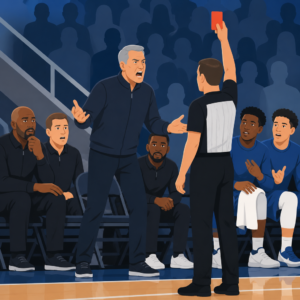

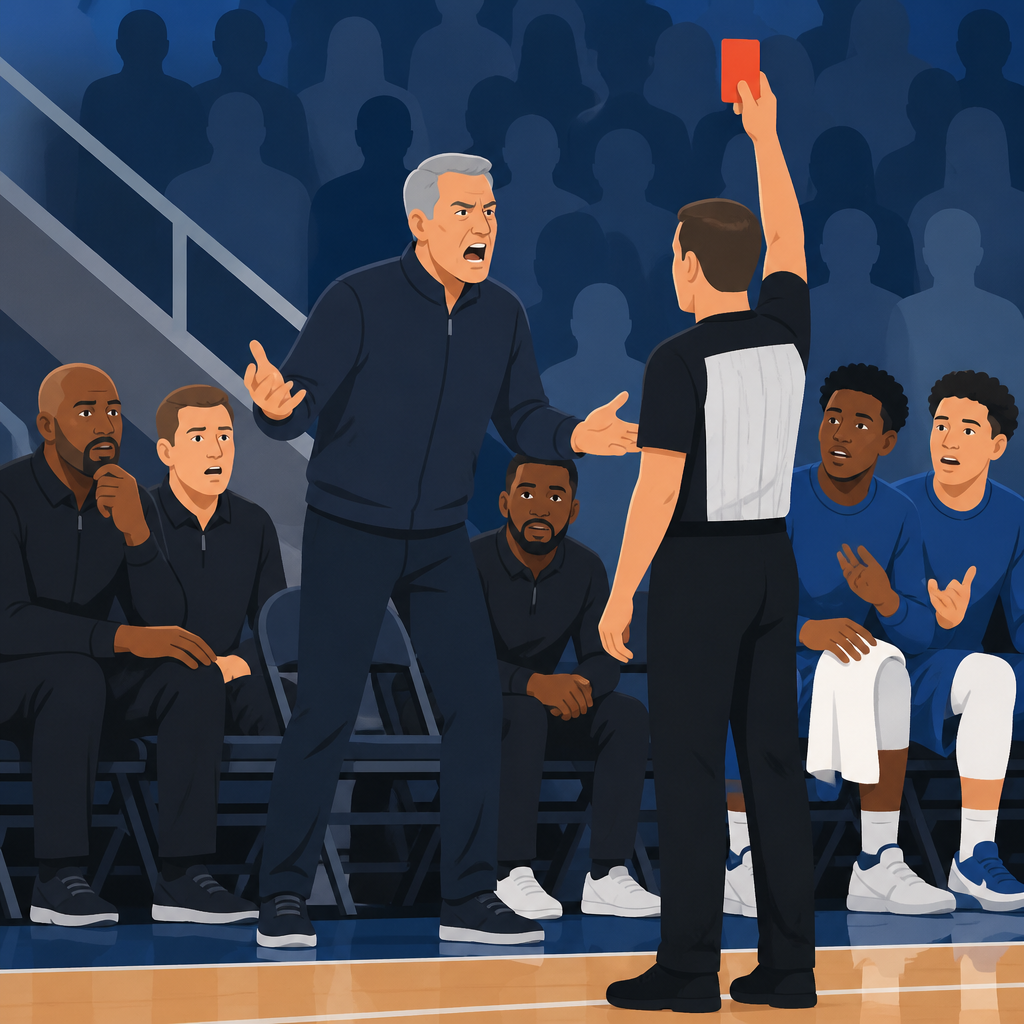
NBA coach ejection rules shape game management, sideline behavior, and the boundaries of protest during live competition. In simple terms, a coach is ejected when officials determine that conduct has crossed from permissible disagreement into unsportsmanlike behavior serious enough to warrant removal. That decision usually follows technical fouls, but not every ejection requires a long sequence, and not every heated exchange leads to a toss. Understanding the distinction matters because coaches influence pace, substitutions, defensive coverages, and emotional control, so their removal can change a game immediately.
Within the broader NBA rules landscape, coach ejections sit inside the fouls framework, especially technical fouls, unsportsmanlike acts, and bench decorum requirements. A technical foul is a non-contact infraction tied to behavior, procedure, delay, disrespect, or illegal bench conduct rather than physical play. Bench decorum refers to the standards governing coaches, assistants, and non-players on the sideline: where they may stand, how they may address officials, and what actions are considered disruptive. “Fouls explained” in this context means more than listing penalties. It means clarifying how the rulebook is applied in real arenas, under pressure, possession by possession, with crew chiefs balancing game flow against authority.
I have watched and broken down enough NBA games to know that most coach ejections are not random eruptions. They usually build through warning signs: repeated demonstrations, sarcastic applause, stepping far beyond the coaching box area, public accusations of bias, or sustained abuse after an explanation has already been given. Officials generally tolerate quick emotional reactions, especially after a missed call in a high-leverage moment. What they do not tolerate is conduct that undermines control of the game or invites a bench-wide escalation. That is why fans often see one coach allowed to yell briefly while another is tossed moments later; context, persistence, and tone matter as much as volume.
This article serves as a hub for the NBA Rules subtopic focused on fouls explained. It covers the ejection process, the role of technical fouls, the standards for bench behavior, what specific actions get a coach tossed, and what happens after the ejection. It also helps connect this topic to related foul categories: personal fouls, flagrant fouls, double technicals, delay-of-game violations, and automatic suspension thresholds. If you want a working understanding of why a coach is removed, when referees escalate from warning to technical, and how the bench is expected to behave, this guide gives the complete foundation.
How NBA coach ejection rules fit within fouls explained
Coach ejections belong to the non-contact side of foul administration. Players commit personals, shooting fouls, loose-ball fouls, and flagrants through physical actions on the court. Coaches, by contrast, are disciplined mainly through technical fouls and, in some cases, direct ejection-worthy conduct. The NBA rulebook distinguishes between conduct that is merely emotional and conduct that is unsportsmanlike, prolonged, demonstrative, abusive, or disruptive. Officials are instructed to preserve order, and the coach is held to a high standard because he represents the team’s leadership and can trigger wider bench reactions.
In practice, most coaches are ejected after two unsportsmanlike technical fouls. A first technical often comes after demonstrative protests, extended arguing, or disrespectful gestures. The second usually arrives if the coach continues after the warning effect of the first has failed. Once that second unsportsmanlike technical is assessed, the coach must leave the bench area and go to the locker room. Assistant coaches then absorb game-management responsibilities, usually led by the top assistant or acting head coach.
However, the common “two technicals and you’re out” summary is incomplete. Certain behavior can justify immediate ejection after one technical or after no prior formal technical at all, depending on severity. Profane abuse directed at an official, aggressive physical approach, refusal to leave the court area, entering the court to continue confrontation, or actions that incite spectators or bench personnel can produce a faster removal. Crew chiefs have discretion, but it is guided by league standards and postgame review.
The key point for readers studying fouls explained is this: coach ejection rules are not separate from foul logic. They are an enforcement mechanism designed to keep technical-foul conduct from compromising fairness, safety, and administrative control. When you understand technical fouls, you understand most coach ejections.
Technical fouls on coaches: what they are and how they accumulate
A technical foul on a coach is a penalty for conduct that violates sportsmanship or procedural standards. The opposing team receives one free throw, the ball is awarded according to the point of interruption or applicable administration rule, and the foul is recorded against the coach or bench. Unlike player personal fouls, technical fouls do not count toward the six-foul disqualification standard, but they do count toward ejection thresholds and season disciplinary review.
Examples include disrespectfully addressing an official, overtly disputing a call after being instructed to stop, using profanity visible and audible in a directed way, making demonstrative gestures such as exaggerated clapping at an official, stepping onto the floor to prolong an argument, or violating bench restrictions. Delay tactics can also trigger technicals, especially if the conduct appears intentional and disruptive rather than incidental.
One nuance fans often miss is the difference between a bench technical charged to the team and an unsportsmanlike technical charged specifically to the head coach. Illegal bench conduct by non-players can be charged to the bench, and the head coach bears responsibility for bench decorum. That does not always mean the head coach personally acted improperly, but he is accountable for order on the sideline. This is one reason the head coach may be penalized even when an assistant or reserve initiated the problem.
The NBA also reviews technical fouls after games for accuracy and possible rescission. That matters for season totals because players and coaches can face fines and suspension consequences once they cross established technical foul thresholds over the course of the regular season. While this article centers on in-game ejection rules, the accumulation system reinforces why coaches must manage themselves carefully even if a single outburst feels justified in the moment.
Bench decorum: the sideline standards every coach is expected to follow
Bench decorum is the practical code of conduct for everyone not actively playing. For coaches, it governs movement, communication, and interaction with officials. NBA head coaches are allowed to stand and coach, but that freedom is not unlimited. They cannot wander far down the sideline to chase officials, encroach onto the court during live action, interfere with inbounding space, or create a second spectacle after a ruling has been explained.
From experience reviewing game tape, the most overlooked decorum issue is escalation by repetition. One complaint rarely gets a coach ejected. Fifteen seconds of continued demonstrative protest after eye contact, acknowledgment, and a stop signal from the referee is what turns frustration into a technical situation. Officials are trained to listen briefly, communicate if useful, then restore focus to play. If a coach keeps performing disagreement for players and crowd, the behavior becomes a game-control problem rather than a simple request for clarification.
Bench decorum also covers assistants and inactive players. If assistants leave the bench area to protest, if the bench stands too far onto the floor during altercations, or if non-players verbally bait opponents, the head coach can be penalized through a bench technical. The NBA takes this seriously because sideline spillover can quickly become a confrontation involving multiple participants. Order on the bench is a competitive issue, not just a cosmetic one.
| Coach behavior | Likely response | Why officials react that way |
|---|---|---|
| Brief emotional protest after a missed call | Verbal acknowledgment or warning | Emotion is expected if it ends quickly |
| Extended arguing with demonstrative gestures | Unsportsmanlike technical foul | Protest becomes public disruption |
| Profanity directed at an official | Technical or immediate ejection | Personal abuse attacks authority |
| Leaving bench area or entering court to continue dispute | Technical and possible ejection | Creates safety and control concerns |
| Bench personnel standing or spilling onto court during conflict | Bench technical charged to coach | Head coach is responsible for sideline order |
What gets a coach tossed in the NBA
The clearest path to an ejection is two unsportsmanlike technical fouls. But if the question is what gets a coach tossed, the complete answer includes specific categories of conduct. Directed profanity at an official is one of the fastest triggers. So is personal, accusatory language that questions integrity rather than judgment. There is a major difference between “That’s a foul” and “You’re cheating us.” The first is protest; the second challenges impartiality and damages game authority.
Aggressive approach matters too. If a coach leaves the sideline, closes distance rapidly, points, waves off an official’s attempt to disengage, or must be physically restrained by staff, the ejection risk rises sharply. Throwing objects, kicking chairs, slamming equipment in a way that threatens participants, or refusing repeated instructions to return to the bench can also justify removal. Entering the court to continue an argument after play has moved on is particularly vulnerable to immediate sanction.
Public theater can draw technicals even without obscene language. Sarcastic clapping, prolonged disbelief gestures, mockingly signaling for replay, or turning to the crowd to inflame reaction all fit the unsportsmanlike category. Officials are not only policing disrespect toward themselves; they are protecting the game from becoming centered on a sideline confrontation.
There are also indirect paths to a coach ejection. If a coach has already been assessed one technical, then bench personnel commit illegal conduct and the second charge is recorded to the bench under the coach’s responsibility, the coach can still be ejected because the accumulation threshold has been met. This catches fans by surprise, but it is consistent with the head coach’s accountability for bench control.
How officials manage warnings, communication, and discretion
NBA referees do not want every dispute to become a technical. The preferred progression is preventive officiating: acknowledge, warn, explain if possible, and penalize only when behavior continues or crosses a clear line. Experienced crew chiefs are especially good at this. They will often tell a coach, in plain language, “That’s enough,” or “We heard you.” That warning is a pivot point. If the coach disengages, the game continues cleanly. If he escalates, the technical becomes likely and deserved under league standards.
Discretion is real, but it is not arbitrary. Context influences enforcement. A one-possession playoff game in the final minute has more emotional intensity than a regular-season game in November, yet that does not mean officials allow abuse. Instead, they distinguish between spontaneous reaction and sustained misconduct. They also consider whether the coach is trying to get information about legality, continuation, verticality, challenge timing, or clock status, which are legitimate areas of discussion.
The NBA Replay Center and the coach’s challenge system have reduced some confrontations by creating structured avenues for review. Still, replay can also inflame matters when coaches believe the original call was avoidable or the review scope is limited. In those moments, strong official communication is decisive. The best crews explain what is reviewable, what standard applies, and why the final ruling stands. Clear process lowers the chance that disagreement turns into an ejection.
After the ejection: penalties, substitutions in leadership, and league review
Once ejected, the coach must leave the court and bench area promptly. He cannot remain in the tunnel, continue arguing from the hallway, or communicate in a way that disrupts the game. An assistant takes over, timeout strategy shifts, and many teams simplify play-calling because the emotional event has already consumed attention. Sometimes the ejection rallies players; other times it destabilizes rotation management and late-game execution.
The immediate in-game penalty is the technical free throw and administrative continuation. The broader consequences can include fines and league-office review. The NBA regularly examines ejections, especially when video shows unusual severity, possible contact, or comments that may have crossed disciplinary lines. Public reporting after games often notes that “the league will review,” and that review can confirm the officials’ handling or, more rarely, rescind a technical if it should not have been assessed.
For the team, a coach ejection is not strategically neutral. Challenges are gone if already used, substitutions may become slower, and communication with officials is reduced because assistants often focus on execution rather than advocacy. That is why disciplined coaches pick their moments carefully. A technical can send a message. An ejection can cost valuable control.
Why this rule matters within the NBA Rules hub
Coach ejection rules connect multiple parts of the NBA Rules ecosystem. To fully understand fouls explained, readers should also study personal fouls, offensive fouls, loose-ball fouls, flagrant foul criteria, double technicals, delay-of-game rules, and replay procedures. Coach behavior often reacts to those rulings, and bench sanctions frequently arise from disputes over them. In other words, coach ejections are a downstream result of how the league defines contact, advantage, sportsmanship, and procedural authority.
The practical takeaway is simple. Coaches are allowed to advocate forcefully, but they are not allowed to become a second show that interferes with officiating and game control. Technical fouls are the main tool officials use to enforce that line, bench decorum keeps the entire sideline accountable, and ejections are reserved for repeated unsportsmanlike conduct or severe single incidents. If you are building your knowledge of NBA rules, start here, then continue through the related foul categories so every whistle makes more sense the next time you watch a game.
Frequently Asked Questions
How does an NBA coach usually get ejected from a game?
An NBA coach is most commonly ejected after receiving two technical fouls, but the process is not always as simple as a fixed two-step formula. In many routine situations, a coach argues a call, uses demonstrative gestures, leaves the coaching box to complain, or continues disputing a decision after being warned. If officials believe that behavior is excessive or unsportsmanlike, they may assess a technical foul. If the conduct continues and a second technical is issued, the coach is automatically ejected.
That said, officials are not required to let a situation build indefinitely. A coach can be removed more quickly if the behavior is especially aggressive, abusive, profane, threatening, or persistent. The practical standard is whether the conduct has crossed the line from acceptable protest into behavior that disrupts the game or disrespects the officials’ authority. In other words, the league allows coaches to advocate, question, and show emotion, but not to engage in prolonged confrontation or actions that undermine game control. Once ejected, the coach must leave the court area and have no further direct involvement from the bench for the remainder of the game.
What kinds of behavior can lead to a technical foul or ejection for a coach?
Several categories of conduct can put a coach at risk. The most common is overtly unsportsmanlike arguing with officials. That can include persistent complaining after a ruling, running onto the floor to challenge a call, using excessive demonstrative reactions, or refusing to stop after a warning. Bench decorum matters as well. Coaches are expected to maintain order in the bench area, remain within the acceptable boundaries of sideline conduct, and avoid creating distractions that interfere with play or officiating.
More serious conduct can accelerate the path to an ejection. Direct personal abuse toward an official, profanity aimed at referees, hostile gestures, confrontational physical encroachment, or repeated outbursts after a technical has already been assessed are all major red flags. Officials also watch for actions that inflame players, provoke the crowd, or delay the game. A coach does not need to be screaming constantly to get tossed; even a brief incident can be enough if it includes language or behavior deemed clearly unsportsmanlike. The central issue is not whether a coach disagreed, but how that disagreement was expressed and whether it crossed the threshold of acceptable sideline advocacy.
Can an NBA coach be ejected without getting two technical fouls first?
Yes. While two technical fouls are the most familiar route to an NBA coach ejection, referees have the authority to eject a coach immediately in more severe circumstances. If a coach uses abusive or vulgar language toward an official, acts in a threatening manner, makes overtly hostile physical movements, or engages in conduct that severely compromises order on the floor, officials can decide that an immediate removal is warranted. The league’s rules are designed to preserve control of the game, not to guarantee multiple warnings before serious misconduct is punished.
This is why fans sometimes see a coach tossed after what appears to be a short exchange. Television broadcasts may not capture every word, and many ejections hinge on tone, proximity, repeated prior comments, or the exact language used. A coach might have already been warned informally before a visible confrontation occurs. So while the two-technical structure is important, it is better to think of it as the standard pathway rather than the only pathway. Referees retain discretion to act faster when they believe the situation demands it.
What is considered acceptable disagreement from an NBA coach, and where is the line?
NBA coaches are expected to communicate with officials throughout the game, and respectful disagreement is part of that job. A coach can question a call, ask for clarification, react emotionally to a close decision, and advocate for players. Officials generally understand that competitive intensity comes with the role. Brief complaints, visible frustration, and strategic lobbying for future calls are all common features of NBA games and do not automatically result in a technical foul.
The line is crossed when the protest becomes prolonged, demonstrative, personal, or disruptive. If a coach keeps pressing after being heard, leaves the bench area in a confrontational way, waves off officials, uses sarcasm or disrespect to show up the crew, or continues arguing while the game needs to proceed, the risk rises quickly. The difference is often less about volume alone and more about persistence, intent, and effect. A coach who makes a point and moves on is usually treated differently from one who turns a complaint into an extended public challenge to the officials’ authority. Bench decorum, timing, and self-control matter just as much as the substance of the disagreement.
What happens after an NBA coach is ejected, and how does it affect the team?
Once ejected, the coach must leave the court and bench area and cannot continue directing the team from the sideline. An assistant coach typically assumes in-game coaching responsibilities, including substitutions, timeout management, and communication with officials. From that point forward, the team must function without its head coach’s immediate presence, which can affect late-game decision-making, defensive adjustments, and emotional composure. Even when a staff is well prepared, losing the head coach changes the rhythm of the bench and can alter the psychological tone of the game.
An ejection can also carry consequences beyond that night. Technical fouls are tracked, and repeated incidents may lead to league discipline, including fines or further review depending on the conduct involved. The league pays close attention not just to the ejection itself, but to whether the coach’s actions involved abusive language, prolonged misconduct, or behavior that reflected poorly on game administration. For teams, the impact is both tactical and symbolic: an ejection can energize players and fans in some moments, but it can also remove a key decision-maker at a critical time. That is why understanding NBA coach ejection rules matters. They are not just about punishing emotion; they define the limits of protest, preserve bench decorum, and help officials keep control of a high-pressure professional environment.