

Understanding how many free throws are awarded for each foul in the NBA starts with a simple idea: not every whistle leads to the same penalty, and the exact number of shots depends on the type of foul, the game situation, and whether the offensive player was in the act of shooting. For fans, bettors, youth coaches, fantasy players, and anyone learning NBA game rules, free throw scenarios can seem inconsistent until you know the framework officials use. Once that framework is clear, the pattern becomes logical. Personal fouls, shooting fouls, loose-ball fouls, offensive fouls, technical fouls, flagrant fouls, clear-path fouls, and away-from-the-play fouls all carry different consequences. Team foul penalties add another layer, as do three-point attempts, made baskets, and end-of-period exceptions.
I have spent years breaking down NBA rules for readers who want more than a highlight-level explanation, and free throws are one of the areas where precision matters most. A single misunderstanding changes how you interpret a close game, a coach’s challenge, or a box score. This guide explains every common and uncommon free throw outcome in plain language, while also serving as a central NBA Rules hub for broader game rules concepts such as bonus situations, continuation, penalty administration, replay triggers, and possession after technical or flagrant rulings. If your core question is “How many free throws for each foul?” the shortest accurate answer is this: zero, one, two, or three free throws may be awarded, and in certain cases the offended team also keeps the ball. The rest of this article explains exactly when each result applies and why.
How NBA officials decide whether any free throws are awarded
The first question after a foul is not “How many shots?” but “What kind of foul was called?” In NBA game rules, officials separate personal fouls from technical fouls and then determine whether the personal foul occurred on a shot, before a shot, by the offense, or in a special category such as clear-path or flagrant. The official scorer also tracks team fouls by quarter, because ordinary defensive fouls can become automatic free throws once the defense reaches the penalty. This is why a hand check with eight minutes left in the quarter may produce a sideline inbound, while the same contact with two minutes left may produce free throws.
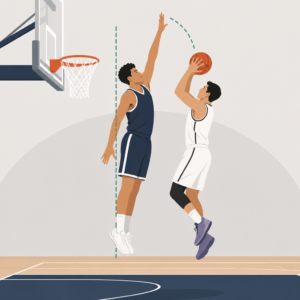
The act of shooting is the most important concept for everyday NBA viewing. If the shooter is gathering the ball and beginning a normal scoring motion when illegal contact occurs, the foul is usually a shooting foul. If the shot misses, the player gets free throws based on the value of the attempt: two for a two-point try and three for a three-point try. If the shot goes in despite the contact, the basket counts and the shooter gets one additional free throw. That is the classic “and-one.” If the foul happens before the upward motion begins, the foul is generally treated as a common non-shooting foul, which means no shots unless the defense is already in the penalty.
Officials also evaluate possession and clock context. Offensive fouls almost never produce free throws for the offense and usually wipe out the basket if it has not already been released legally. Loose-ball fouls can go either way depending on who initiated illegal contact. Away-from-the-play fouls, take fouls in transition, and clear-path fouls each have their own penalty structures. Technical fouls sit outside the normal bonus rules entirely, and flagrant fouls carry enhanced penalties because the NBA punishes unnecessary or excessive contact more severely than ordinary illegal contact.
Standard personal fouls: zero, one, two, or three free throws
The most common result of a foul is still no free throws at all. A standard defensive personal foul on the floor before the penalty simply gives the offense the ball out of bounds. Example: a defender grabs a cutter early in the first quarter and it is only the team’s second foul of the period. That is a common foul, no shot attempt, no bonus, so the offense inbounds. Fans often think every defensive foul means free throws; in the NBA, that is false unless a shot was in progress or the team-foul count triggers the penalty.
One free throw is awarded after a made field goal when the shooter is fouled in the act of shooting and the basket is good. If a player drives, absorbs contact, and finishes a layup, the two points count and one free throw follows. The same applies on a made three-pointer: the basket counts for three and the shooter receives one free throw, creating the rare four-point play. These one-shot situations are straightforward, but officials still review whether the foul occurred during legal shooting motion. If contact comes before the gather and the player tosses the ball in afterward, the basket usually will not count.
Two free throws are awarded in several routine circumstances. The first is a missed two-point shot on which the shooter is fouled. The second is any defensive common foul when the fouling team is in the penalty, meaning it has committed five team fouls in a regulation quarter or two in overtime. In those cases, even if no shot was attempted, the offended player shoots two. Three free throws are awarded when a player is fouled on a missed three-point attempt. The logic mirrors the missed two-point shooting foul: the player receives the number of shots needed to replace the lost scoring opportunity.
| Foul scenario | Free throws awarded | What else happens |
|---|---|---|
| Defensive foul on the floor, defense not in penalty | 0 | Offense inbounds |
| Fouled on made two-point shot | 1 | Basket counts |
| Fouled on made three-point shot | 1 | Basket counts |
| Fouled on missed two-point shot | 2 | Dead-ball free throws |
| Defensive team foul in penalty, non-shooting foul | 2 | Dead-ball free throws |
| Fouled on missed three-point shot | 3 | Dead-ball free throws |
One nuance matters here: the NBA does not use a one-and-one bonus like the NCAA. Once a team reaches the penalty, the offended player gets two shots automatically. That difference changes late-quarter strategy and is essential if you follow multiple levels of basketball. In NBA game rules, “bonus” means two free throws, not a front end and a possible second shot.
The bonus, team fouls, and special timing rules
The team foul penalty is where many viewers get confused, because the same contact can produce different outcomes at different times. In regulation, a team enters the penalty on its fifth team foul in a quarter. After that, each additional defensive common foul results in two free throws, even if the player was not shooting. In overtime, the threshold resets and the penalty begins on the fourth team foul, with free throws on the fifth and subsequent defensive team fouls. This reset is why late-game foul management matters so much after regulation ends.
There is also an important two-minute rule that prevents a team from giving multiple cheap fouls before reaching the penalty at the end of a period. If a team has not yet committed its fifth foul in the final two minutes of a quarter, the first defensive foul in the last two minutes puts the team on a path where the second such foul results in free throws. In practical terms, the NBA limits how much a defense can exploit unused fouls late in a quarter. Coaches know this and often become more conservative with pressure defense once the clock drops under two minutes.
Loose-ball fouls count toward the penalty as team fouls when committed by the defense. So do many routine reach-ins, holds, and illegal body checks. Offensive fouls do not create bonus free throws for the offense, even if the offense has already piled up team fouls; the bonus applies to defensive team fouls against the offense. When checking a box score, look at the quarter team foul count before assuming a non-shooting foul should have produced shots. In many game breakdowns I have done, that single missing detail explains most fan confusion.
Offensive fouls, loose-ball fouls, and what happens when no shots are allowed
Offensive fouls are the cleanest category if you remember one rule: the offense does not get rewarded with free throws for committing the foul. A charge, illegal screen, push-off, or hook by the offense results in a turnover. If the offensive player scores after committing the foul, the basket is waved off. If the foul occurs by an off-ball offensive player while a teammate is shooting, the shot result can depend on timing, but the basic principle remains that the offense does not go to the line for its own illegal contact.
Loose-ball fouls happen when neither team has clear control or when players are battling for position around a rebound or deflection. If the defense commits the loose-ball foul and is not in the penalty, the offense gets the ball out of bounds. If the defense is in the penalty, the offended team shoots two. If the offense commits the loose-ball foul, possession changes. This is why rebound scrums can swing a possession without involving a shot attempt at all.
A common real-world example is a missed jumper with both teams fighting for the rebound. If a defender shoves a rebounder in the back and the defense has already reached five team fouls, the rebounder’s team gets two free throws even though nobody was shooting. If that same shove is committed by the offense, it is simply a turnover. Understanding this distinction is essential when evaluating physical playoff games, where many whistles come after the initial shot.
Technical, flagrant, clear-path, and away-from-the-play free throw scenarios
Technical fouls produce one free throw in most standard cases. This includes unsportsmanlike conduct, excessive arguing, delay-of-game progression to a technical, defensive three seconds, and many bench technicals. Any player on the floor at the time may shoot the technical free throw unless a rule specifies otherwise. After the shot, play resumes according to the point of interruption, which means the technical does not automatically change possession. That is why a team can score on a technical and still keep the ball if it already had possession.
Flagrant fouls are more severe. A Flagrant 1, defined as unnecessary contact, results in two free throws for the offended player and possession for that player’s team. A Flagrant 2, which involves unnecessary and excessive contact, also results in two free throws and possession, plus ejection of the offender. The shot count does not increase to three just because the contact occurred on a three-point attempt; under NBA administration, the offended player generally receives two free throws on a flagrant personal foul, then the team keeps the ball. The value comes from both the shots and the retained possession.
Clear-path fouls and transition take fouls are designed to discourage defenders from illegally stopping open-floor scoring chances. Under current NBA rules, a clear-path foul generally gives the offended team one free throw and possession when specific transition criteria are met, especially when the path to the basket is unobstructed. The league also strengthened penalties for take fouls in transition to reduce deliberate stopping of fast breaks. These calls are technical in effect even though they arise from personal foul behavior, so the enforcement differs from ordinary common fouls.
Away-from-the-play fouls in the final two minutes of the fourth quarter or overtime also carry a special penalty: one free throw and retained possession for the offended team. This rule targets intentional grabbing of poor free throw shooters before the inbound or during dead-ball style actions. It effectively shuts down tactics that once distorted endgame situations. When officials identify the foul as away from the play in that protected window, teams cannot benefit from gaming the clock through strategic holding.
Replay, edge cases, and how to read every free throw ruling correctly
Modern NBA officiating uses replay to sort out whether a shooter was behind the three-point line, whether the foul occurred before the gather, whether contact met the threshold for a flagrant, and whether a clear-path opportunity existed. Those details directly affect free throw totals. A review can change two shots to three, erase an and-one, or add possession after an upgraded foul. In close games, that is enormous.
The easiest way to read any ruling is to follow a four-step checklist. First, identify the foul type: personal, offensive, technical, flagrant, clear-path, or away-from-the-play. Second, ask whether the player was in the act of shooting. Third, check whether the basket was made. Fourth, check the team foul count and game clock for penalty or special endgame rules. This sequence matches how experienced analysts decode whistles in real time.
As the NBA Rules hub for game rules, this topic connects naturally to related subjects every fan should learn next: what continuation means, how the coach’s challenge changes foul outcomes, when the ball becomes dead, how bonus rules reset by period, and why possession may be retained after some penalties but not others. Master those concepts and free throw rulings stop feeling random. The main takeaway is simple: NBA free throw awards are rule-based, not discretionary. Learn the foul category, shooting status, and penalty context, and you can explain virtually every whistle on sight. Keep this framework in mind the next time a game turns on a single call, and you will understand exactly why the line at the stripe looks the way it does.
Frequently Asked Questions
How many free throws are awarded on a normal shooting foul in the NBA?
In the NBA, the standard rule is simple: a player fouled in the act of shooting gets the number of free throws that matches the value of the shot attempt. If the player was attempting a two-point shot and the basket did not go in, he receives two free throws. If he was attempting a three-point shot and missed, he receives three free throws. If the shot goes in despite the foul, the basket counts and the player gets one additional free throw, commonly called an “and-one.” That means a made two-point shot plus the foul leads to one free throw, and a made three-point shot plus the foul also leads to one free throw.
The key phrase here is “in the act of shooting.” Officials have to determine whether the offensive player had started his shooting motion when the illegal contact occurred. That judgment matters because the same contact can produce very different outcomes depending on timing. If the foul happens before the shooting motion begins, it usually is not treated as a shooting foul, even if the player throws the ball up immediately afterward. This is why some whistles lead to side-out possession or bonus free throws, while others produce two or three shots at the line.
For most fans, this is the foundation that makes the rest of the free throw rules easier to understand. If the foul clearly affects a shot attempt, think in terms of shot value: two-point attempt equals two free throws if missed, three-point attempt equals three free throws if missed, and any made basket with a shooting foul equals one extra free throw.
What happens if a player is fouled but was not shooting?
If a player is fouled and was not in the act of shooting, the result depends on team foul count, foul type, and game situation. In many non-shooting situations, play resumes with the ball being inbounded rather than with free throws. However, once the defensive team has committed enough team fouls in a quarter, those same non-shooting fouls can send the offended player to the line.
In the NBA, the penalty structure is quarter-based. When a team reaches the foul limit in a quarter, common defensive fouls that are not on a shot usually result in free throws. The standard penalty is two free throws once the defense is in the bonus. There are also special rules late in a quarter involving the final two minutes, where the foul limit effectively tightens and teams can reach the penalty sooner depending on how many fouls they have already committed. That is why broadcasters often mention whether a team is “in the bonus” or “over the limit,” because it changes whether a routine reach-in foul leads to an inbound or two shots.
This is one of the biggest reasons free throw totals can rise late in quarters and especially late in close games. Teams that are trying to stop the clock may intentionally foul, and if they are already in the penalty, those fouls automatically become two free throws. So when the player is not shooting, the answer is not always zero free throws; it often depends on whether the defense has exhausted its allowable fouls for that period.
How many free throws are awarded for technical fouls, flagrant fouls, and clear-path fouls?
These special foul categories have their own penalty rules, and they do not always follow the normal shooting-versus-non-shooting structure. A technical foul typically results in one free throw. Technicals are not about illegal contact during a live scoring play; they are usually called for unsportsmanlike behavior, delay violations, or administrative infractions. The opposing team gets one technical free throw, and play then resumes according to the situation that existed when the technical was assessed.
A flagrant foul carries harsher consequences because it involves unnecessary or excessive contact. In the NBA, a Flagrant 1 foul generally results in two free throws for the offended player plus possession of the ball. A Flagrant 2 foul also results in two free throws and possession, but it additionally includes the ejection of the offending player. Even if the player was attempting a three-point shot, the flagrant foul framework is applied differently than a standard shooting foul because the league treats the severity of contact as the central issue. The specific administration can vary slightly depending on when the foul occurred and what else happened on the play, but as a practical rule, think two free throws and the ball for flagrants.
A clear-path foul is another special case. This happens when a defender illegally impedes an offensive player with a clear path to the basket in transition and certain rule criteria are met. The penalty is one free throw for any player on the offended team, plus possession of the ball. This is distinct from ordinary transition contact because the league wants to discourage defenders from stopping likely scoring opportunities with tactical fouls. These special fouls matter because they create free throw situations that do not line up with the normal “two for a two-point attempt, three for a three-point attempt” rule.
What is the bonus in the NBA, and how does it change the number of free throws?
The bonus is the stage in a quarter when the defending team has committed enough team fouls that most additional common fouls result in automatic free throws, even if the offensive player was not shooting. In the NBA, once a team goes over the team foul limit for the quarter, the opponent is awarded two free throws for common defensive fouls. This is why team foul tracking is so important on scoreboards and broadcasts: it directly affects whether defenders can be aggressive without conceding free points.
There is also an important late-quarter wrinkle. During the final two minutes of a quarter, if a team has not yet reached the normal penalty threshold, a lower threshold applies based on how many team fouls it has committed in that period. In practical terms, teams can enter the penalty sooner in the last two minutes than fans expect if they are not watching the foul count closely. This rule prevents defenses from using repeated non-shooting fouls late in quarters without consequence.
Understanding the bonus clears up a lot of apparent inconsistency in NBA officiating. Two identical reaches at midcourt can produce different outcomes depending on whether the defensive team has fouls to give. Early in a quarter, that foul might simply mean an inbound pass. Late in the quarter, or after the team has reached the limit, it becomes two free throws. So the bonus does not change what kind of foul occurred, but it absolutely changes the penalty attached to that foul.
Do offensive fouls, loose-ball fouls, and intentional late-game fouls always lead to free throws?
No, and this is where many viewers get confused. Offensive fouls generally do not result in free throws for the defense. Instead, they usually cause a turnover, and the defending team gets the ball. A classic example is a charge: the offensive player commits illegal contact, the basket does not count if it went in on that play, and possession changes. Because the foul is on the offense, there are usually no free throws attached.
Loose-ball fouls can go either way depending on who committed the foul and whether the team foul situation triggers the bonus. If the defense commits a loose-ball foul while not in the penalty, the result may just be possession for the offense. If the defense is already in the bonus, that same loose-ball foul can mean two free throws. If the offense commits the loose-ball foul, it often results in a turnover or change of possession rather than free throws. So “loose-ball foul” describes when the contact occurred, not automatically how many shots are awarded.
Intentional late-game fouls also do not create a special number of free throws by themselves unless they fall under a more specific rule category, such as clear-path or away-from-the-play foul provisions. Most late intentional fouls are simply common fouls used to stop the clock. If the fouling team is in the penalty, the offended player gets two free throws. If not, the offense may just inbound the ball. The reason these fouls so often lead to free throws is that they usually happen late in quarters or late in games, when teams are already over the foul limit. That is why endgame situations can feel like a parade to the line even though the underlying rule is still the ordinary bonus structure.