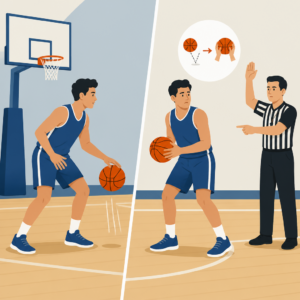

The double dribble rule is one of basketball’s most misunderstood game rules, yet it shapes nearly every possession from youth leagues to the NBA. In plain terms, a double dribble violation happens when a player dribbles the ball, ends that dribble, and then starts dribbling again, or when the player dribbles with both hands on the ball at the same time. I have spent years breaking down officiating clips, coaching ballhandlers on legal moves, and reviewing rulebook language, and the pattern is always the same: players, fans, and even newer coaches often confuse a legal gather, a temporary loss of control, and an illegal second dribble. Understanding the distinction matters because this call immediately stops play and gives the ball to the other team. It also connects to larger game rules such as traveling, palming, backcourt status, and the closely guarded rule. If you want to understand why referees blow the whistle on some dribbles and let others continue, you need a precise definition, clear examples, and the context officials use in real time.
At every level, the purpose of the double dribble rule is simple: it preserves fairness by limiting how long and how freely a player can control the ball while moving. Without it, a ballhandler could stop, rethink the play, and restart a dribble over and over, making defense far less meaningful. Rulebooks from the NBA, NCAA, and NFHS phrase details a bit differently, but the core idea is consistent. A dribble ends when the player touches the ball with both hands simultaneously, permits the ball to come to rest in one or both hands, or otherwise gains control so that the bouncing action is over. A new dribble after that is illegal unless another player touched the ball, a shot or pass legitimately changed possession, or the original player never actually controlled the ball in the first place. That last point explains why loose-ball sequences look chaotic but are often legal. For a hub article on basketball game rules, double dribble is essential because it teaches the broader principle officials apply everywhere: control matters more than appearance, and the exact moment control begins or ends decides the ruling.
What the double dribble rule means in basketball
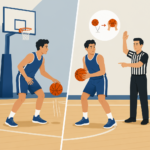
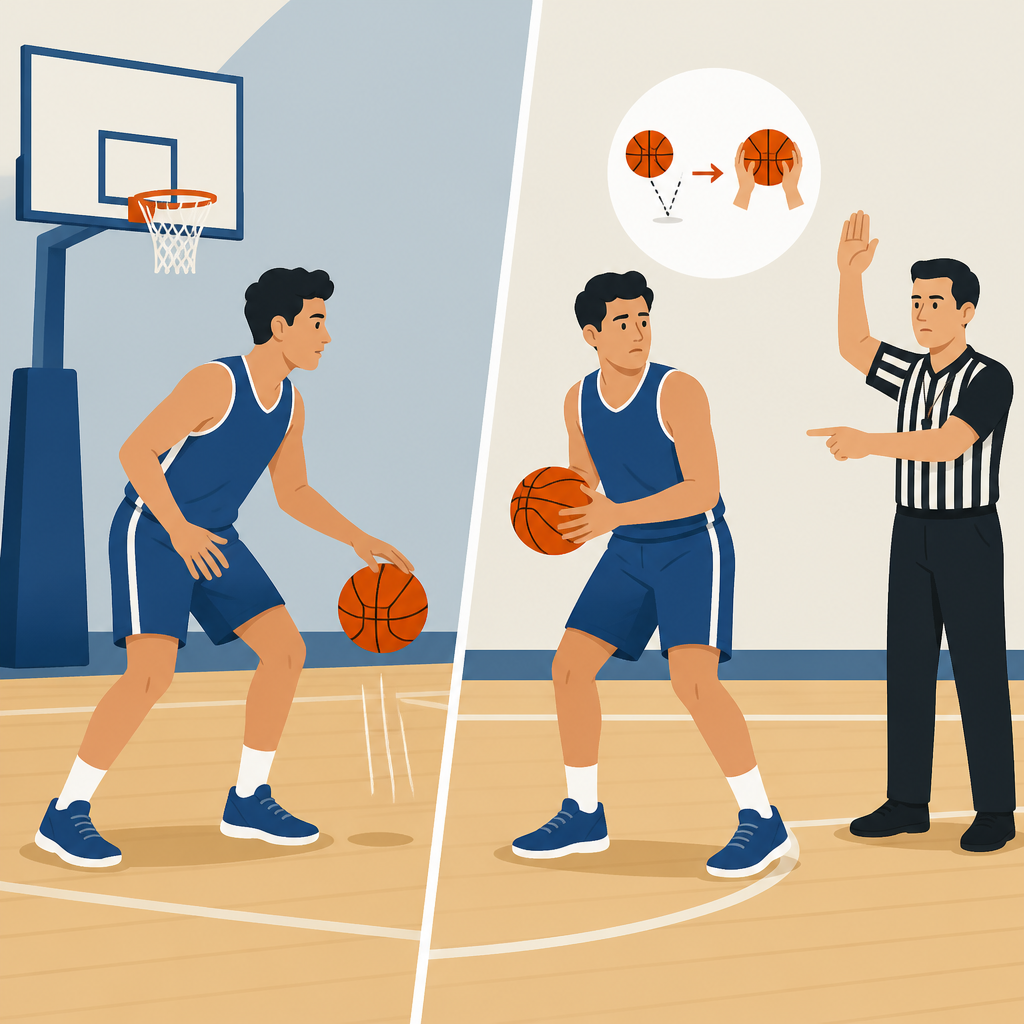
The cleanest definition is this: a player may not dribble a second time after ending the first dribble, unless the ball touched an opponent or another player legally touched it in between. The player also may not dribble the ball with both hands at the same time. In officiating language, there are two common forms of the same violation. First is the interrupted dribble that restarts after control has been established. Second is the simultaneous two-hand dribble. Both result in a dead ball and a turnover. The offended team receives the ball for a throw-in at the nearest spot, subject to the specific league’s restart procedures.
In practice, referees do not call double dribble based on style points or awkwardness. They look for control. A high-level guard may pound the ball hard, let it rise near the shoulder, and re-attack without violating the rule if the dribble never ended. By contrast, a beginner who picks up the ball, hesitates, and bounces it again commits an obvious violation even if the action lasts less than a second. This is why film review is useful. When I train players, we slow clips down to identify the exact frame where two hands touch the ball or where the ball settles in one hand. Once that happens, the dribble is over.
What actions count as a violation
Several game situations consistently qualify as double dribble. The most obvious is a player who dribbles, picks up the ball, pump fakes, and then starts another dribble without a defender touching it. Another common example is a player trapped near the sideline who ends the dribble, cannot pass, panics, and bounces the ball again. A third example involves simultaneous two-hand contact while actively pushing the ball to the floor. Youth referees call this often because younger players instinctively stabilize the ball with the off hand.
Another frequent source of whistles is confusion between a legal gather and an illegal restart. Suppose a guard uses a crossover, briefly cups the ball into both hands, then continues bouncing. If that contact actually ended the dribble, the second bounce is illegal. If, however, the hand contact was part of one continuous dribble and the ball never came to rest, the issue may be carrying rather than double dribble, or it may be legal altogether. Officials must sort these distinctions instantly. The violation is not about flair; it is about whether the player terminated the original dribble and then created a new one.
| Play | Legal or Violation | Why officials rule it that way |
|---|---|---|
| Player dribbles, grabs ball with two hands, then dribbles again | Violation | The first dribble ended when control was established with both hands |
| Player loses ball accidentally, regains it, then continues dribbling without full control in between | Legal | A fumble is not a completed dribble if control was never re-established |
| Player pushes ball to floor with both hands at once | Violation | Simultaneous two-hand dribble is specifically prohibited |
| Player shoots, rebounds own shot off the rim, then dribbles | Legal | A legitimate try for goal ends the prior dribble sequence |
| Defender tips ball away, original ballhandler recovers and dribbles again | Legal | An opponent’s touch creates a new opportunity to dribble |
Why referees call double dribble
Referees call double dribble to protect the structure of offensive and defensive play. Basketball gives the dribbler a major advantage: freedom to move while maintaining live-ball control. The rule balances that advantage by forcing a decision once the dribble is used. Pass, shoot, or pivot are the legal next choices after the dribble ends. If players could stop and restart casually, defenders would have no reliable moment to pressure the ball. That is why officials are trained to watch the ballhandler’s hands and the ball’s moment of rest, especially on hesitations, spin moves, and pickups near traffic.
There is also an officiating reason this rule gets called quickly. Unlike block-charge judgments or verticality contests, double dribble is usually objective. Either the player ended the dribble and restarted it, or did not. In two-person and three-person crews, the lead or trail official often has a clear angle on the handler’s upper body and can identify two-hand control immediately. At the NBA level, replay does not commonly intervene on routine violations, so on-floor accuracy matters. A sharp whistle prevents extended confusion and stops advantages created by an illegal extra move.
Legal plays that look like double dribble
The most important exception is the fumble. If a player accidentally loses control of the ball and then recovers it, that alone is not a double dribble. The reasoning is straightforward: the player did not intentionally end the dribble and restart it; the dribble was interrupted by loss of control. This comes up on hard crossovers, wet floors, deflections, and traffic in the lane. Officials ask a simple question: did the player ever clearly gather and control the ball before bouncing it again? If not, play continues.
A shot attempt is another key separator. A player may end a dribble, attempt a try for goal, miss the shot, retrieve the rebound, and dribble again if the attempt touched the backboard, rim, or otherwise qualified as a legitimate shot under the rules. Players sometimes try to disguise a second dribble as a “shot,” and experienced officials read body language well. A true shot has upward intent toward the basket. A fake toss downward or sideways to self is not a legal reset.
Deflections also matter. If a defender knocks the ball loose and the offense regains it, a fresh dribble is allowed. The same principle applies when a pass is touched by another player and recovered. In training sessions, I tell guards to remember this phrase: your dribble rights reset only through another player’s touch, a real shot, or a true loss of control. That mental model helps players avoid turnovers and helps coaches teach game rules with much less ambiguity.
Double dribble compared with carrying and traveling
Fans often confuse double dribble with carrying because both involve questionable ball control during a live dribble. Carrying, sometimes called palming, occurs when the dribbler places the hand under the ball and allows it to come to rest while continuing the dribble motion. Double dribble occurs after the first dribble has already ended and a new dribble begins. The difference is subtle but important. On a carry, the dribble may be illegally prolonged. On a double dribble, the original dribble has terminated and then restarted. In real games, the same move can look like either violation depending on timing and hand position.
Traveling is different again. Once a player ends the dribble and gains control, footwork restrictions tighten. The player may establish a pivot foot and must pass or shoot before lifting and returning that pivot illegally. Many turnovers happen in sequence: a player picks up the dribble, hesitates, takes an extra step, then bounces the ball again. Spectators may shout for one violation while the official calls another. Referees are instructed to penalize the first violation that occurs. If the dribble ended legally, then the player traveled before the second bounce, traveling is the proper call. If the illegal second bounce happened first, double dribble is correct.
How different levels apply the rule
The core rule is consistent across the NBA, WNBA, NCAA, FIBA, and NFHS high school basketball, but enforcement emphasis can vary. FIBA and NFHS crews often call obvious two-hand control tightly because developing players benefit from clear boundaries. NCAA officials, especially in high-level men’s games, may allow brief rhythm actions that remain within a continuous dribble if control never fully stops. In the NBA, where handlers use advanced gathers, hang dribbles, and change-of-pace moves, referees focus intensely on whether the ball came to rest and whether the player had ended the dribble before the next bounce.
These differences do not mean the rule changes dramatically. They reflect speed, skill, and game management. What gets fans frustrated is inconsistency in perception, especially on television angles that do not show hand placement cleanly. That is why coaching from the strictest practical standard works best. If a player avoids obvious two-hand pickups, does not bounce the ball after securing it, and understands when a deflection resets dribble rights, that player will stay legal in any rule set.
How players can avoid getting called
Ballhandlers reduce double dribble violations by building cleaner habits. First, keep the off hand off the ball except for legal protection where the hand is not controlling the dribble. Second, make a decision before picking up the dribble: pass, pull up, pivot, or power through contact. Third, train against trap pressure so panic does not trigger an illegal restart. In workouts, I use short-clock drills near the sideline and baseline because that is where double dribbles spike. Players learn that once the ball is gathered, their feet and eyes must solve the problem, not another bounce.
Video study helps too. Freeze the pickup moment and ask whether the ball came to rest. Then watch elite guards such as Chris Paul or Jalen Brunson, who rarely waste dribbles and almost never get caught restarting illegally. Their advantage is not trickery; it is precision. For coaches building a complete understanding of NBA rules and broader game rules, double dribble is a foundational teaching point because it links skill execution, officiating standards, and possession value. One careless extra bounce can erase a scoring chance, fuel transition the other way, and swing momentum late in close games.
The double dribble rule is easy to state but important to study closely: once a dribble ends, it cannot begin again unless the play legally resets. That single principle explains nearly every whistle. If a player picks up the ball and dribbles again, or uses both hands to dribble at the same time, the violation should be called. If the ball is fumbled, tipped by a defender, or released on a legitimate shot, the next dribble may be legal. Knowing those distinctions makes basketball easier to watch, coach, and play because the action stops feeling arbitrary.
As a hub topic within NBA rules and overall game rules, double dribble opens the door to understanding related concepts like traveling, carrying, pivot foot restrictions, and live-ball control. The benefit is practical: smarter players protect possessions, coaches teach cleaner fundamentals, and fans read officiating decisions with more confidence. Review game film, watch the hands, and focus on the moment control is established. Do that, and the next double dribble call will make immediate sense. If you are building your rules knowledge, use this page as your starting point and continue into the rest of the game rules topics to see how each violation fits the logic of basketball.
Frequently Asked Questions
What exactly is a double dribble in basketball?
A double dribble is a ballhandling violation that happens in one of two ways. First, it occurs when a player starts a legal dribble, ends that dribble by catching or controlling the ball, and then begins dribbling again. Second, it can be called when a player dribbles the ball with both hands touching the ball at the same time. In both cases, the rule exists to prevent a player from gaining an unfair advantage by stopping and restarting the dribble or by using extra control that is not allowed under normal dribbling rules.
The key idea is that a legal dribble is one continuous action. Once that action ends, the player must pass, shoot, or establish a pivot if standing still. They do not get a second dribble unless another player touches the ball, a shot attempt changes possession circumstances, or a similar legal interruption occurs. This is why the rule gets called so often at youth levels: players instinctively pick the ball up, hesitate, and then bounce it again without realizing their first dribble was already over.
When does a dribble officially end?
A dribble officially ends when a player gains enough control of the ball that the bouncing action is no longer continuous. The most obvious example is when the player picks the ball up with one or both hands and holds it. It also ends when the player allows the ball to come to rest in one or both hands, or when they touch the ball simultaneously with both hands while dribbling. From that moment on, the dribble is over, and starting another one without a legal reset is a double dribble violation.
This is where many players get confused. A quick gather before a pass or shot is legal if it is part of ending the dribble, but once the player clearly secures the ball, they have used their dribble. They cannot bounce it again just because they changed their mind. Officials watch for control, not just contact. If the player momentarily touches the ball during a normal dribble without actually controlling it, play continues. If the player cups, catches, or settles the ball and then resumes bouncing, that is when the whistle is likely to come.
Is dribbling with both hands always a double dribble?
Yes, if a player is actively dribbling and puts both hands on the ball at the same time, that is generally a double dribble violation. The rules treat that simultaneous two-hand contact as the end of the dribble. If the player then continues the bouncing action or pushes the ball back down, officials can call the violation immediately. This often happens when inexperienced ballhandlers try to protect the ball under pressure and instinctively bring the second hand onto it while still moving.
What makes this rule tricky is that not every brief two-hand-looking motion is illegal in real time. Officials have to judge whether the player truly had both hands controlling the ball or whether the off-hand simply brushed near it while the dominant hand maintained a normal dribble. At faster levels of play, referees are trained to look for clear control and advantage. But as a teaching point, players should assume that if both hands are on the ball during the dribble, they are in danger of ending it and committing a violation if they continue.
What are some common game situations where double dribble gets called?
One of the most common situations is when a player drives, gets cut off, picks up the ball, and then panics and dribbles again to escape pressure. Another frequent example is on the perimeter, when a player takes a live dribble, briefly gathers the ball to read the defense, and then restarts the dribble. Youth players also get called for double dribble after a rebound or loose-ball recovery when they secure the ball with two hands, hesitate, and then bounce it. In each case, the problem is the same: the first dribble ended before the second one began.
Officials also see this violation during press breaks, jab-step moves, and transition plays where players are moving fast and do not realize they established control. Sometimes what fans think is a flashy hesitation dribble is actually legal because the ball was never fully gathered. Other times, what looks harmless is correctly whistled because the player clearly paused with control and then restarted. The difference usually comes down to whether the ballhandler maintained one uninterrupted dribble or ended that dribble before bouncing again.
Why is the double dribble rule important, and what happens after it is called?
The double dribble rule is important because it preserves fairness and structure in ballhandling. Without it, offensive players could stop whenever they wanted, reassess the defense, and restart their dribble repeatedly, making it much harder to defend legally. Basketball is built around limits on movement and control, and this rule is one of the basic checks that keeps possession balanced between offense and defense. It also works together with related violations such as carrying, traveling, and palming to define what legal dribbling really looks like.
When a double dribble is called, play stops and the other team gets possession of the ball for a throw-in at the nearest appropriate spot under the rules being used. There are no free throws for the violation itself. For players and coaches, the call is often a reminder about fundamentals: keep the dribble alive if you are undecided, avoid bringing the second hand onto the ball, and recognize the moment control is established. At every level, from youth games to the NBA, understanding this rule helps players make cleaner decisions and helps fans understand why an official blows the whistle even when the play seems subtle.