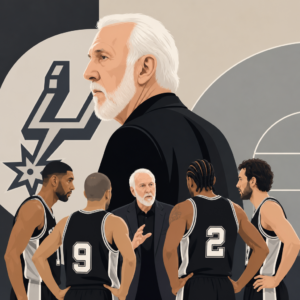

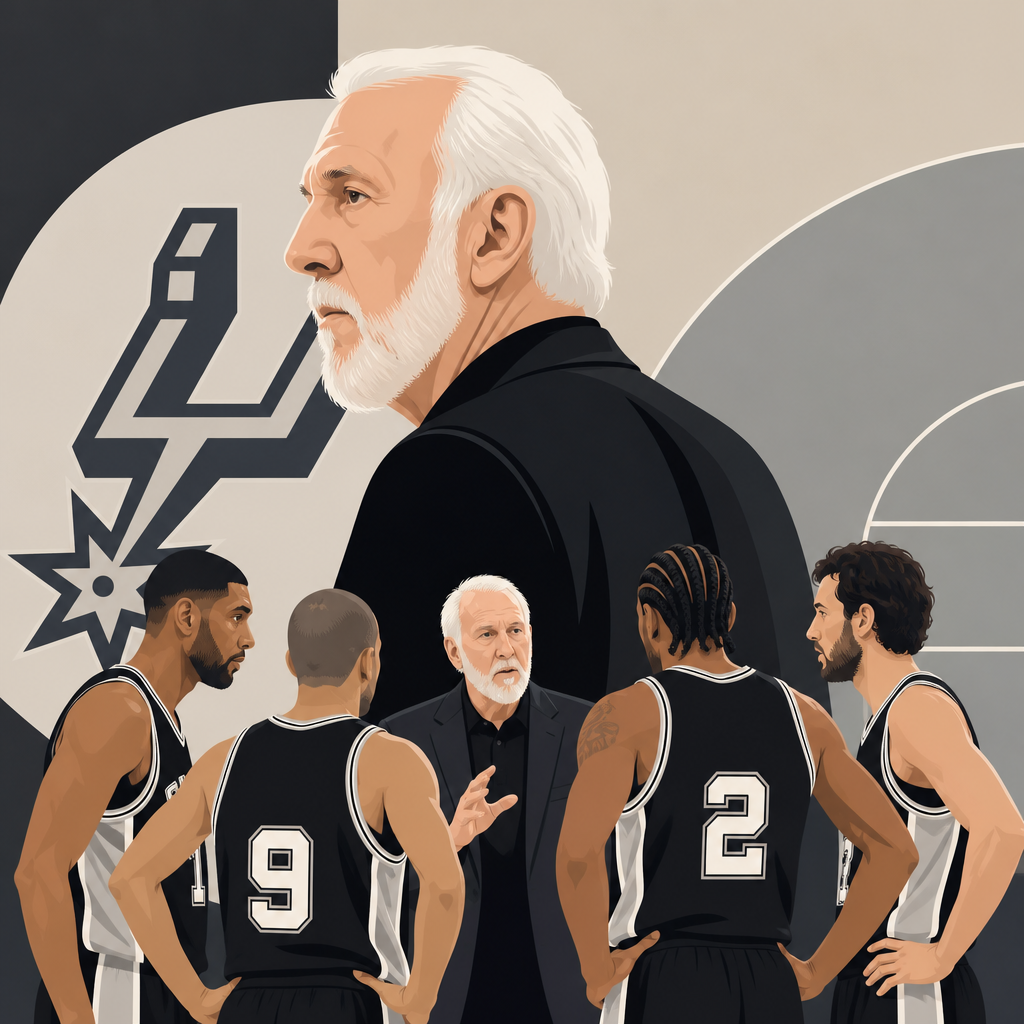
The San Antonio Spurs system became one of the defining case studies in modern sports because it fused patient roster building, tactical discipline, player development, and organizational stability into a model that endured for more than two decades. When people refer to the Popovich era, they mean the period shaped by head coach and later president Gregg Popovich, who took over in 1996 and built a culture that turned a small-market franchise into a global standard for sustainable winning. In NBA terms, a system is more than an offensive scheme or defensive coverage package. It includes decision-making structures, scouting priorities, practice habits, communication norms, sports science, and the way stars are asked to fit the group rather than the other way around.
This matters because most team histories are defined by peaks and collapses. The Spurs were different. They won 50 games in every full season from 1999-2000 through 2016-17, captured five championships, and remained relevant across multiple stylistic eras, from bruising post play to pace-and-space ball movement. I have studied this franchise closely for years, and what stands out is not just the trophy count. It is the repeatable architecture behind it. San Antonio did not rely on one miracle draft, one owner willing to overspend, or one short title window. The franchise kept solving new basketball problems with the same institutional principles.
As a hub for NBA team histories, the Spurs offer an ideal lens because their story touches nearly every major theme in franchise building: expansion-era roots, superstar drafting, international scouting, coaching-tree influence, dynasty maintenance, succession planning, and the tension between culture and inevitable decline. Their history also links naturally to broader coverage of championship teams, front-office models, and the evolution of NBA offenses. To understand why the Popovich era was unlike anything else in NBA history, you have to look beyond the rings and study how San Antonio created one of the league’s most coherent basketball ecosystems.
From ABA Roots to a Stable NBA Identity
The Spurs began as the Dallas Chaparrals in the ABA in 1967, moved to San Antonio in 1973, and joined the NBA during the ABA-NBA merger in 1976. That background matters because the franchise entered the modern league without the glamour, revenue base, or historical weight of the Lakers, Celtics, or Knicks. San Antonio had to manufacture credibility. Early stars such as George Gervin gave the team style and scoring prestige, while later stretches under Larry Brown and then with David Robinson gave it defensive backbone and legitimacy.
Robinson changed the franchise before Popovich ever reached dynastic status. Drafted first overall in 1987 and arriving in 1989 after Naval service, he instantly made the Spurs competitive. By the early 1990s, San Antonio was a serious regular-season team, but not yet a champion. The recurring issue was familiar in NBA history: excellent talent without a fully optimized structure around it. The Spurs were good, sometimes very good, but they had not yet become the league’s most disciplined institutional machine.
Popovich entered this picture first as general manager. In 1996, after a disappointing start and Robinson’s injury-plagued season, he dismissed coach Bob Hill and took over himself. That decision is often reduced to bold self-promotion, but inside basketball circles it was really an organizational reset. Popovich wanted alignment between roster construction, accountability, and playing style. In my view, that is the true starting point of the Spurs system: one decision-maker establishing a shared philosophy from draft room to locker room.
The Core Architecture of the Spurs System
The Spurs system rested on several interconnected pillars. First, every player had to understand role clarity. Stars were empowered, but they were also expected to defend, make the extra pass, and accept coaching. Second, the front office valued temperament as much as talent. Third, the organization pursued continuity aggressively, keeping key assistants, support staff, and developmental processes in place. Fourth, San Antonio treated adaptation as a strength, not a betrayal of tradition. That last point is why the system aged so well.
Popovich’s teams were never static. The 1999 champions won with defense, rebounding, and the interior pairing of Robinson and Tim Duncan. The 2003 title team still leaned heavily on Duncan, who produced one of the great postseason runs ever. By 2005 and 2007, Tony Parker and Manu Ginobili had become central engines, with the offense using more pick-and-roll creation and drive-and-kick pressure. By 2014, the Spurs had evolved into a flowing, democratic attack built on rapid ball movement, weak-side reads, and spacing principles that influenced the entire league.
Most dynasties dominate one version of basketball. The Spurs mastered several. That is why comparisons to other title teams can be misleading. The Bulls of Michael Jordan had two three-peats, but those runs were compressed around one all-time apex. The Shaq-Kobe Lakers burned brighter for a shorter period. The Heatles reached four straight Finals but did not sustain excellence for twenty years. San Antonio’s uniqueness lies in duration plus reinvention. The same organization won with twin towers, with perimeter creation, and with one of the smartest motion offenses the NBA has ever seen.
Tim Duncan as the System’s Moral and Tactical Center
No Spurs history can be accurate without centering Tim Duncan. He was the first overall pick in 1997, but he became far more than a franchise player. He was the behavioral template for the entire building. Duncan accepted hard coaching, rarely chased publicity, defended at an elite level, and played with a simplicity that made everyone else’s role easier. Teammates could not plausibly ask for exceptions when the best player accepted sacrifice.
On the court, Duncan gave Popovich strategic flexibility. Defensively, he was one of the greatest back-line anchors in NBA history, elite at positioning, verticality before the term became popular, and cleaning up mistakes without gambling. Offensively, he could score on the block, pass from the elbows, screen in pick-and-roll, and stabilize lineups in half-court playoff games. During film study, his value was even clearer. Because Duncan consistently made the correct rotation or read, the staff could teach from reliable examples instead of abstract diagrams.
What made the Spurs system durable was that Duncan’s leadership was functional rather than theatrical. He did not need emotional speeches every night. He modeled standards. In practical terms, that meant younger players saw that stars arrived on time, knew the scouting report, and accepted reduced usage if the matchup demanded it. That culture is difficult to fake. Many franchises talk about accountability, but few have an all-time great making accountability look normal for nineteen seasons.
International Scouting, Player Development, and Smart Risk
One of San Antonio’s clearest competitive advantages was its international scouting operation. The franchise found Manu Ginobili with the 57th pick in 1999, selected Tony Parker at 28 in 2001, and later identified value in players such as Tiago Splitter, Patty Mills, Boris Diaw, and Marco Belinelli. This was not luck alone. The Spurs invested early in global talent evaluation when many NBA teams still treated international leagues as secondary markets.
The key was not merely finding overseas players. It was knowing which skills would translate. Ginobili had improvisational creativity, but also toughness and processing speed. Parker had elite north-south acceleration and fearlessness in the lane. Diaw brought connective passing and positional intelligence. The Spurs routinely targeted players whose decision-making fit their environment. In front offices, this is the difference between collecting talent and building fit.
| Player | Acquired | Why It Mattered |
|---|---|---|
| Tim Duncan | 1997 Draft, 1st overall | Established championship foundation on both ends |
| Manu Ginobili | 1999 Draft, 57th overall | Created massive surplus value through playmaking and competitiveness |
| Tony Parker | 2001 Draft, 28th overall | Gave the Spurs downhill speed and long-term point guard stability |
| Boris Diaw | 2012 Free agency | Unlocked spacing, passing, and versatility in later title teams |
| Kawhi Leonard | 2011 Draft-night trade | Extended the window with elite two-way wing development |
Development completed the process. San Antonio did not demand that every prospect become a star. It asked players to become useful in specific lineups and game states. That sounds obvious, but many teams fail here by forcing universal growth plans. The Spurs taught footwork, defensive shell positioning, pace control, and read-based passing within narrow responsibilities first. Once trust formed, responsibility expanded. The eventual rise of Kawhi Leonard from defense-first wing into Finals MVP and later primary scorer remains one of the strongest developmental arcs of the era.
Tactical Evolution: From Defensive Power to Beautiful Offense
The broadest basketball reason the Popovich era stands apart is tactical evolution. Early Spurs teams were methodical, physical, and often criticized as dull by casual viewers. That criticism missed the point. In the slow, high-contact environment of the late 1990s and early 2000s, San Antonio was optimizing for playoff survival. Their shot profile, tempo, and defensive conservatism matched the era’s incentives. Great systems do not chase aesthetics first; they solve the game in front of them.
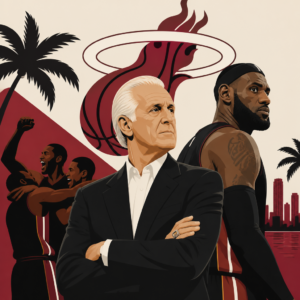
As league rules and talent changed, the Spurs changed too. Hand-check restrictions opened driving lanes. Perimeter creation became more valuable. Three-point volume rose. San Antonio responded by building more actions around Parker’s penetration, Ginobili’s pick-and-roll creativity, and big-to-big or big-to-guard passing sequences. By 2014, the offense had become the clearest expression of institutional maturity. The championship team that dismantled Miami produced advantages through timing, spacing, and ruthless extra passes. The ball rarely stuck. Defenders were constantly forced into second and third rotations.
I still view the 2014 Finals as the cleanest demonstration of the system’s peak form. The Spurs were not just talented; they were synchronized. A possession might begin with Parker initiating, swing through Diaw at the elbow, continue to a weak-side cut by Ginobili, and end with Danny Green or Patty Mills shooting an open three. Every option flowed from the previous read. This style later influenced teams across the league, especially those seeking to combine spacing with decision-making rather than pure isolation.
Culture, Rest, and the Courage to Ignore Noise
Another reason the Spurs system was unlike anything else was its willingness to prioritize long-term function over short-term optics. Popovich famously managed minutes for veteran stars before load management became common language. The NBA even fined the Spurs in 2012 for sending home key players before a national television game in Miami. At the time, many critics framed the move as anti-entertainment. In competitive terms, it was rational roster stewardship based on age, schedule density, and championship priorities.
San Antonio also built an unusually honest communication culture. Veterans were coached hard. Young players had to earn trust. Roles were explained clearly. Humor mattered too. Popovich’s public persona could be dry or abrasive, but inside strong organizations, emotional range often includes bluntness paired with deep consistency. Players generally knew where they stood, and that reduces the uncertainty that damages many locker rooms. Stability was not softness. It was predictable standards enforced over time.
The coaching tree reinforces the point. Assistants and former staff connected to the Spurs spread across the league, including Mike Budenholzer, Brett Brown, Ime Udoka, James Borrego, and others influenced by San Antonio methods. Not every branch replicated the original success, because context always matters, but the diffusion of ideas proved that the franchise had built more than a winning roster. It had built a transferable operating model.
The Limits of the System and the End of an Era
No team history is complete without the harder parts. The Spurs did not avoid decline forever. Duncan retired in 2016. Leonard’s emergence looked like the bridge to a new championship phase, but his injury dispute and eventual trade to Toronto in 2018 fractured that plan. The organization remained competitive through professionalism and player development, yet the title-contending certainty was gone. This is an important reminder: even the best systems cannot eliminate the power of aging, health variance, and star movement.
Still, the final measure of the Popovich era is not whether it lasted forever. Nothing in the NBA does. The measure is whether it produced a standard other franchises still chase. It did. San Antonio showed that a small-market team could become globally respected through coherence, not chaos. It proved that culture must be expressed through drafting, teaching, and tactical adaptation, not slogans. And it left one of the richest team histories in basketball, connecting ABA roots, Duncan’s steadiness, international innovation, and one of the sport’s great coaching careers.
For readers exploring NBA team histories, the Spurs are essential because they explain how lasting excellence is actually built. The main lesson is simple: talent starts dynasties, but aligned systems sustain them. If you are mapping the history of NBA franchises, use San Antonio as the benchmark for organizational design, then continue through the rest of the league with that standard in mind.
Frequently Asked Questions
What made the San Antonio Spurs system under Gregg Popovich so different from other NBA dynasties?
The Spurs system stood apart because it was never built around hype, short-term gambles, or a single burst of dominance. Instead, it was rooted in continuity, discipline, and a long-range organizational philosophy that shaped everything from draft strategy to player conditioning to in-game decision-making. Gregg Popovich did not simply coach a team; he helped construct an ecosystem where roles were clear, expectations were high, and ego was consistently subordinated to execution. That level of alignment is rare in professional sports, especially in the NBA, where team identities often shift dramatically based on superstar movement, front-office turnover, or coaching changes.
Another key difference was the Spurs’ ability to evolve without abandoning their core principles. Early championship teams leaned heavily on defense, interior dominance, and physical control through Tim Duncan, David Robinson, and a fundamentally sound supporting cast. Later versions of the Spurs became more dynamic offensively, emphasizing spacing, ball movement, and international influence in a way that helped redefine modern team basketball. The 2014 title team, in particular, became a symbol of collective play at its highest level, showing how a team could dismantle elite opponents through timing, passing, and trust rather than isolation-heavy star dependency.
Most dynasties have a distinct peak and then decline quickly. The Spurs resisted that pattern because their system was not dependent on a single trend or personality impulse. Popovich, Duncan, Manu Ginobili, Tony Parker, and the front office created an environment where adaptation was expected. That is why the Spurs remained contenders across multiple NBA eras, rule changes, and stylistic transformations. Their system was less about one great team and more about an enduring method for producing great teams.
How did Gregg Popovich build a winning culture that lasted for more than two decades?
Popovich built the Spurs’ culture by making accountability and consistency non-negotiable. From the beginning, he established a standard that applied to everyone equally, whether it was a franchise superstar or the last player on the bench. That meritocratic structure earned respect because players understood that the organization’s values were real, not performative. Popovich was demanding, but his authority was effective because it was paired with honesty, preparation, and a clear sense of purpose. He challenged players hard, yet he also created a sense that they were part of something stable and meaningful.
One of the most important parts of that culture was the relationship between coaching, management, and leadership inside the locker room. Tim Duncan was central to this. As the franchise cornerstone, he embraced sacrifice, humility, and team-first basketball, which made it easier for everyone else to do the same. When a superstar accepts coaching, does not chase attention, and prioritizes winning over statistics, it becomes much easier for an organization to maintain internal order. Duncan’s example reinforced Popovich’s message and gave the Spurs unusual cultural durability.
The Spurs also invested deeply in habits that support sustained success: smart rest, detailed scouting, player development, emotional composure, and role clarity. Popovich and the organization were often ahead of the league in understanding workload management and the importance of preserving players for the postseason. At the same time, they never treated development as an afterthought. Veterans were expected to sharpen their games, and younger players were taught how to contribute within structure rather than being left to improvise. Over time, that created a self-reinforcing cycle in which professionalism was passed down from one generation of Spurs players to the next.
Why is player development such a major part of the Spurs system’s legacy?
Player development became one of the defining pillars of the Spurs system because San Antonio rarely operated like a glamour-market team that could rely on constant superstar acquisitions. To stay competitive year after year, the franchise had to extract value from late draft picks, international scouting, overlooked veterans, and players whose best roles were not always obvious when they entered the league. The Spurs excelled at identifying strengths, teaching decision-making, and putting players in positions where they could succeed within a larger framework.
This development model was about much more than improving individual skill. The Spurs taught players how to think the game. That included reading spacing, making the extra pass, rotating correctly on defense, and understanding time, score, and matchup context. Because the system emphasized precision and trust, players often became more efficient and more impactful in San Antonio than they had been elsewhere. The organization had a reputation for helping players refine their games without forcing them into unnatural roles, which is one reason so many rotation players flourished there.
The international dimension of the Spurs’ development pipeline also mattered enormously. San Antonio was one of the league’s most forward-looking organizations in identifying and integrating global talent. Manu Ginobili and Tony Parker are the most famous examples, but the larger story is that the Spurs were unusually comfortable building a culturally diverse roster long before that became standard practice across the NBA. They understood that talent could come from anywhere, and they had the infrastructure to help players from different backgrounds adapt and thrive. That global openness expanded the talent pool and helped define the Spurs as one of basketball’s most progressive and intellectually flexible organizations.
How did the Spurs balance star power with team-first basketball during the Popovich era?
The Spurs balanced star power and team basketball by ensuring that their best players embodied the same principles the coaches demanded from everyone else. Tim Duncan was the clearest example. He was one of the greatest players in NBA history, yet he played without the kind of stylistic vanity that can distort a team’s structure. He defended, rebounded, accepted coaching, and often allowed the offense to flow according to game needs rather than personal stat accumulation. That set the tone for the franchise and gave Popovich the freedom to build a true collective identity around elite talent.
Tony Parker and Manu Ginobili strengthened that balance in different ways. Parker brought speed, pressure, and shot creation, while Ginobili brought improvisation, competitiveness, and playmaking flair. Both were capable of starring, but both also adapted repeatedly based on what the team required. Ginobili famously accepted a bench role at times despite being one of the team’s most gifted offensive players, which illustrated how deeply the culture prioritized impact over status. Parker evolved from an attacking young guard into a more controlled and mature engine of the offense. These adjustments were not signs of limitation; they were signs of buy-in.
What made the balance sustainable was that Popovich did not suppress talent; he organized it. The Spurs did not reject individual brilliance. They channeled it into a system where stars could dominate without causing everyone else to stand still. Their offense often featured quick decisions, extra passes, and intelligent spacing, but that structure still left room for elite players to create advantages. In that sense, the Spurs solved one of the hardest problems in basketball: how to have stars without becoming predictable, and how to have a system without becoming rigid.
Why is the Popovich-era Spurs model still discussed as a blueprint for sustainable success in NBA history?
The Popovich-era Spurs remain a blueprint because they proved that sustained contention does not require chaos, constant reinvention, or dramatic roster swings every few seasons. Their model showed that smart leadership, patient team-building, and cultural alignment can produce elite results over an extraordinary period of time. In a league often defined by volatility, San Antonio became the rare franchise that consistently translated internal stability into external performance. That made the Spurs not just successful, but instructive.
Front offices, coaches, and analysts still study the Spurs because the organization excelled at combining macro vision with daily discipline. They drafted well, developed talent well, communicated clearly, and adjusted to new realities without losing their identity. They won championships with different roster constructions and stylistic emphases, which is one of the strongest arguments for the durability of their methods. The Spurs were not trapped in one era’s version of basketball. They defended at an elite level, embraced international scouting before much of the league caught up, and later became a model for modern ball movement and spacing.
Just as importantly, the Spurs demonstrated that professionalism can be a competitive advantage. Their approach was not flashy, but it was deeply intentional. Every part of the organization appeared connected to a coherent philosophy about winning, development, and responsibility. That is why the Popovich era is still discussed with such reverence. It was not only a period of championships and playoff appearances; it was a rare example of a franchise building something that was structurally sound, adaptable, and historically unique.