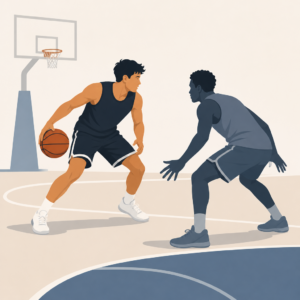


Basketball positions give structure to a fast, fluid game, but they are not rigid boxes. When players ask, “What position should I play in basketball?” they usually want to know where their height, athletic traits, technical skills, and mentality fit best. The right answer matters because position affects training priorities, playing time, confidence, and long-term development. I have coached and evaluated players from youth leagues to advanced high school programs, and the mistake I see most often is assigning a role by height alone. Height matters, especially around the rim, but it is only one part of the decision.
In basketball, the five traditional positions are point guard, shooting guard, small forward, power forward, and center. Guards usually initiate offense, wings score and defend in space, and bigs protect the paint, rebound, and finish inside. Modern basketball has blurred those lines. A center may shoot threes, a forward may run pick-and-roll, and a point guard may defend larger wings by using strength and anticipation. That flexibility is useful, but most players still need a primary role and a secondary role. A player who knows both can train more efficiently and become more valuable to coaches.
This guide covers positions and roles comprehensively so you can identify your best fit and understand how teams use each spot. It looks at height, but also ball handling, shooting, passing vision, lateral quickness, defensive instincts, physicality, and mindset. It also explains why age and competition level change the answer. A 12-year-old who is the tallest player on the court should not automatically be developed only as a center. A college-level 6-foot guard may need elite shooting and decision-making to thrive. By the end, you should know where you fit now, what skills to build next, and how to think about your role as the game evolves.
How basketball positions work today
The simplest definition of a basketball position is the role a player most often fills on offense and defense. On offense, that role might include bringing the ball up, spacing to the corner, setting screens, posting up, or finishing in transition. On defense, it includes whom you guard, what actions you must contain, and where your help responsibilities are. Traditional labels remain useful because coaches still organize lineups around them, but in real games roles overlap constantly. The same player can be a primary ball handler in one lineup and a spot-up wing in another.
When I build development plans, I separate position from function. Position is the label on the lineup card. Function is what the player actually does. For example, Nikola Jokic is listed as a center, but one of his central functions is offensive initiation through dribble handoffs, elbow playmaking, and transition passing. Jrue Holiday is a guard, but his defensive function often includes checking stronger wings. This distinction helps players avoid the trap of thinking a position limits their game. Your position should clarify your responsibilities, not shrink your toolbox.
At youth and amateur levels, coaches usually start with a practical question: where can this player help us most right now without harming long-term growth? That balance matters. A tall young player may dominate near the rim, but if that player never learns to handle pressure, pass on the move, or shoot from range, future options narrow. The best programs teach position skills and universal skills together. Every player should learn to pass, dribble, shoot, defend, rebound, and communicate, even if some abilities become signature strengths.
Height: useful, but not the whole answer
Height is the first filter because it changes shot angles, rebounding range, contest ability, and finishing windows. In many youth leagues, taller players naturally play forward or center because they can score over defenders and clean the glass. At higher levels, however, height must be read alongside wingspan, strength, mobility, and skill. A 6-foot-4 player with a long wingspan, strong frame, and explosive first step may fit as a wing. Another 6-foot-4 player with elite vision and tight handle may be a lead guard. Measurements set possibilities; they do not settle the question alone.
Context also matters. Position by height looks different in middle school, high school varsity, college, international play, and the NBA. In the NBA, the average player is roughly 6-foot-6, according to league roster data, so a 6-foot-2 guard is clearly undersized unless he has exceptional speed, strength, or shooting. In local high school basketball, that same player might have normal guard size. This is why players should compare themselves to the competition they actually face. If you are selecting a role, ask: how tall and strong are the players I must attack and defend every week?
Another common mistake is relying on current height instead of projected development. Late bloomers and early bloomers should not be trained the same way. I have seen young post players lose confidence when they stop growing and can no longer rely on size. I have also seen smaller guards shoot up and suddenly become versatile wings because they had already built perimeter skills. If you are still growing, the best approach is broad skill development. Use your current size advantage if you have it, but keep learning guard and wing fundamentals. Basketball rewards players who can adapt when their body changes.
Skills that usually define each position
Specific skills separate positions more clearly than labels do. Point guards need ball security, pace control, pick-and-roll reads, and accurate passing with either hand. Shooting guards need movement shooting, closeout attacks, and the ability to score without dominating the ball. Small forwards must connect actions across the floor: defend multiple matchups, cut decisively, rebound, and punish mismatches. Power forwards need screening angles, interior finishing, help defense, and enough shooting or playmaking to avoid shrinking spacing. Centers need rim protection, rebounding technique, screening, hands, and touch around the basket.
Defensive requirements often reveal a player’s true fit faster than offensive highlights do. A player may enjoy dribbling like a point guard, but if he cannot handle backcourt pressure, navigate screens, or organize teammates, he may be better suited to an off-ball role. Likewise, a player may love post moves, but if she cannot defend the paint, box out with leverage, and communicate coverages, frontcourt minutes become hard to trust. Coaches value reliability. If your film shows that you consistently solve the most important problems at one spot, that usually points to your position.
| Position | Primary offensive role | Primary defensive role | Key skills | Typical mindset |
|---|---|---|---|---|
| Point guard | Initiate sets, create shots, control tempo | Contain the ball, call coverages | Handle, vision, decision-making | Calm, organized, unselfish |
| Shooting guard | Score off movement and spot-ups | Chase shooters, help on drives | Shooting, footwork, secondary creation | Aggressive, efficient, composed |
| Small forward | Slash, space, attack mismatches | Guard wings, switch actions | Versatility, rebounding, defense | Adaptable, competitive, physical |
| Power forward | Screen, finish, stretch or facilitate | Help at the rim, battle on boards | Strength, positioning, touch | Tough, disciplined, team-first |
| Center | Protect paint spacing vertically, finish inside | Rim protect, rebound, anchor schemes | Timing, screening, hands, interior defense | Physical, vocal, dependable |
Point guard: who should run the team
The point guard is usually the lead organizer. This player brings the ball up, starts actions, reads help defenders, and gets teammates into the right spots. Good point guards do more than rack up assists. They manage tempo, know when to push in transition, understand time and score, and protect the ball under pressure. If you are one of the smallest players on the court, this is often the most natural path, but size does not guarantee fit. The real test is whether you can make fast, correct decisions while tired, crowded, and guarded by aggressive defenders.
Players suited for point guard tend to love responsibility. They are comfortable directing traffic, calling out coverages, and accepting blame for bad possessions. They usually have a tight handle, sharp change of pace, and the vision to hit rollers, weak-side shooters, and cutters. Jalen Brunson is a useful model because he wins with balance, footwork, and composure rather than overwhelming height. If you want to play point guard, train pick-and-roll reads, weak-hand passing, pressure dribbling, and pull-up shooting. Defensively, learn to fight over screens and keep the ball out of the middle.
Shooting guard and small forward: the wing spectrum
The difference between shooting guard and small forward is often smaller than players expect. Both are wing positions, and many athletes move between them depending on lineup size. Shooting guards usually provide more perimeter scoring and operate more often off the ball. They come off pin-downs, flare screens, and dribble handoffs, then punish hard closeouts with one- or two-dribble attacks. Small forwards are typically a bit bigger and more versatile. They may defend the opponent’s best wing, crash the glass harder, and spend more possessions as slashers, connectors, or secondary creators.
If you are deciding between these roles, ask which problems you solve best. Can you make contested jumpers on the move and relocate with precise timing? That points toward shooting guard. Can you switch across positions, rebound in traffic, and finish through contact? That points toward small forward. Think of Klay Thompson in his prime as a model of off-ball shooting guard value, and Mikal Bridges as an example of two-way wing impact. Both spaces are critical in modern basketball because teams need players who can defend in space without becoming offensive weak links.
Power forward and center: frontcourt roles in a spaced game
Power forwards and centers still control many of the game’s highest-value plays: rim attempts, free throws, rebounds, screens, and paint defense. The power forward role has changed most over the last two decades. Many fours now stretch the floor, attack slower defenders off the dribble, and pass from the elbows. Others function as screeners and short-roll playmakers. Centers remain the defensive anchors on many teams, but the best ones now influence offense as passers and decision-makers. A big who can catch, process, and deliver the next pass keeps the entire offense on schedule.
Choose power forward if you have frontcourt size, enjoy contact, and can contribute both inside and on the perimeter. Choose center if your best traits are rim protection, rebounding, screening, and interior finishing. That said, a center who cannot defend in space may struggle against spread pick-and-roll, while a power forward who cannot shoot, pass, or switch may clog lineups. Players like Bam Adebayo show the value of mobile centers who can switch and facilitate. Players like Jaren Jackson Jr. show how a forward-center hybrid can stretch the floor while protecting the rim at an elite level.
Mindset, role acceptance, and the best position for your future
Mindset often decides position when height and skill are close. Some players naturally organize others, some hunt shots confidently, some take pride in shutting down scorers, and some love the physical work that rarely makes highlights. None of these mindsets is better than another, but each aligns with certain roles. If you resist defending, avoid contact, or lose focus without the ball, coaches will notice quickly. The best position is the one that matches both your tools and your competitive habits. Teams trust players who embrace the dirty work their role requires.
To find your best fit, review game film and ask three direct questions. First, what actions lead to your team’s most efficient possessions when you are involved? Second, what defensive assignments can you handle without extra protection? Third, which skills improve fastest when you train consistently? Honest answers usually reveal a primary position and a secondary role. Keep both. Basketball careers advance when players become excellent at something useful, then add versatility. Start with where you help winning most right now, train the adjacent skills that broaden your ceiling, and ask your coach for a role-specific plan this season.
The right basketball position is not chosen by height alone, and it is not fixed forever. It is the role where your physical profile, technical skills, and mentality create the most value for your team while still allowing you to grow. Point guards organize and decide. Wings score, connect, and defend in space. Forwards and centers control the paint, screens, and boards. Many players sit between categories, which is normal. The key is understanding what your coach needs, what your competition demands, and what your game repeatedly proves under pressure in real possessions.
If you remember one principle, make it this: train beyond your current label. Guards should learn to finish and rebound. Wings should learn to handle and pass. Bigs should learn footwork, touch, and reads away from the rim. Position gives direction, but complete players stay on the floor when matchups change. Use height as a clue, skills as evidence, and mindset as the tiebreaker. Then build from there with honest film study and role-specific reps. If you want to improve faster, identify your primary and secondary position today and organize your next month of workouts around the demands of both.
Frequently Asked Questions
How do I know what basketball position I should play?
The best way to figure out what position you should play in basketball is to look at the full picture, not just your height. Height matters, but it is only one part of the equation. Coaches also evaluate how well you handle the ball, how quickly you make decisions, how you move laterally on defense, whether you can shoot consistently, how physical you are around the basket, and how you respond under pressure. A player who is average in height but has excellent court vision, tight ball handling, and composure may be a point guard. A taller player with strong shooting and smart movement may fit better as a wing or stretch forward than as a traditional center.
I usually tell players to start by asking a few practical questions. Are you most comfortable bringing the ball up the floor and organizing teammates? Do you create scoring chances for others? Do you thrive attacking from the perimeter? Are you better at finishing through contact, rebounding, and protecting the rim? Your answers reveal a lot. Guards generally need decision-making, ball control, and perimeter defense. Wings need versatility, scoring ability, and the athleticism to defend multiple types of players. Forwards and centers usually need rebounding, interior toughness, screening, finishing, and defensive presence, though modern basketball also rewards shooting and passing from bigger players.
The smartest approach is to identify your current strengths while also thinking about your long-term development. Many younger players get labeled too early, especially taller kids who are automatically placed near the basket. That can limit skill growth. If you are still developing physically, it is important to build guard skills no matter what position you currently play. In today’s game, players who can dribble, pass, shoot, and defend in space have more options. The right position is usually the one that lets you help your team now while still expanding your game for the future.
Is height the most important factor in choosing a basketball position?
Height is important, but it should never be treated as the only deciding factor. It gives coaches clues about how a player might match up physically, but it does not automatically determine role, impact, or ceiling. Basketball is full of examples of players who succeeded because their skills, instincts, toughness, and versatility allowed them to play above or beyond traditional size expectations. A shorter player who is strong, aggressive, and a great rebounder may defend bigger players well. A taller player who moves fluidly, passes well, and shoots from distance may function more like a perimeter player than a low-post one.
At the youth and high school levels especially, relying too heavily on height can lead to bad development decisions. I have seen tall young players placed exclusively at center, where they score easily against smaller opponents, but they never learn to handle the ball or make reads from the perimeter. Then, as competition improves and everyone catches up physically, those same players struggle because they lack the broader skill set the modern game requires. On the other side, smaller players sometimes assume they must be point guards, even if their best traits are actually scoring, on-ball defense, or off-ball movement.
A better way to think about height is as a context clue. It helps shape likely responsibilities, but skills and mindset determine how effectively you perform them. If you are taller than most players in your league, you may be asked to rebound more, set stronger screens, and defend the paint. If you are smaller, you may be expected to handle pressure, create advantages, and guard in space. But the best players do not let size define the limits of their game. They use their physical profile as a starting point and build the skills that make them more complete and more valuable.
Can my basketball position change as I get older or improve my skills?
Yes, and in many cases it should. A basketball position is not a permanent identity. It is a role based on what helps your team most at a particular stage of development and competition. Younger players often play one way because of temporary physical advantages. A player may dominate inside at age 12 because they are taller than everyone else, then move into a forward role later when other players grow. Another player may begin as an off-ball guard but become a primary ball handler after improving passing, decision-making, and confidence against pressure.
This is why smart development matters more than early labels. If a player only trains for the role they currently hold, they can get stuck. A young post player still needs to work on dribbling, foot speed, and shooting. A guard still needs to rebound, finish through contact, and understand how to defend bigger players in switches. The game becomes more fluid at higher levels, and players who can adapt are much more useful. Coaches love athletes who can slide between roles depending on matchups, pace, and team needs.
As your body changes, your role may change too. Strength gains can help you defend bigger wings or finish at the rim. Improved shooting can move you from an interior role to a spacing role. Better passing and poise can turn you into a secondary or primary creator. The key is to avoid thinking in narrow terms like, “I am only a center,” or, “I am only a shooting guard.” It is much better to think, “These are the jobs I can do for a team right now, and these are the skills I am building next.” That mindset keeps you flexible, coachable, and ready for new opportunities.
What skills should I develop if I am not sure which position fits me best?
If you are unsure what position fits you best, focus first on universal skills that matter at every level and in every role. Ball handling, passing, shooting mechanics, defensive footwork, finishing at the rim, and understanding spacing are valuable for everyone. Even if you eventually become a post player, improving your handle and decision-making will make you more effective. Even if you become a guard, learning to rebound, set screens, and play physically will increase your impact. Players who build complete fundamentals give coaches more ways to use them.
I usually recommend that uncertain players train in layers. First, master the basics: dribble with both hands, make simple and advanced passes, shoot with proper form from multiple spots, finish with either hand, and defend without fouling. Second, work on read-based skills: pick-and-roll decisions, closeout reactions, cutting timing, help defense, and transition choices. Third, add role-specific tools based on your likely fit. If you may become a guard, emphasize change of pace, pressure handling, and live-dribble passing. If you may become a wing, build catch-and-shoot ability, straight-line drives, and switchable defense. If you may become a forward or center, emphasize screening angles, rebounding technique, post footwork, rim protection, and short-roll passing.
The most important thing is not to train in a way that locks you into a limited version of yourself. A lot of players want a quick answer about position because it feels simpler, but development is rarely that clean. The better question is, “What skills will make me playable in any lineup?” If you can defend, communicate, make good decisions, and contribute offensively without needing the ball every possession, you will always be valuable. From there, your best natural position becomes much easier to identify.
What mindset helps a player succeed at the right basketball position?
The right mindset starts with honesty. You need to understand what you do well, what you do not do well yet, and what your team actually needs from you. A lot of players get frustrated because they chase the image of a position instead of the responsibilities of a role. They want to be called a point guard, wing, or center, but the label itself does not matter nearly as much as whether they can perform the tasks that come with it. Winning players accept that every position requires sacrifice, discipline, and attention to detail.
Coachability is another huge factor. The players who improve fastest are willing to listen, adjust, and expand their game without taking feedback personally. If a coach tells you to rebound more, defend tougher, or simplify your offensive decisions, that is not a demotion. It is often the clearest path to earning trust and minutes. Once coaches trust you, they usually give you more freedom. Players who embrace unglamorous habits such as talking on defense, sprinting back in transition, setting solid screens, making the extra pass, and rotating on time often separate themselves quickly.
Finally, the best mindset is a growth mindset. Instead of asking, “What position am I stuck in?” ask, “What kind of player am I becoming?” That shift changes everything. It helps you stay patient when your role is limited, motivated when you are developing new skills, and confident even when your game is evolving. Basketball positions are tools for organizing the game, not cages that define your future. If you stay versatile, competitive, and committed to improvement, the right position usually reveals itself through your performance.